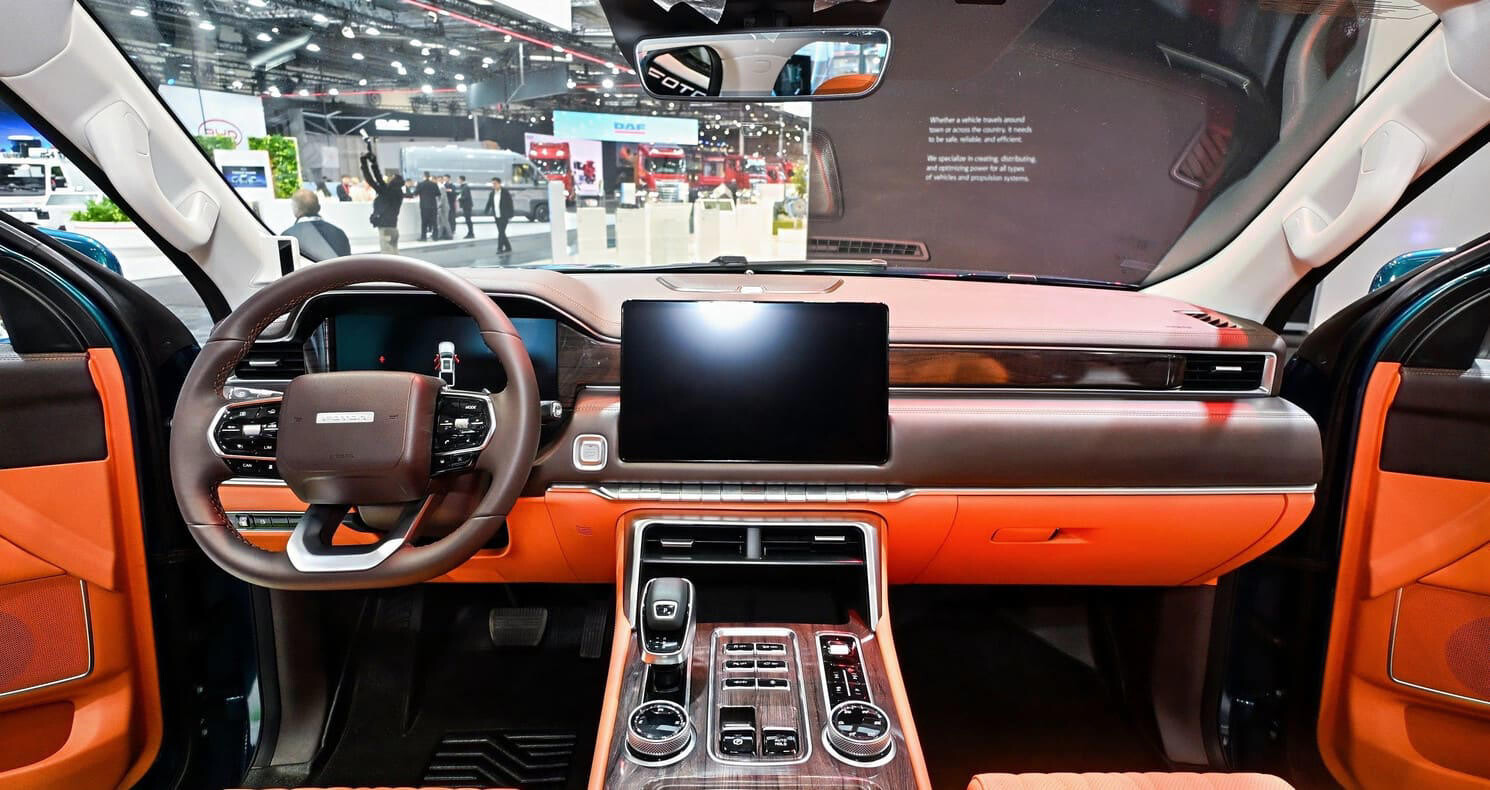
China’s automotive industry will need components and software worth 2.6 trillion yuan (US$356.2 billion) a year by 2030 amid mainland buyers’ surging interest in smart cars with autonomous driving systems and digital cockpits even as a brutal price war envelops the industry.
Zhang Yongwei, general secretary of the China EV100, a non-governmental organisation whose members include nearly all top executives of major Chinese electric car manufacturers, said that the market is likely to grow at an annualised pace of 28.8 per cent between 2026 and 2030.
“For car component vendors, designing and churning out hi-tech products to cater to the assemblers and consumers’ needs hold the key to their success,” he said at a forum in Wuhan on Friday. “The best products in high demand will face supply issues.”
Components and services for intelligent vehicles – powered by either combustion engines or batteries – include chips, lidar sensors, LED screens, computer software and electronic devices.
Intelligence is measured by a vehicle’s digital bells and whistles, manifested in features such as voice-activated controls, facial recognition, over-the-air software upgrades, phone-linked features and self parking.
The 2030 forecast for car parts and software represents an increase of more than 2 trillion yuan from 2024, You Zheng, vice-president of state-owned Dongfeng Motor, said at the forum.
Total car sales on the mainland were valued at about 4 trillion yuan in 2023.
More than half of the new cars sold this year on the mainland – the world’s largest automotive and electric vehicle (EV) market – are categorised as intelligent vehicles, said Zhang, who was formerly a researcher at the Development Research Center under the State Council, China’s cabinet.
In the next one or two years, it is highly likely all cars sold in China will be billed as intelligent vehicles, Zhang said. “The pace of penetration of intelligent cars has turned out to be faster than EVs.”
Dongfeng’s You said 17 million cars with smart features will be sold in China this year, accounting for about 60 per cent of the total.
Last year, 47.3 per cent of cars sold were categorised as intelligent.
Lang Xianpeng, vice-president of research and development at Li Auto, said the company wants to become a leading player by 2030 through wider use of artificial intelligence technologies.
“It is of strategic importance to us to focus on developing autonomous vehicles,” Lang said.
Last month, Andrew Fan, chief financial officer of Shanghai-based lidar sensor maker Hesai, told the Post that the cost of the devices that many smart cars use to map their surroundings have fallen to about US$200 per unit from thousands of dollars five years ago amid increasing production and uptake.
Despite such upbeat forecasts, a discount war has squeezed profit margins of the more than 100 carmakers operating on the mainland.
In the EV segment, only three BYD, the world’s largest EV maker, Li Auto and Huawei Technologies-backed Aito are profitable, according to industry data.