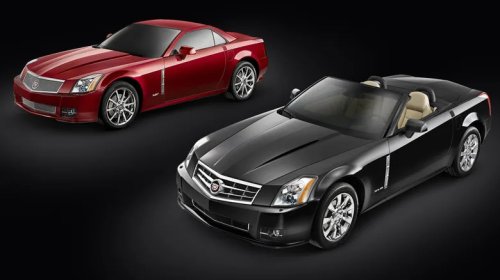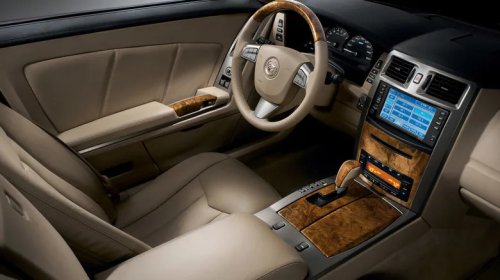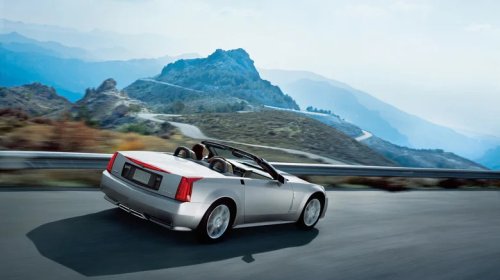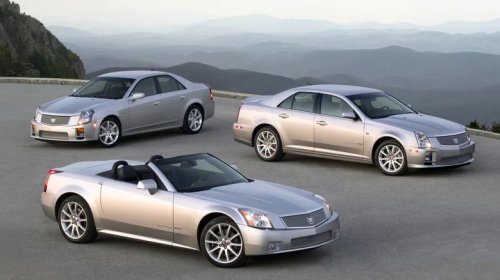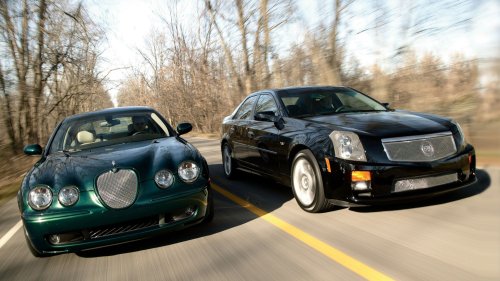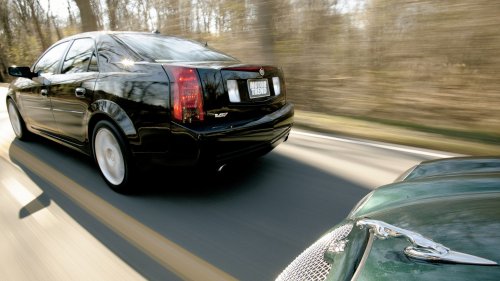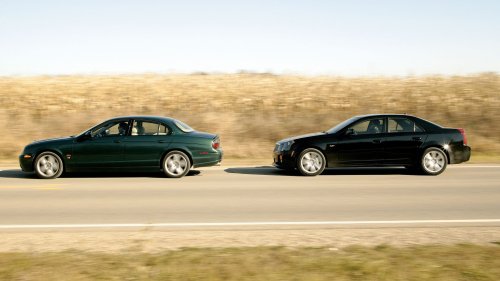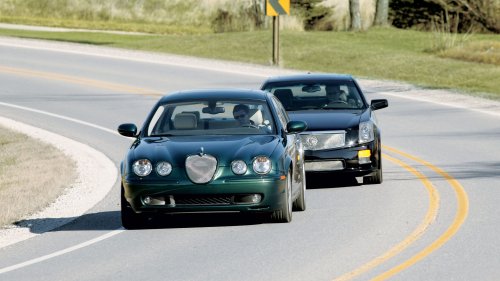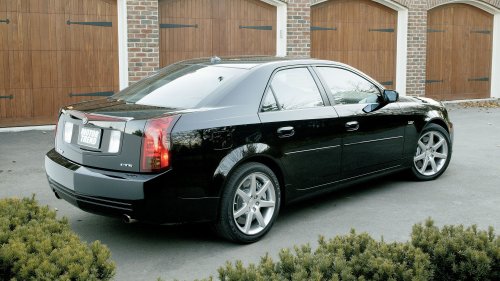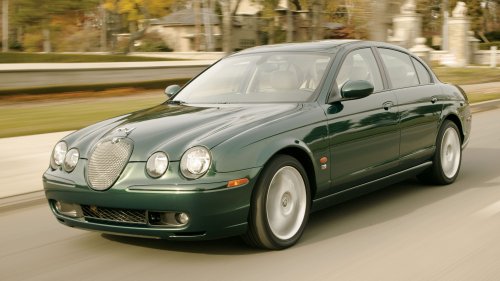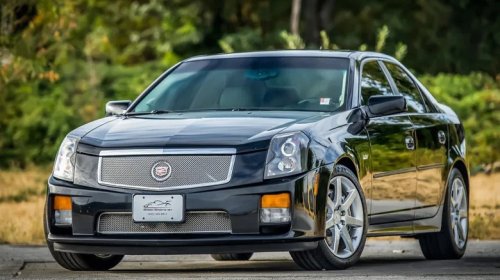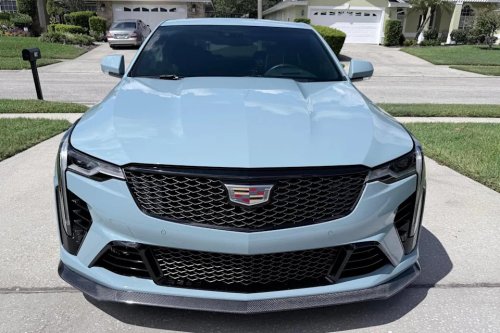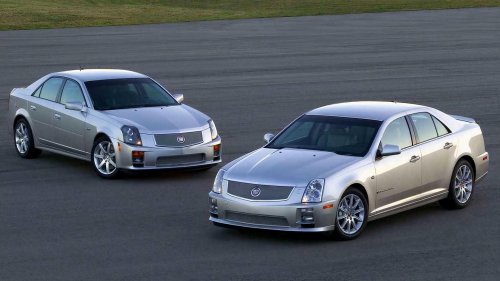
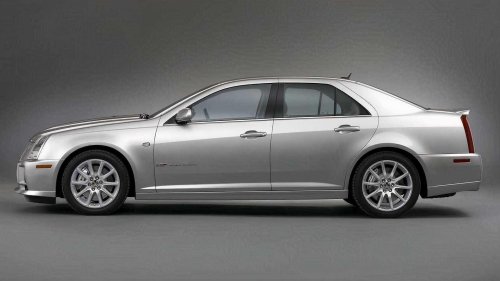
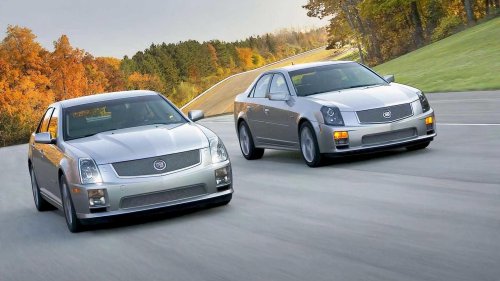
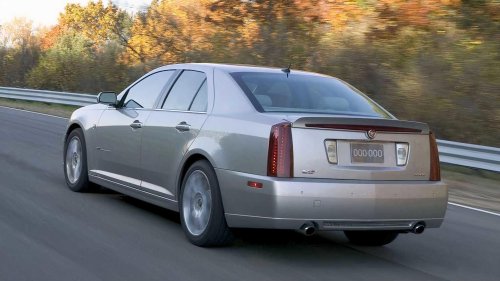
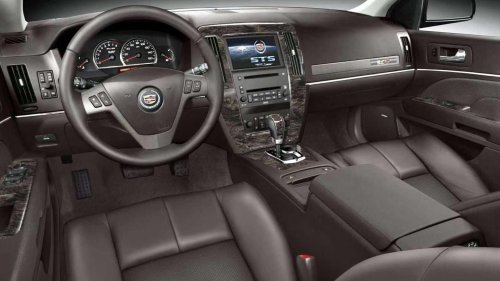


















Most enthusiasts know that the Cadillac CTS-V changed the way we look at American sports sedans today when it launched for the 2004 model year. Still, there was another V-series Cadillac sedan selling alongside it at the height of the performance sedan era: the STS and its high-performance variant, the STS-V.One of them became legendary. The CTS-V remains inflated in price, status, and virtue. While buyers remember the first-generation CTS-V fondly as a relatively affordable performance sedan, enthusiasts seem to have lost its sibling in the mix of mid-2000s-era sports sedans.Cadillac has been in the luxury market since its inception. By combining its affinity for producing comfortable rides with high-performance powertrains, models like the STS-V should be remembered as one of the greats, so why don't more people know about it today? Well, much of its obscurity can be attributed to the CTS-V overshadowing it before even more impressive models eventually overtook it, like how the CT4-V Blackwing is overshadowed by the even more powerful and impressive CT5-V Blackwing today.The STS-V may be somewhat rare today, but its lack of sensationalism led to a low-price valley, while other, more memorable models found themselves on a high-price plateau. Here's why you should consider giving this lesser-known high-performance American luxury sedan a second chance.Specs have been sourced directly from the manufacturer. Used car values vary depending on factors including location, mileage, condition, and more. The prices quoted in this article may not reflect exactly what your STS-V is worth, or what you might buy one for. Sport Sedans at Peak: The Mid-2000s Performance Wars NetCarShowLet's set the stage by looking at Cadillac during the early 2000s. The company was making comfortable luxury sedans like the DeVille, with the DTS replacing it in 2006. The Eldorado was also on the way out, with sales already far lower than in the 1990s. The Seville's G-body platform was starting to feel stale, too. By the mid-2000s, the automaker could look around at the competition to see other luxury competitors combining large, powerful engines, with some even getting forced induction in high-end models.It was time to introduce a sleeper sedan: the Cadillac STS-V. Of course, the CTS-V debuted a year before the STS-V, but the two models together proved to the world that Cadillac was ready to revolutionize itself. The STS-V set its sights on models like the 2006-2010 E60 BMW M5, with a 5.0-liter naturally aspirated V10 producing 500 horsepower and 384 pound-feet of torque.Other premium sports sedans from the era include the Audi RS4, which was only sold for the 2007 and 2008 model years in the United States, the W211 Mercedes-AMG E 63 with its 507-hp 5.5L V8, and the Lexus IS F, which used one of the most famous Lexus/Toyota engines: a 5.0-liter naturally aspirated V8 that made 416 horsepower and 371 lb-ft of torque.American sports sedans had to catch up to models like the M5 that had been around for decades by that point. Cadillac's answer was its first supercharged model, the STS-V. The STS-V Arrives: Cadillac's Supercharged Answer NetCarShowThe Cadillac STS-V was the first Cadillac sedan to be built with a supercharger from the factory. It used the automaker's most notorious engine, the Northstar V8, which had been in production for years before the STS's debut. It even ranked among Ward's Auto World's "10 Best Engines in North America" in 1996 and 1997.The engine wasn't without problems, but the "LC3" engine was impressive, despite its issues, and made for a quick performance sedan. Buyers didn't catch on to the STS-V at first — the sedan sold only about 2,500 units over its entire production run, with the majority of those sold in the 2006 model year. Cadillac produced fewer than 100 units for the 2009 model year. Why It Never Landed – And Why the CTS-V Won Instead CadillacEven though the STS-V was supercharged with even more power than the CTS-V, the CTS lived on to become one of the most legendary Cadillac models in the brand's history. There's no definitive reason as to why the STS-V never caught on, but we can make some educated estimates.Firstly, the STS's performance variant had problems with its Northstar V8 – the engine was notorious for poor aluminum casting, resulting in weaker blocks. This, combined with the head bolts' threads being too small and too close together, often resulted in the head bolts stretching and pulling out of the block; the head gaskets would then fail, and the engine could be damaged beyond repair.These problems aside, the STS-V was still a luxury sports sedan with plenty of power, so why didn't it sell? Well, pricing made a huge difference, as the 2007 STS-V started at $75,050, while the CTS-V from the same year was $51,395. Neither model was especially flashy, nor did they advertise their performance on the outside. Styling remained subtle on both models. The CTS-V's performance is still more than enough, and it was thousands of dollars cheaper than the STS-V, so buyers were drawn in. Performance Reality: What 400+ Horsepower Actually Felt Like CadillacIt may not have sold many units, but the STS-V was still a performance machine. It handled great, accelerated like a rocket, and kept up with competitors like the E60 M5. Since there are so few examples around, owner forums like Cadillac Forums have created pages to maintain an owner registry, answer maintenance questions, and discuss how they enjoy their STS-Vs. One owner reportedly shipped his example to Europe, where it accrued miles by driving between Italy and Switzerland. Here's what he has to say about how it drives:It is an absolute blast to drive in Europe - the Europeans love the car; they follow it; photograph it; race it; smudge it; and give me the thumbs up everywhere I go. On three-lane highways that climb, there is nothing more enjoyable than getting in the passing lane to zip by all the trucks and small-engined econo-boxes which are furiously changing gears to extract what little torque they can while the Cadillac majestically sweeps by in regal comfort and elegance.- gogmgo, Cadillac Forums, October 2 2018Needless to say, the STS-V drives smoothly and with more than enough power to coast past mainstream models. Since it was built to compete with the E60 BMW M5, it had to have all 469 horsepower available at all times. The E60 only unlocked all of its potential when in M mode at the push of a button.Car and Driver pitted the two models against one another in its January 2006 issue. The testers ultimately ranked the BMW higher for its driving characteristics and pure power. The STS-V was the slowest to reach 60 mph, and the suspension was a bit too bouncy. However, its steering is tight and responsive. The interior is the most luxurious with more tech and features than its rivals, and the Cadillac was the least expensive of the bunch. The Second Act: Values, Collectibility, and the Case for Now CadillacEnthusiasts today are waking up to the STS-V, especially since the cars are so cheap. As it turns out, rarity doesn't always equal high value. This Cadillac is still currently worth an average of $16,683. Auction results over the past 12 months average $9,950. The most recent auction at the time of writing finished on May 14, 2026; a buyer went home with a 2006 example with 99,000 miles in average condition by only paying $9,300. The highest auction price in the last year was $15,250 for a silver 2007 example with 91k miles in better overall condition.AutoTempest includes listings for examples asking $18k or more and notes that the listing is taken down or finalized, but there's no way to confirm whether the private sales went through at the asking price. Keeping that in mind, we can assume some clean STS-Vs probably sold for more than $15k in the last year, but the average confirmed auction result proves they're not actually worth much today.The way we see it, the STS-V is still undervalued given the performance it delivers. There are so few examples that they could end up a future classic waiting to gain value. That doesn't mean you should buy one as an investment, though. If you own one of these luxury performance sedans, drive it like it's meant to be driven, and you won't regret it for a second.