Beijing could soon hold carmakers legally responsible for traffic violations when autonomous driving systems are in use, marking an important step towards clearing regulatory hurdles to wider commercialisation.
The National People’s Congress Standing Committee, China’s top legislative body, is set to review an amended Road Traffic Safety Law on Tuesday. For the first time, the document was set to include a dedicated chapter on governing autonomous vehicles and advanced driving systems, according to state-run news agency Xinhua.
“The definitions of autonomous vehicles and driver-assistance functions would be clarified in the amendments,” Xinhua reported, without revealing when the revised law would enter into force.
Self-driving systems switched off during a journey would remain subject to existing rules and laws, according to Xinhua, while analysts noted that carmakers could be held accountable for accidents and traffic rule violations when such systems were activated in a vehicle legally recognised as autonomous.
“As they are required to shoulder the responsibilities for the cars’ operations on the roads, automotive companies will also be allowed to build and sell cars of this kind to attract consumers,” said Gao Shen, an independent analyst based in Shanghai.
“When the amended law is promulgated, dozens of new autonomous models will hit the streets.”
Next-generation technologies, such as early-stage automated software, sophisticated in-car entertainment systems and phone-linked features, are quickly becoming game changers in China – the world’s largest automotive and electric vehicle (EV) market – amid rising consumer demand for such features, analysts said.
Even electric vehicles priced as low as 60,000 yuan (US$8,926) now come equipped with basic automated features, classified as level 2 or level 2+ autonomous driving technologies. These systems still require drivers, who remain responsible for all traffic accidents and violations, to keep their hands on the wheel at all times even when the functions are activated.
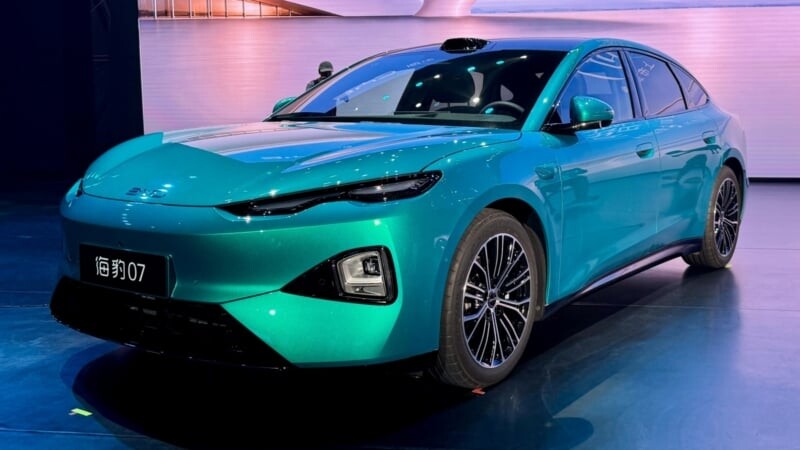
However, some manufacturers have begun to promise financial liability guarantees. BYD, the world’s largest EV maker, announced in May it would cover any costs from traffic accidents when its “God’s Eye” advanced driver-assistance system was in operation.
Founder and chairman Wang Chuanfu told a press conference in Shenzhen on May 28 that BYD aimed to achieve zero traffic accidents through its self-developed autonomous driving technology while designing affordable, next-generation cars for mass-market consumers.
He did not disclose a timetable for implementing the policy.
Regulatory approvals are also gathering pace. In December, the Ministry of Industry and Information Technology gave state-owned Changan Automobile and BAIC the go-ahead to build level 3 vehicles on a trial basis.
These systems promise to navigate streets independently, though drivers would still be required to remain fully alert and ready to intervene when necessary, according to criteria set by SAE International, a global standards organisation.