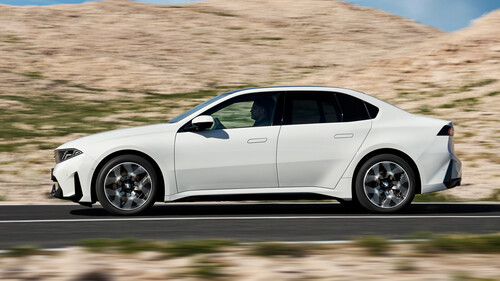
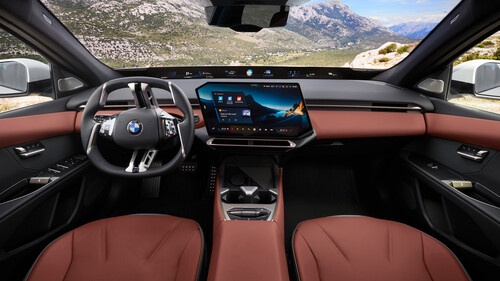
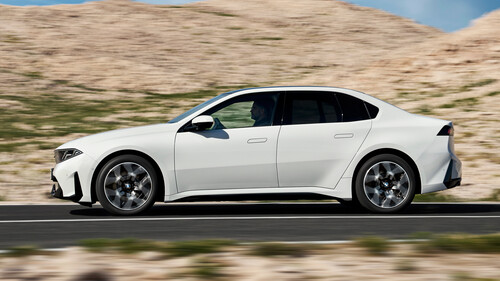
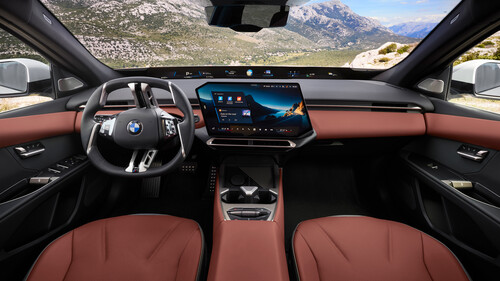
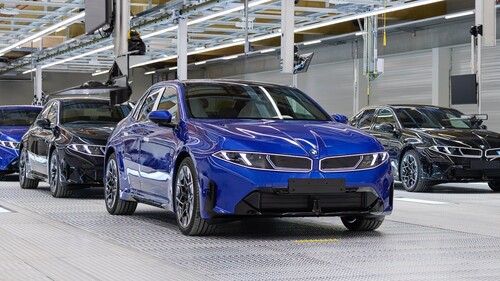
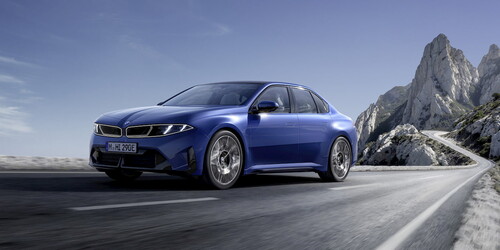
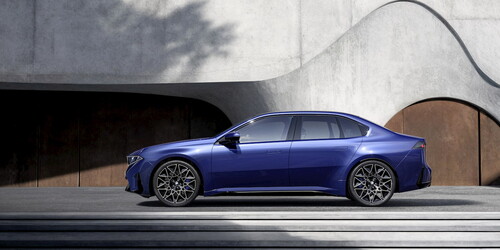
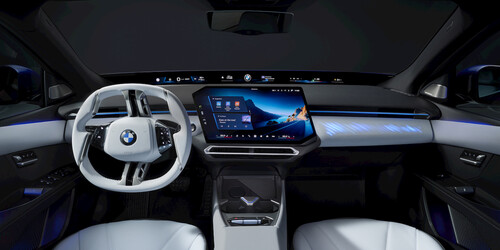
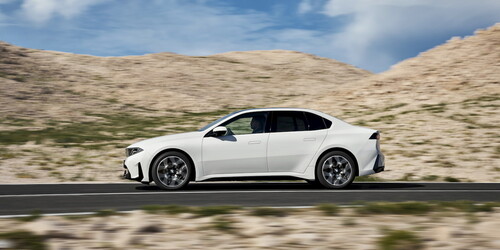
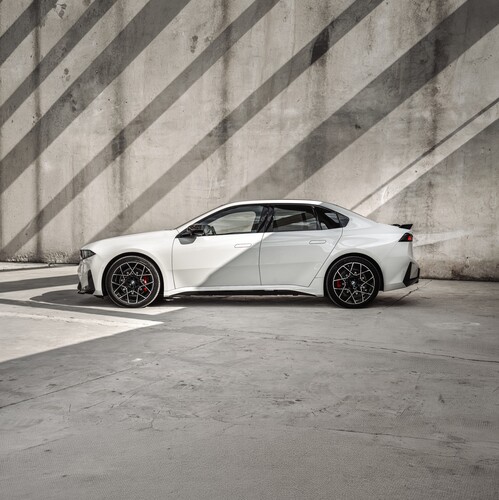
It might run on old tech, but the chunky BMW i3 electric from the 2000 years still looks modern and brings plenty of eco-friendly charm. Used ones can be had quite cheaply and there is likely plenty of life left in them. Patrick Pleul/dpaBMW's i3, with its posh badge and distinctive looks, is proving to be a big hit on the second-hand car market.The i3 has been around since 2013 so there is a wide choice of used models, including the useful range extender version.It is not to be confused with the all-new electric i3 which goes on sale from the end of this year. That BMW sits on the Neue Klasse platform which uses the company's sixth generation battery technology.Prices for a used i3 start at around €8,500 which makes it a bargain in markets where affordable second-hand electrics are rare.A key seal of approval comes from technical inspection agency TÜV, whose 2026 test report says "the innovative electric runabout" is a hidden gem on the used EV market. Reliability is also said to be excellent."The BMW i3 is one of the most interesting used electric car purchases available," says the UK-based used car platform Allcars."The CFRP construction, the agile rear-wheel-drive handling, the unique interior design, and the i3's genuine engineering ambition make it a car that rewards buyers who appreciate what it is rather than measuring it against modern EVs with longer range and faster charging."Standing at a tad over four metres, the car had a sustainability focus from the outset, with carbon-fibre bodywork and interior fittings made from plant-based fibres.The doors open in opposite directions which seemed a gimmick at the launch and some owners now find them a bit impractical. On the other hand, they are distinctive.When buying a used one of the best version to go for is the REX i3. This is the Range Extender model, which is fitted with a motorcycle petrol engine under the boot floor.Once the battery runs low, the two-cylinder engine kicks in to generate more electricity, adding about 120 km to the range.This is a useful margin when out and about, and many original owners opted for this model as a safety net at a time when charging infrastructure left much to be desired, meaning that longer journeys were fraught with range anxiety.The i3 got a bigger battery pack (33 kWh) in mid-2016 and underwent a revamp in 2017 with more power, the introduction of the faster i3S and the 42 kWh battery.The key issue with a used electric car is the health of the batteries. The ones fitted by BMW show a low level of degradation and are regarded as long-lived.To test one, use the so-called "secret menu", which is activated by holding the trip odometer button on the lower-left corner of the dash for about 10 seconds.Enter an unlock code by adding the last five digits of the VIN sequentially, unlock the menu using that code and navigate to the battery capacity option (Batt. Kapa. Max), and read the estimated maximum remaining capacity in kWh.You could also connect an OBD2 scanner and use smartphone apps like Electrified (Android) or mi3 (iOS), or BMW's desktop software ISTA+. These tools read the precise State of Health (SOH) percentage directly from the Battery Management Electronics (BME).A battery State of Health (SOH) reading above around 88% indicates minimal degradation. Readings between 80 and 88% are normal for older models and open room for price negotiation. An SOH below 80% generally signals heavy wear or approaching end-of-warranty limits.The carbon-fibre structure of the i3 ensures a high level of crash safety but it can be very expensive to repair, so check that the car you are interested in has not been involved in an accident. Any crash damage should have been inspected and repaired by BMW.The chassis on the i3 is made of aluminium and contains the electric motor, batteries and rear axle. It often suffers badly in the case of a shunt at the front or rear.The 60-Ah (22.2 kWh) version, which was available until 2016, is fine for short trips, while the 94-Ah version (33.2 kW) should manage 200 km depending on the weather and driving style. Distance of up to 290 km are possible with the range-topping 120-Ah version (42.3 kWh, offered from 2018.BMW offered a three-year manufacturer's warranty and an eight-year guarantee (160,000 km) on the high-voltage components and thanks to the carbon fibre construction, rust is never an issue.Occasional faults with the charging electronics outside the warranty period can prove costly however. Charging cables are also prone to faults. Down the years there have been 10 recalls on record with Germany's Federal Motor Transport Authority.The i3 is also not really suited to frequent motorway driving and feels most at home in an urban environment. The ADAC highlighted its skittish feel at higher speeds, which is mainly down to the narrow tyres.With a compact design and advanced tech for its time, experts saw BMW's i3 as one of the pioneers of electric mobility. BMW/dpaSome experts see BMW's i3 as a hidden gem on the used electric vehicle market. Buyers should know the i3 is not really suited to frequent motorway driving and feels most at home in an urban environment. Sven Hoppe/dpa