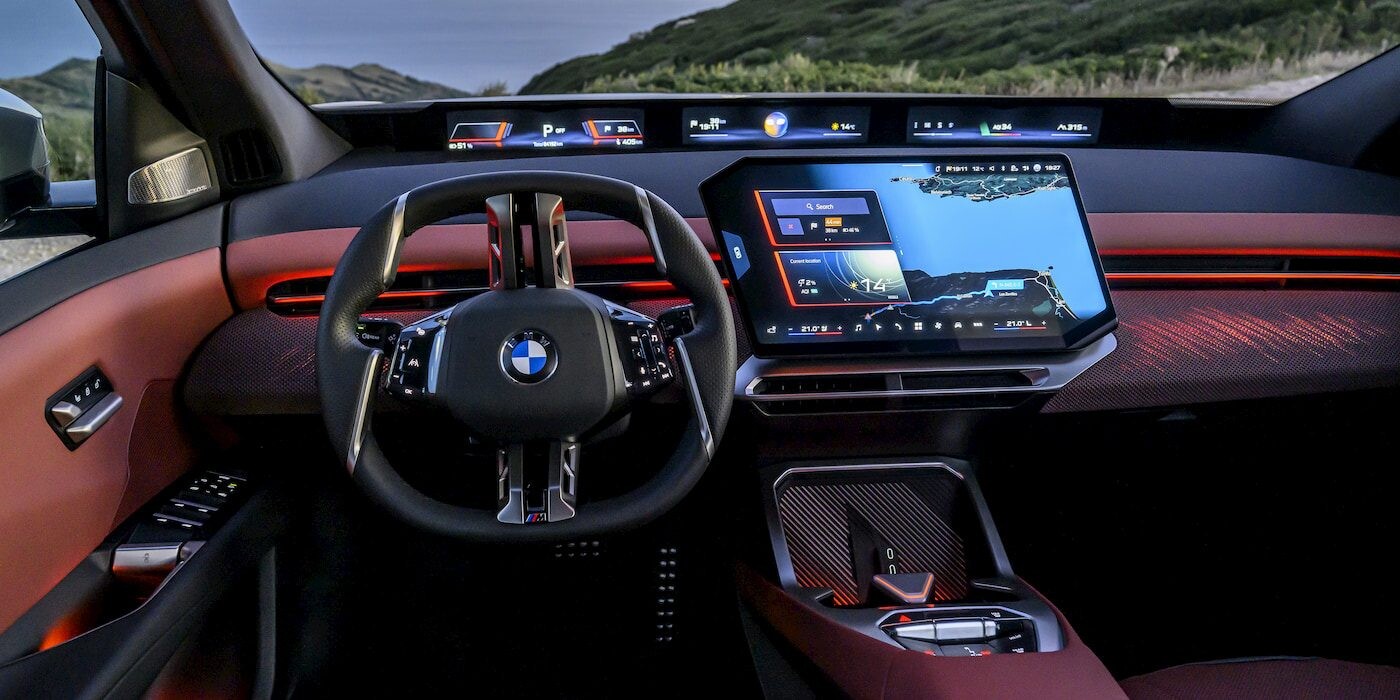
The BMW Group is expanding its supplier network for battery cells, with a stronger focus on regional sourcing. For the sixth-generation high-voltage batteries (Gen6), which is destined for the electric models of the Neue Klasse, the automaker has begun engaging additional suppliers. Samsung SDI will supply BMW from its existing European plants in the future, while LG Energy Solution (LGES) will take on this role in the USA. Deliveries are expected to begin at the end of the 2020s.
With these two new partnerships, BMW is pursuing the “local for local” principle. The company aims to source components in the same regions where its vehicles are produced. This approach is intended to shorten transport routes, strengthen regional value creation, and enhance supply security. At the same time, BMW continues to rely on a globally diversified supplier network to avoid dependencies on individual manufacturers and markets.
“Diversifying procurement is an integral part of the BMW Group’s purchasing strategy,” explained Nicolai Martin, Board Member for Purchasing and Supplier Network, adding: “Through our battery cell partnerships, we are actively strengthening value creation in Europe and the US.”
Three cell suppliers for Europe; LGES in the US
In future, BMW will thus source battery cells from three European manufacturers: CATL, EVE Energy, and Samsung SDI. Meanwhile, in the US, LG Energy Solution will fulfil this role. The respective suppliers are expected to produce cells as close as possible to BMW’s battery and vehicle plants.
In line with this, EVE Energy has built a cell factory near BMW’s new plant in Debrecen , Hungary (DE), and CATL is currently ramping things up at a new factory in Debrecen in addition to its existing facility in Arnstadt (Thuringia). Samsung SDI has long operated a plant in Göd, Hungary, where it was rumoured in 2023 that 46120-format cells for BMW would be produced in the future. This now appears to be confirmed – at least indirectly, as BMW’s current press release does not specify either the cell format or the location used by the new supplier Samsung SDI. The new supplier for the US market, LGES, already operates several cell factories in the USA.
The assembly of Gen6 high-voltage batteries also follows this regional approach. BMW has established five new production sites near its vehicle plants: Irlbach-Straßkirchen in Lower Bavaria, Debrecen in Hungary, Shenyang in China, as well as Woodruff in the USA and San Luis Potosí in Mexico. The proximity between cell manufacturers, battery assembly, and vehicle production is intended to further stabilise supply chains.
Neue Klasse to feature different cell chemistries
The expansion of the supplier network coincides with a phase in which BMW is further diversifying its battery strategy. As reported, the Neue Klasse electric vehicles will not only use the initially planned NMC cells but will also incorporate LFP batteries in the future. BMW CEO Milan Nedeljković confirmed this during the Q3 earnings conference call. However, a comprehensive switch to LFP is not planned. Instead, BMW intends to decide on a case-by-case basis depending on the vehicle segment and use case. While LFP technology is more cost-effective, it also offers a different range, according to Nedeljković.
The Gen6 batteries are fundamentally based on large-format cylindrical cells with a diameter of 46 millimetres and two different heights: 95 and 120 millimetres. Compared to the previous prismatic NMC cells, BMW promises an energy density increase of around 20 per cent. The cells are integrated directly into the battery using the cell-to-pack principle. The battery housing, in turn, becomes part of the vehicle structure through the pack-to-open-body principle.
The current announcement does not specify which cell chemistries the two new suppliers, LGES and Samsung SDI, will provide for BMW. For now, the new partnerships should be understood as an expansion of the regional procurement base.
BMW also invests in its own battery expertise
In addition to external suppliers, BMW is expanding its own expertise in battery cell technology. Since 2019, the company has been researching new cell technologies at its Battery Cell Competence Center in Munich. Since 2022, the Cell Manufacturing Competence Center in Parsdorf has been studying near-series production processes. Additionally, since 2024, the Cell Recycling Competence Center in Salching has been working on its own direct recycling process to recover valuable raw materials and reintegrate them into the production process.
BMW emphasises that establishing regional battery ecosystems requires time, significant investment, and reliable framework conditions. In addition to attractive location conditions, implementable political guidelines are also crucial to enable the necessary industrialisation.