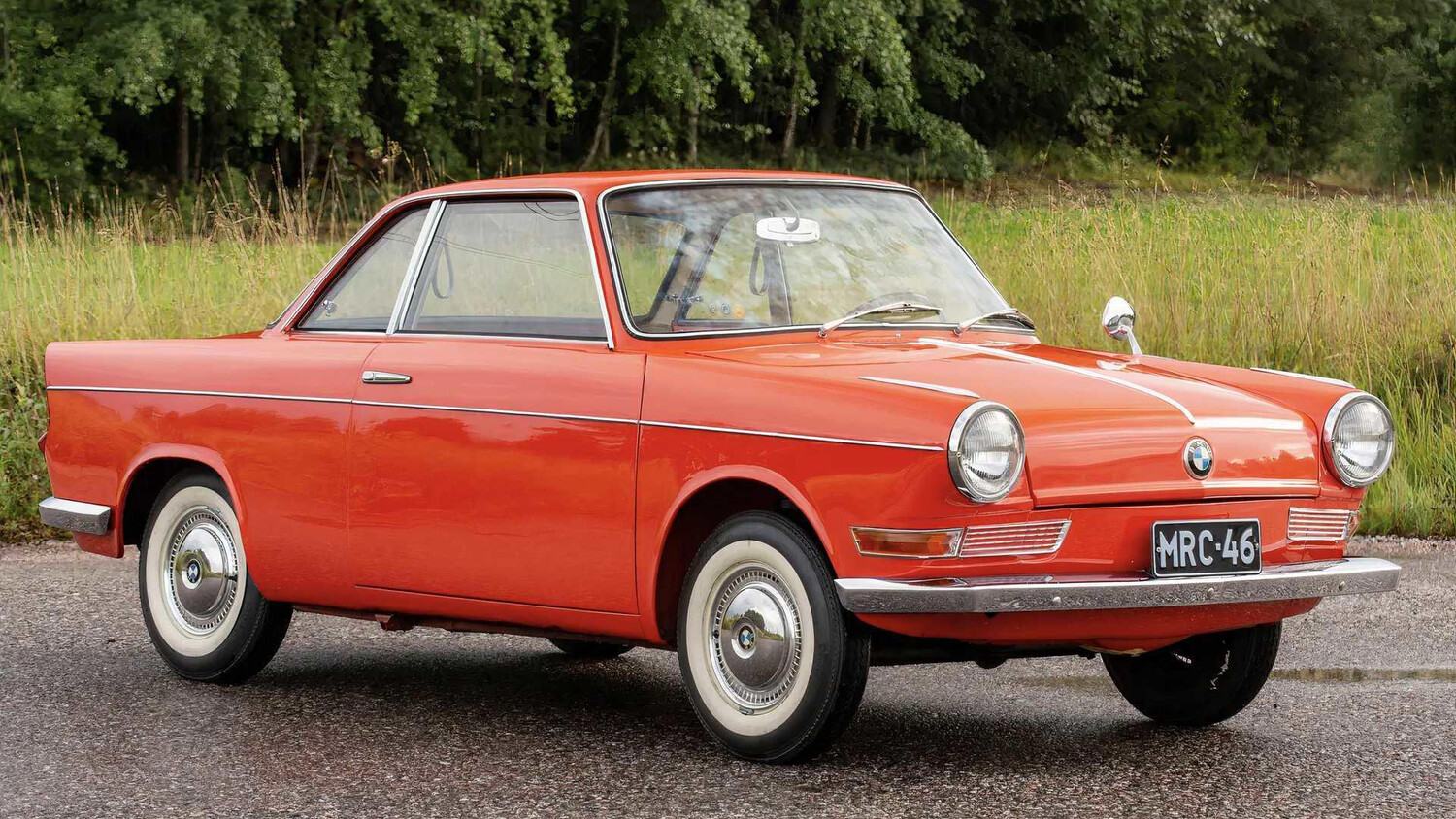
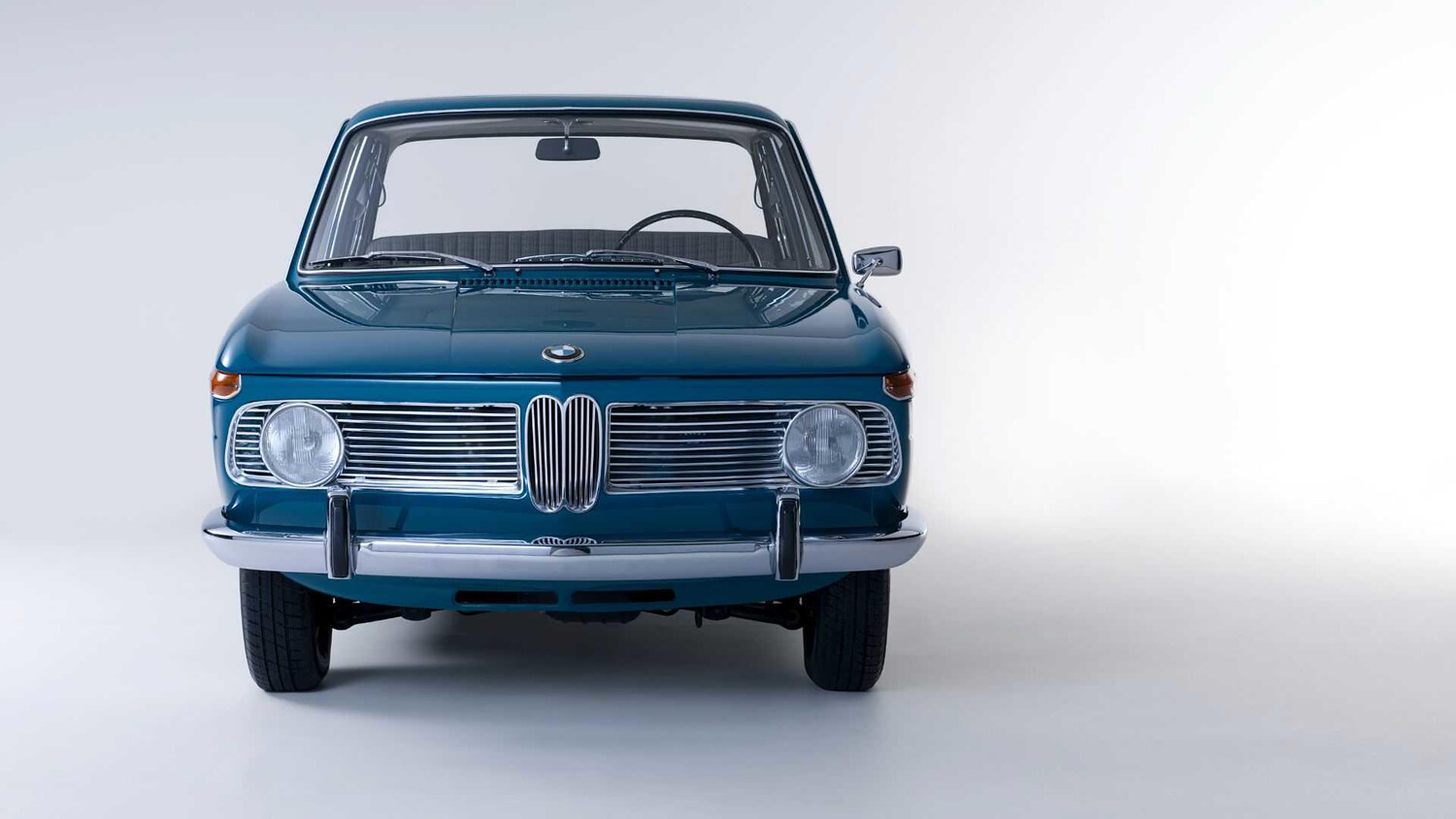
During the late 1950s, Germany was still rebuilding itself after spending a dozen years under the Nazi regime. Berlin, a city already split in half by the Western Allies and the Soviet Union, was about to wake up to a guarded wall separating more than just political ideologies. Many of the companies that survived without going bankrupt were dismantling military aircraft and other equipment to rebuild their industry and the country's economy altogether.If you were a car company in Germany in the late 1950s, you were up the Rhine without a paddle, and BMW was in a rough spot. It went from building airplane engines, motorcycles, and cars in the late 1920s and early 1930s to manufacturing whatever the German military required of it during World War II.By summer 1945, Allied bombing had left BMW’s factories in ruins, forcing it to pause vehicle production until the early 1950s, when it returned to building luxury sedans and sports cars. However, a small, basic car called the 700 would save the automaker. BMW Returns To Car Building In A War-Torn Germany 1952 BMW 501, sideTo survive while rebuilding its production lines, Bayerische Motoren Werke manufactured household goods like pots, pans, and bicycles. Cars flowed out of the factory once more in 1952 – 7 years after the end of WWII. BMW aimed these models at the few wealthy clients left in the country.The company quickly discovered it needed something inexpensive to add to the lineup if it wanted to stay alive. Meanwhile, a little car built by Iso SpA, an Italian refrigerator company that saw the same need for inexpensive cars in post-war Italy, caught BMW's attention. Several other companies also licensed the manufacturing rights. However, the ones BMW made would become the most famous of all the Isettas. The odd little Isetta put BMW in better financial standing, but the business was far from safe. The car that followed, however, would get the job done and set BMW up for success for years to come.BMW IsettaWhile stamping out Isettas, BMW was also building the 501 luxury sedan and 327 sports car, later adding the gorgeous 507 roadster and equally stunning 503 coupe to the lineup. Unfortunately, these cars had a big problem. They were expensive.The 501 sedan cost twice as much as the average new car in 1956 (about $4,500 US), and the planned $5,000 price for the 507 in the US doubled by the time the car's importer, Max Hoffman, had shipped over a handful for wealthy clients. Only a few hundred 507s were ever sold, and the company was bleeding cash with every dwindling purchase.1957 BMW 507 RoadsterThe Isetta was wonderful for a handful of reasons, but it couldn’t pull the company out of the red. The vehicle was a rebadged Italian car with a door from a refrigerator. Even though it was excellent at getting Germany mobile again, the little car still wasn't big enough for the average family.The 600 joined the lineup in 1957 as a stretched version of the Isetta, serving as the most practical shape the Isetta came in and delayed the inevitable for a little while longer. Both the Isetta and the 600 kept BMW alive, but the automaker wasn’t flourishing. The company needed a vehicle that could save it. The Humble 700 Saved BMW From Extinction 1961 bmw 700 sport coupe_frontBMW’s chief executive at the time was Heinrich Richter-Brohm, who took over in 1957 after the previous CEO oversaw the failed attempt to build luxury cars with higher profit margins. Brohm tapped Wolfgang Denzel, the company’s Austrian importer and engineer by trade, to develop a new kind of car for the brand. His list of contacts consisted of everyone in the engineering department, as well as Albrecht Goertz, the designer of the 503 and 507. When asked to design this new family car, Goertz essentially told Denzel, “You can’t afford me, pal,” and pointed him to his colleague, Giovanni Michelotti.Michelotti, whose name was attached to projects at Ferrari, Alfa Romeo, Maserati, and Lancia, to name a few, shot back with a design that was subtle yet elegant. More importantly, it could share components with the 600, which BMW insisted on. The flat two-cylinder engine produced 30 horsepower and sat behind the rear axle. By June 1959, the 700 was ready and presented to the board of directors and a few dozen journalists.The car weighed less than 1,400 pounds, carried four people, and despite the half-minute sprint to 60 MPH, acceleration was deemed excellent for such a small car at the time. Even better was its price. The 700 went on sale in 1959 for DM 5,300, a far cry from the prices it was asking for its large sedans. For comparison, the 507 sports car started at DM 26,500. BMW Printed Money With Each 700 Sold RM SothebysBMW produced about 188,000 examples of the 700 from 1959 to 1965, when a new wave of premium sedans took over. The 700 helped fund BMW's first Neue Klasse era, launched in 1963 with the 1500 and later the 1600, 1800, and the 2002. Without the 700, there would have been no Neue Klasse, or no BMW for that matter. As the 700 debuted to right the ship, BMW was fending off a buyout initiated by Daimler-Benz, though the board and stockholders ultimately turned down the offer.The 700 was built to a price, and that's evident in more ways than one. To keep it competitive with the almighty Volkswagen Beetle, all it needed was four seats and an engine. Anything else on top of that was a luxury feature. Sparse would be a kind way to describe the cabin. The 700's interior had so few amenities it made a white dinner plate look busy – even by early 1960s standards. The controls are an assortment of buttons, knobs, and switches all placed in random spots on and below the dashboard. Plus, drivers could easily confuse the choke with the heater control.There was no radio, no locking trunk, and no spare tire. The only luxuries added were a dashboard-mounted clock, a cigarette lighter, and an ashtray. Those last two features might have been practically mandatory given how many people smoked at the time, but BMW didn’t spend money on anything it didn’t have to, which helped maximize profits on each unit.The 700 was available in three different versions: a fastback coupe, a convertible, and a two-door sedan. Each might have looked like a conventional car but still shared the bones of the 600, which was nothing more than a stretched Isetta.The 700cc flat twin engine made no more horsepower than it needed, even when it was juiced to a whopping 40 horsepower in sport models and 70 hp in racing versions. The car wasn’t meant to be a luxury sedan, nor did BMW pretend it was.Without the 700, BMW wouldn't exist today. The model served its purpose: earning the company enough cash to keep the lights on, fight off a buyout, and fund the upcoming project that would secure BMW’s place in history. The Neue Klasse Sedans That Followed Owe The 700 Everything P90074510_highRes_50-years-of-bmw-new-After the 700 ended production, BMW left the economy-car segment altogether, hoping never to return. The 600 ended as the 700 began, and the Isetta wouldn’t live past 1962. While BMW later offered some budget-oriented models, such as the 3 Series Compact, it didn't really return to the entry-level car market until it bought Rover Group in 1994. It launched a completely reimagined Mini brand in 2001 to sell stylish vehicles that cost less than BMW's upmarket offerings.Without the help of a little economy car, BMW wouldn’t be one of the largest producers of luxury vehicles. The 3 Series, X3, X5, and X7 keep the brand at the front of the pack today, but they share little to no resemblance to the tiny 700 that saved the company. BMW is returning to its Neue Klasse looks and philosophy with a new era of electric and connected vehicles, paying homage to the first chapter of BMW’s history that followed its patchy reconstruction period.If it went back any further, it would have to start building airplane engines again, followed by household appliances, then compact commuter cars. BMW as it is today may have begun with the iconic three-box sedans it penned for a new age of motoring. Still, BMW’s long pre-war history and participation in the German war efforts were punctuated by a little car that broke with old ways of thinking and brought BMW back from the brink of death.