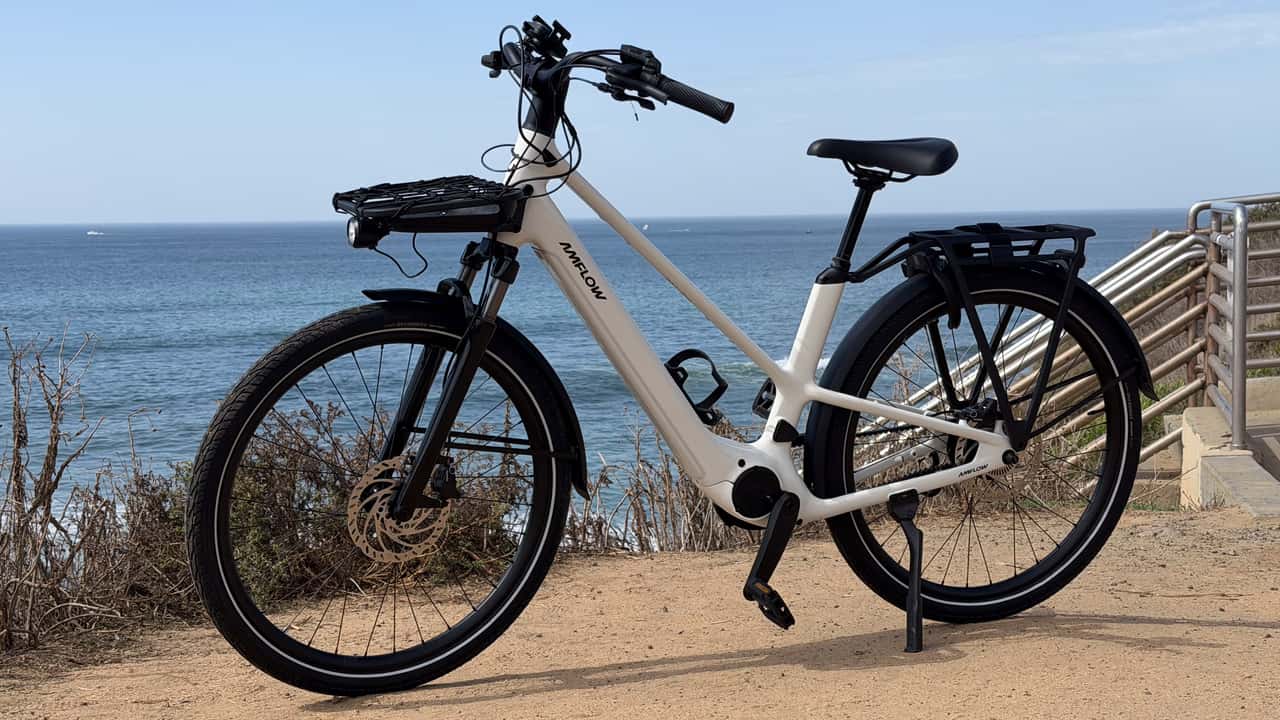
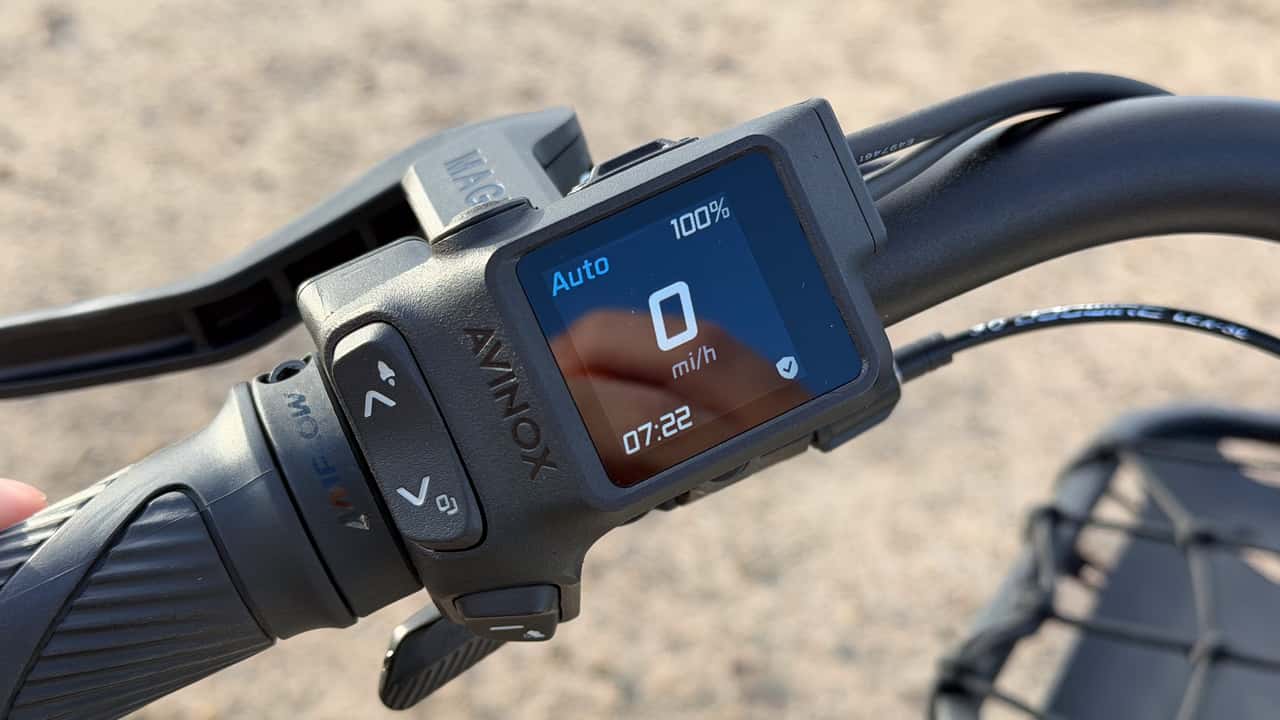
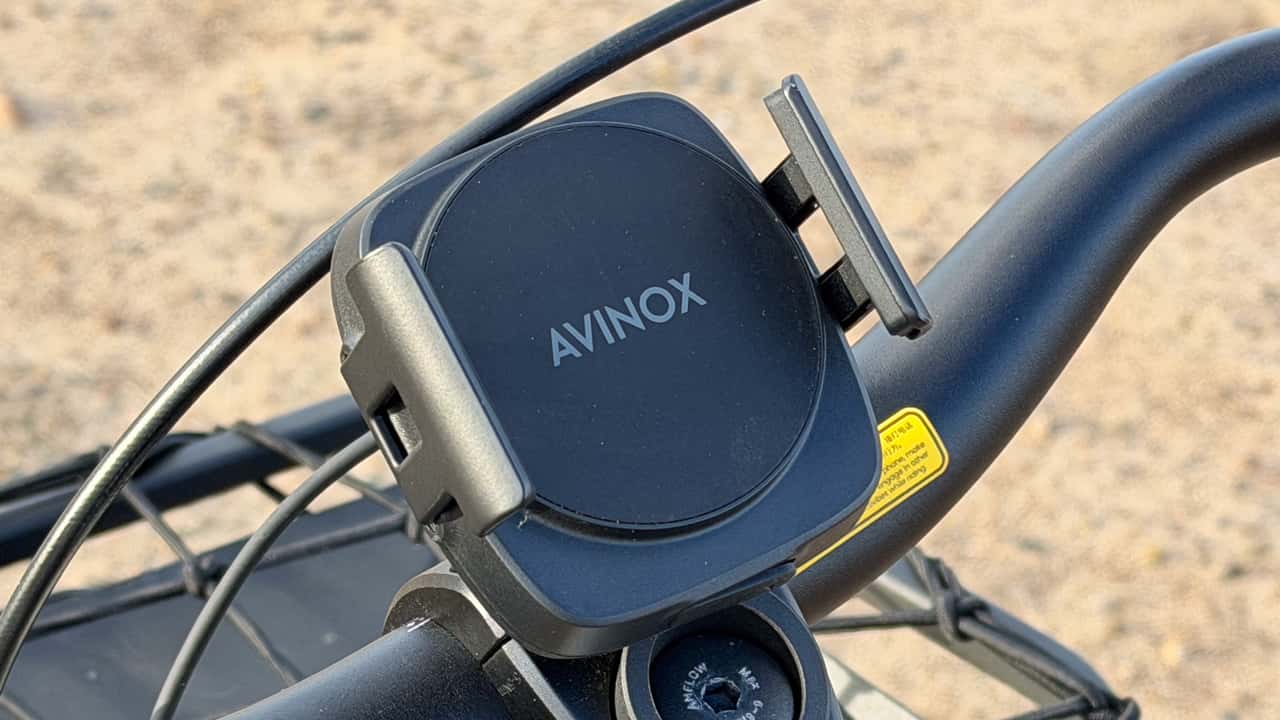
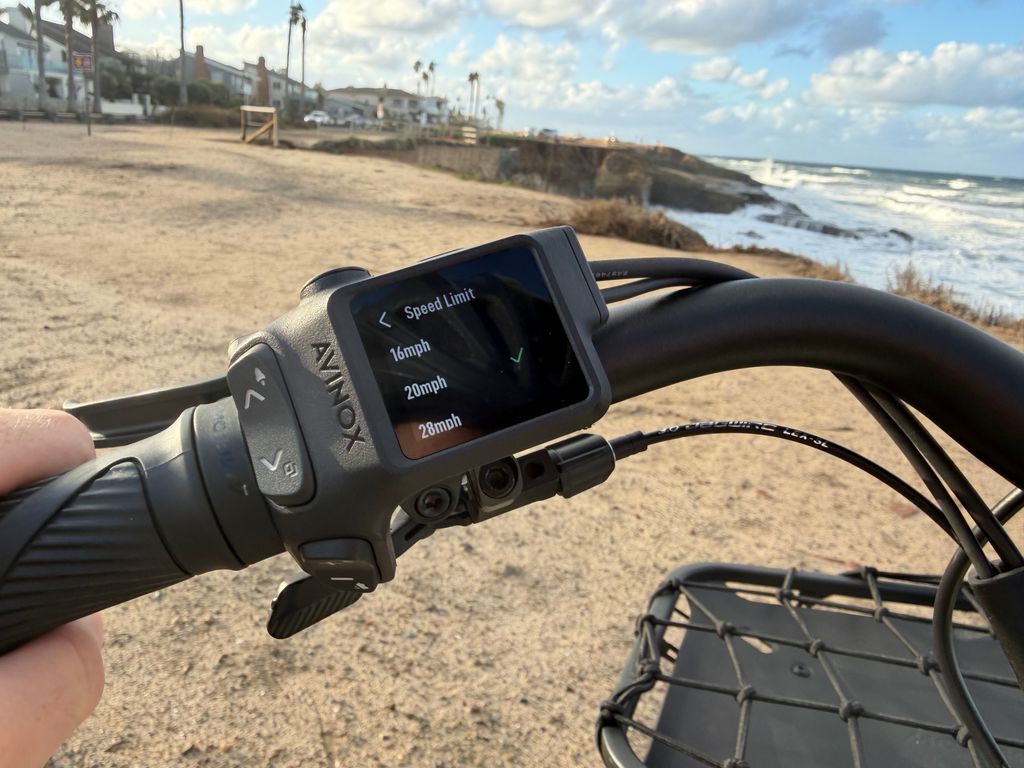
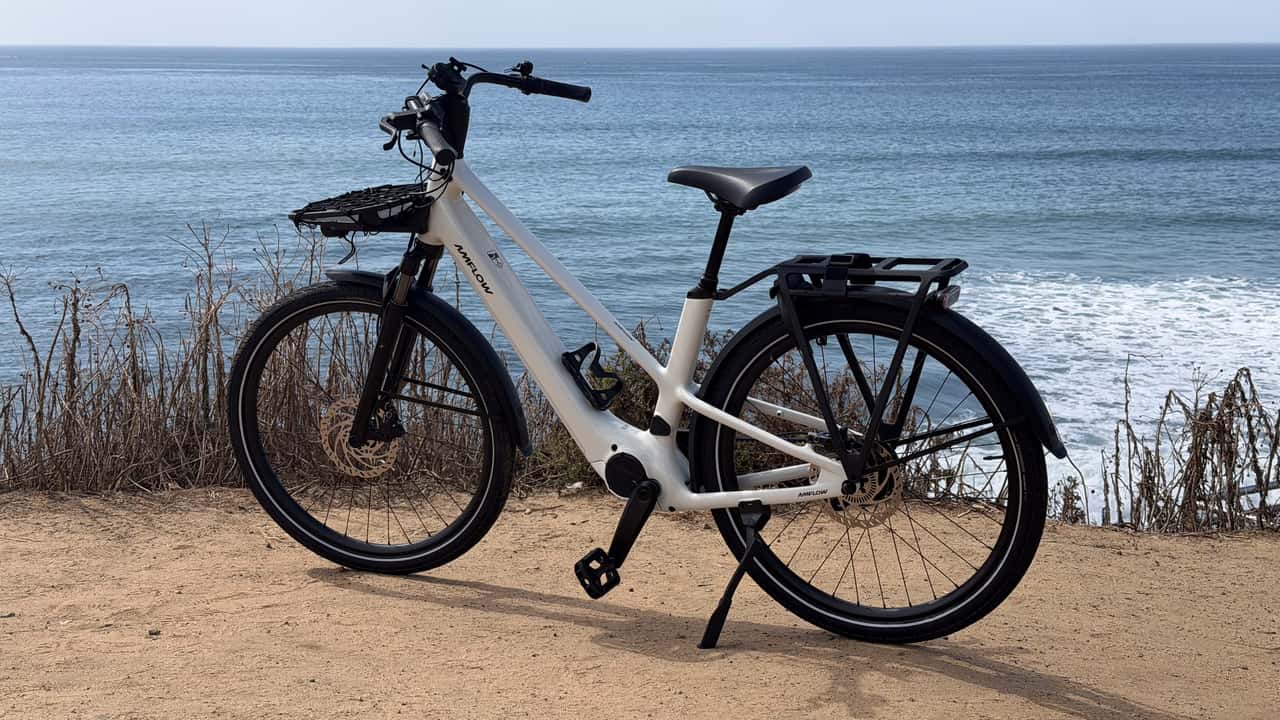
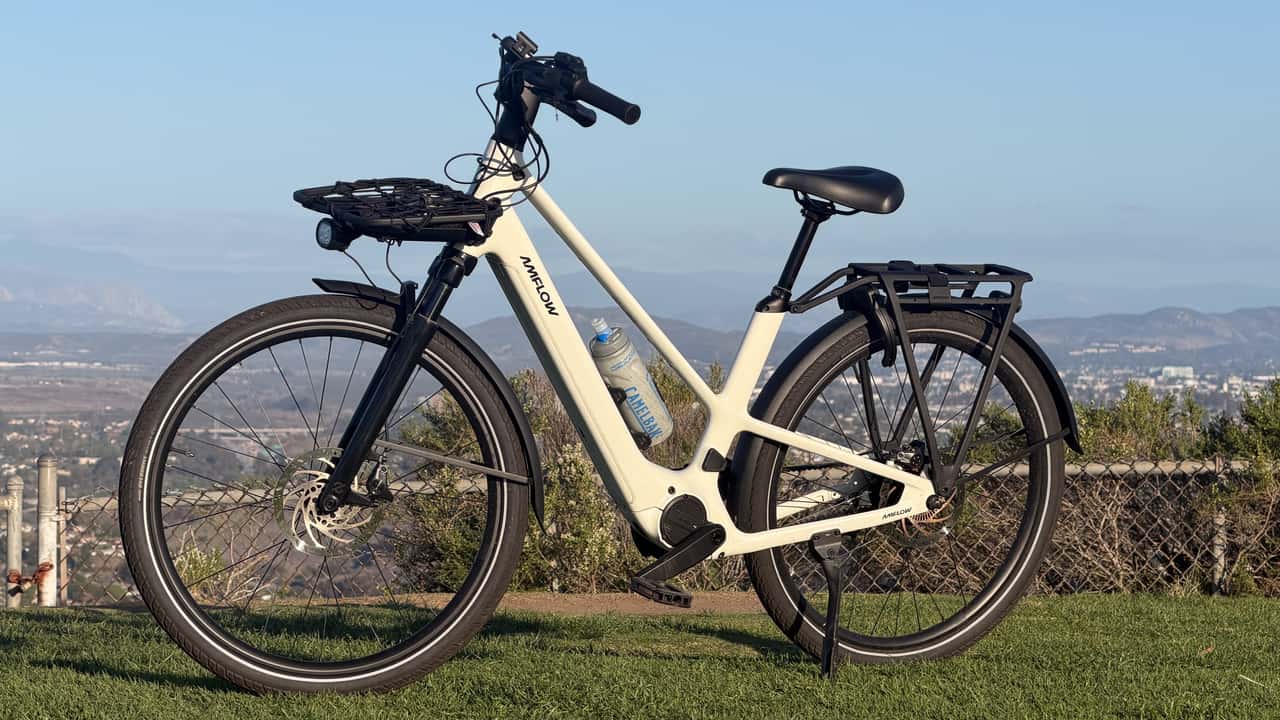
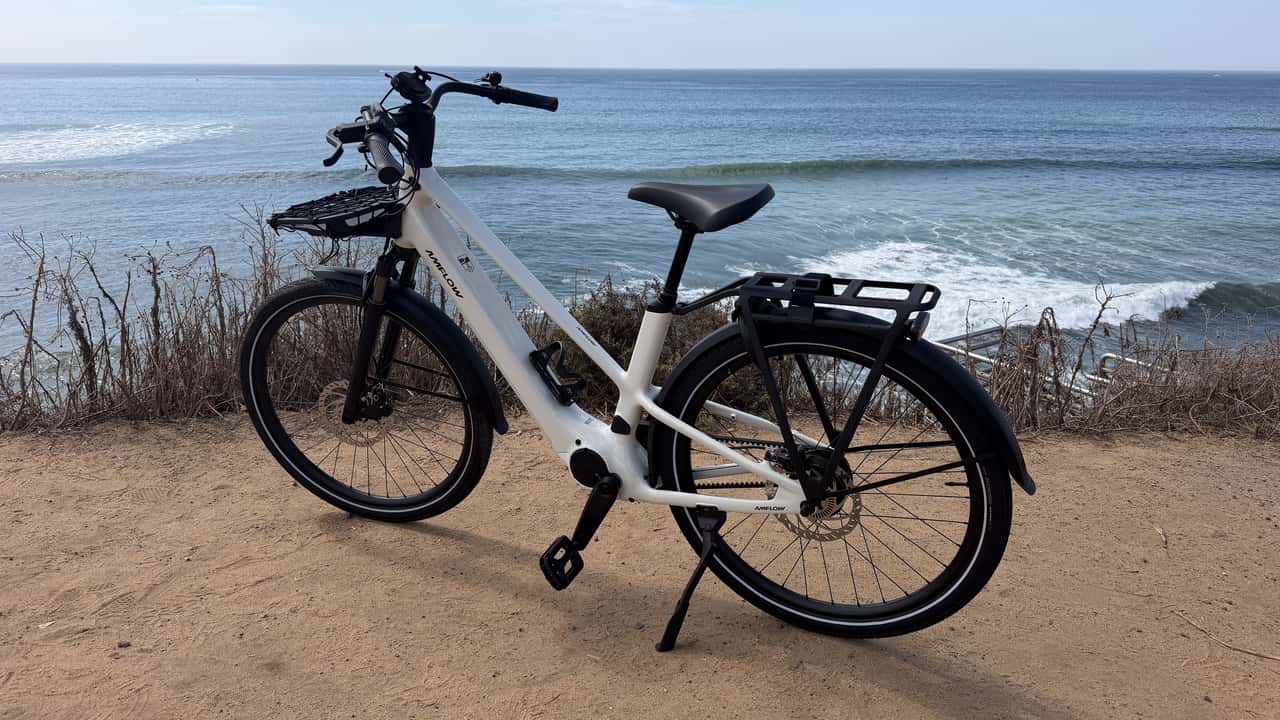
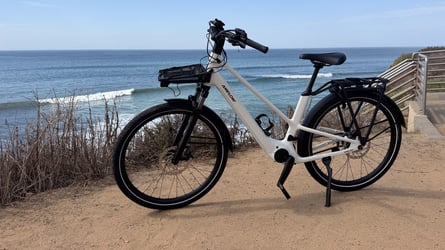
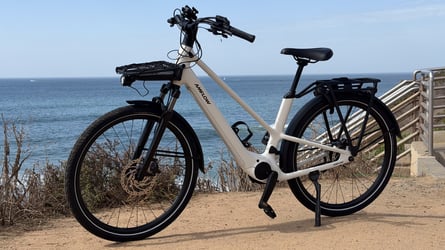
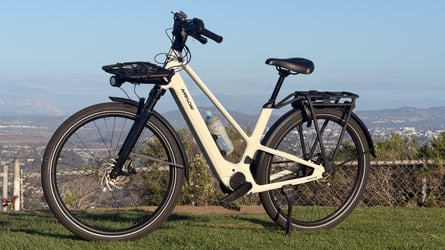
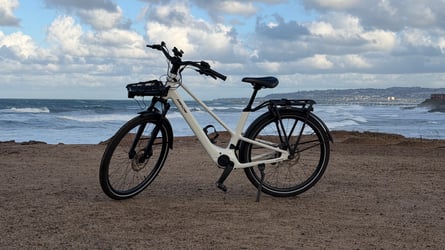
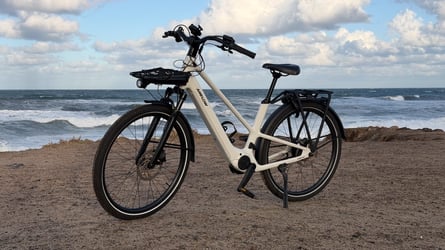
Amflow is getting into the commuter e-bike game. The DJI-incubated brand already disrupted the e-mountain bike market with its PL line, but it's now bringing the same motor tech to a line of urban bikes. After a month riding the Amflow UE Carbon Pro, I’m convinced the brand be just as competitive in the premium commuter segment. (Full Disclosure: Amflow sent me a UE Carbon Pro for this review.) What Is It? Photo by: Mack Hogan/InsideEVs Amflow is the demonstration brand for Avinox, the brand of e-bike parts and motors that was incubated by drone giant DJI. (The companies are separate and a spokesperson clarified that DJI has no involvement in the current series of motors.) The centerpiece of the empire is the Avinox Drive System, a series of mid-drive e-bike motors. The company has already disrupted the e-mountain bike space with its powerful, quiet, and smooth powertrains; now it is doing the same in the commuter market with the new UE line. The UE Carbon and UE Carbon Pro do not come with high-travel shocks for leaping over rocks; that’s the Amflow PL’s game. Instead, the UE comes with 65 and 35 mm of front and rear suspension travel, respectively, and an upright seating position for relaxed urban commuting. There’s a cargo rack on the rear and a nice basket up front, complete with tie-down netting and an underslung light. Taken altogether, the UE presents as more bicycle than motorbike, more unassuming than bold. That’s all the better; no one expects it when I unleash all 1,100 Watts of peak power and zip right by. Its 125 Newton-meters of torque eclipses some hatchbacks from earlier this century in a package that itself weighs just 46 pounds. It is, in a word, brisk. And light. It’s a full 20 pounds lighter than something like an Aventon Level 4 Rec, and you feel that everywhere. It is not cheap, however. Pricing starts at $3,499 for the UE Carbon and $3,899 for the UE Carbon Pro. The Pro model is mostly distinguished by its Gates carbon belt-drive powertrain and three-speed internal hub. The standard model comes with a more conventional ten-speed rear derailleur. One quirk on the UE: You shift modes with the clicker on the left, but gear selection is handled by the rocker below that, which is mounted out of your eyesight. It's a bit confusing, and I would prefer a separate shifter on the other side of the bike. Photo by: Mack Hogan/InsideEVs Both the UE Carbon and UE Carbon Pro come with all of the gadgetry you’d expect from a modern e-bike, and more on top. There’s a traction control system to keep your tires in check. Apple Find My integration helps you locate it if it gets nicked. A built-in wheel lock and motion alarm help prevent that from happening in the first place, as does a keycode on power-up. If that’s too fussy, you can also use the passive entry system to unlock it as your phone approaches (though this was spotty in my testing). It’s got automatically activated lights with a high and a low beam, too, and a wireless charging pad that clamps your phone onto the head tube. Finally, the Pro model’s belt-drive setup is a nice premium add-on. The three-speed hub is a sealed internal component, and the belt is carbon fiber, meaning there’s no lubrication or degreasing required and no chain or exposed gears. The belt is supposed to last 10,000-20,000 miles and just occasionally needs to be rinsed with a hose to wash off any caked on debris. The bike’s frame is carbon, too, and most of the rest is plastic, so there’s nothing really to rust. The UE has a wireless phone charger that clamps your phone to the head tube. It works very well. Photo by: Mack Hogan/InsideEVs For my situation—my bikes live outside in an area with salty sea spray—it’s the ideal low-maintenance vehicle. Eventually the Maxxis 26×2.0” tires and the pads for the Magura 180mm disc brakes will need to be replaced, but these are cheap and easy to access. Until then, all there is to do is pump up the tires and charge the battery. The 600 Wh lithium-ion battery is easy to remove and can be charged inside or outside of the frame. Charging from 0-100% takes a claimed 2 hours and 23 minutes, and Amflow says this will be good for up to 82 miles (132 km) of range. As usual with e-bike range figures, hitting this number is unlikely in regular human usage. So let’s get into the real-world experience. What’s It Like In The Real World? I sampled the Pro model for a month in the lead-up to its reveal. I came away impressed. I’m a noted skeptic of e-moto style bikes. I think the value of an e-bike is amplifying your movement, not just serving as a workaround to sell electric motorcycles to teenagers. And if you agree with me, the Amflow UE is about as good as urban bikes get for the price. It has no throttle and no free power. If you want to move, you pedal. But it provides the most natural blend of human and mechanical input I’ve felt. In Auto mode, the UE feeds power in to match your effort. Pedal hard and it pushes hard. Slow down and it unwinds. In its top mode, the UE amplifies rider input by up to 8x, giving me enough power to rocket up ultra-steep San Diego hills with barely any effort. The UE defaults to being a Class 2 pedal assist bike with a top speed of 20 mph. You can bump the speed limiter up to 28 mph, but it resets every time you turn the bike off. Photo by: Mack Hogan/InsideEVs The three-speed internal hub also switches gears quickly and without issue, though I did hear some unhappy noises if I shifted under hard load. It can also shift while the bike is stationary, which is nice for when a stop sign catches you out. And if you’re ever overwhelmed by the power, you can adjust it on the fly. I added a custom “Tour” mode to my bike as a middleground between the power-sucking Auto mode and the thigh-burning Eco setting, helping me strike a better balance than the factory settings allow. That Eco mode is my one big complaint about the bike. Many e-bike manufacturers offer an Eco setting for endurance, but they typically feel a bit more sprightly than this, at least in my experience. The ultra-low power output combined with only three selectable speeds made Eco essentially unusable in my hilly neighborhood. (It may be more usable on the derailleur-having model.) And since it’s certainly required for that 80-plus-mile claimed range, I wouldn’t count on that in the real world. Photo by: Mack Hogan/InsideEVs In fact, over 120 miles of real-world testing, I typically managed between 30 and 50 miles in riding that covered a lot of hilly ground. I used 74% of the battery on a 23.17 mile test ride with 990 ft of climbing. That involved a mix of primarily Auto and Tour modes, with occasional dips into Eco for cruising and Turbo for climbing. Considering that route included a steep climb up the 823-foot-tall Mount Soledad in La Jolla, I think it’s a fairly solid showing. The Amflow on top of Mount Soledad. Photo by: Mack Hogan/InsideEVs I also got off the bike feeling great. I adjusted the pre-load on the front fork for the softest possible ride, a decision which has paid off well. The bike is cushy over potholes and still sharp on tough corners. That being said, if you’re a speed demon, be warned. A lot of my riding involves a chained-together series of alleyways and backroads with quick elevation changes. On this route, most e-bikes are a blast. The UE, with its extra power and lighter weight, should shine. But it doesn’t. Unfortunately, that’s due to the traction-control system. When you’re riding hard and come to a point where the road rises steeply while you’re turning, the bike tends to assume you’re heading into an uncontrolled wheelie and cuts power. I can’t count how many times I went through a divot at a moderate pace and found myself forcing my legs against a suddenly resistive crank. This was accompanied with a beep and an “Attitude Error” warning on the display explaining that the motor was locked. You cannot disable this system. And because it locked up mid corner, a few times it threw my off balance. That was frustrating. So too is the weird wheel lock at the back. It has a built-in key that can only be removed when the lock is engaged. That would be fine, except it’s the same key shape that’s used to unlock the battery. If I want to use my U-lock rather than the wheel lock, then, I am leaving a key attached that can also remove my expensive battery. I’m forced to use the wheel lock every time. These minor issues fade away whenever the bike starts moving. It is so seamlessly in step with my every move and so absurdly quiet that I occasionally forget it is an e-bike. Top-end mid-drive models from the big name brands can be nearly as quiet and as smooth, but they cost more. And while I do occasionally miss having a throttle, the graceful way this thing leaves a stoplight in Auto mode is more than worth the tradeoff. It doesn’t feel like a machine I’m commanding, it feels like an Iron Man suit, amplifying my moves and fading into the background. Photo by: Mack Hogan/InsideEVs Conclusion The UE isn’t perfect. The passive entry is hit-or-miss, the wheel-lock design is confounding, the Eco mode is useless, and a middle-power mode should come standard, rather than me having to create my own setting. Many of these features feel thrown at the wall, and I’m still waiting to see what sticks. Those who mainly commute on high-speed roads should know, too, that the Class 3 mode with a 28 mph speed limit must be enabled from the touchscreen on every trip where you plan to use it; it cannot be the default. What do you think? But that’s ok. This is not trying to be a motorcycle for urban highways. It’s a bicycle, but more powerful. It looks, feels, and handles like a normal bike, but with all of the power of an e-moto. For me, that makes it the most satisfying e-bike I’ve ever ridden. (Correction 11/17/26, 3:06 PM ET: An earlier version of this story mistakenly called this a DJI product. While Avinox was incubated by DJI, the drone and camera brand, the companies are now separate. A spokesperson clarified that DJI has no involvement in the current-generation motors. We regret the error.) Gallery: Amflow UE Carbon Pro: Test 10 Source: Mack Hogan/InsideEVs Click here to see all articles with lists of the best EVs Got a tip for us? Email: tips@insideevs.com