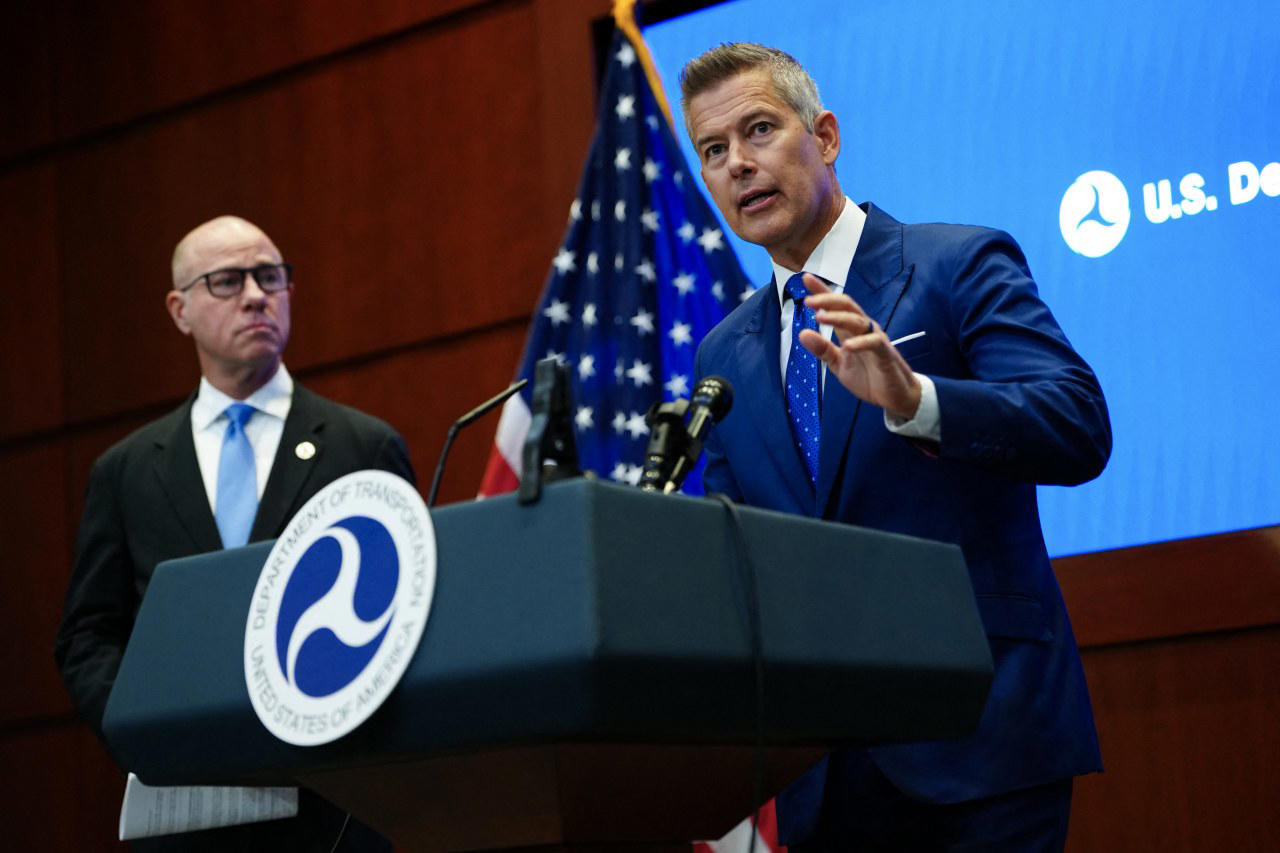
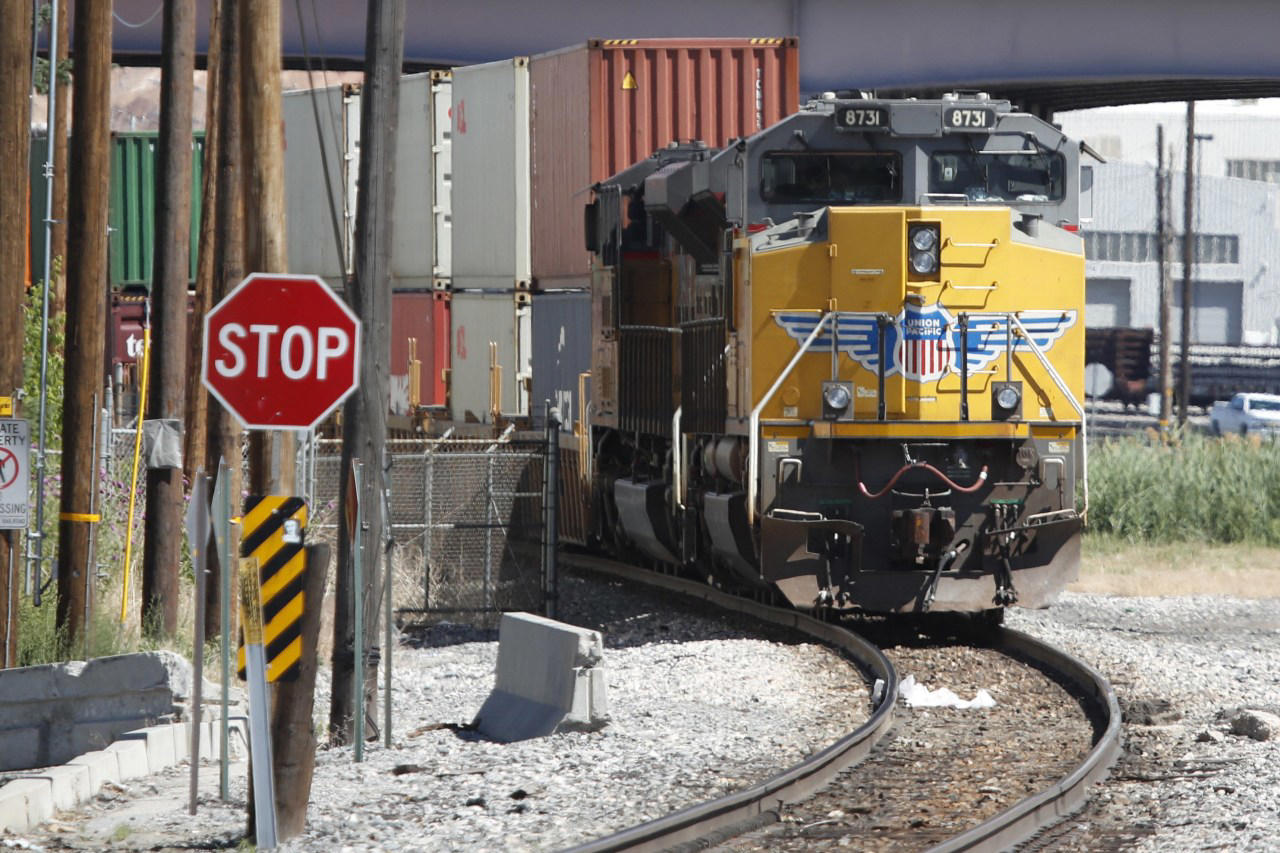
Transportation Secretary Sean Duffy (R) spoke alongside FAA Administrator Bryan Bedford (L) on Nov. 14. Air carriers spent the weekend recovering and rebuilding their schedules as the effects of Friday’s nationwide ground stop continued to reverberate through their operations, The Wall Street Journal’s Alison Sider writes. The Federal Aviation Administration’s move to halt all flight departures came in response to problems within the outdated system used by air-traffic controllers. Investigators focused on a site in Arkansas, where a router began to ping the network at a very high rate. Data from that router and another in Texas overwhelmed the system. The FAA didn’t yet know why the router began having issues, the Journal’s Andrew Tangel and Drew FitzGerald report. Transportation Secretary Sean Duffy said the agency was investigating a mechanical problem with the device itself or “incompetence” by L3Harris Technologies, which oversees the communications system known as FTI. An L3Harris spokeswoman said the company was supporting the agency’s probe. Duffy said Sunday that L3Harris secured the routers and is conducting diagnostics testing. He said the FAA, HPE’s Juniper Networks and Cisco engineers were assisting. FTI is undergoing a multibillion-dollar upgrade, and Duffy—who defended his decision to call the ground stop—said more disruptions could come until all copper wires in the system are replaced with fiber at the end of 2028. Radio broadcasts and airline-pilot messages show how the four-hour saga unfolded. (WSJ) A Copa Airlines plane struck the nose of a United Parcel Service freighter jet while the planes taxied at Miami International Airport on Saturday night, injuring two. (CNN) Number of the Day Total equipment posts on the DAT One spot truckload market in the week ended Nov. 13, up 9% from the week before, while load posts fell 6% Railroads Union Pacific’s CEO might have derailed his own deal, a $71.5 billion plan to create a transcontinental railroad that he touted as the future of freight, the Journal’s Esther Fung writes. It all goes back to March, when Jim Vena made private remarks at an industry event. The ultracompetitive, tough-talking executive threatened anyone who spoke out against Union Pacific’s proposed combination with Norfolk Southern, which is currently awaiting regulatory approval. Union Pacific said it doesn’t retaliate against customers and that its CEO had made an offhand comment. The company had spent months trying to prevent the recording from going public. Now that it is out, opponents of the deal have amped up their warnings about creating a rail giant with enormous pricing power. The Surface Transportation Board, the federal agency that must approve the deal, has moved to reassure all the companies, farms and unions that would be affected by the deal that it is taking into account the influence that threats can have on public comment. In Other News Prices charged by U.S. producers rose less quickly last month than during their rapid increase in September, but wholesale inflation over the past year remains well above trend. (WSJ) China’s trade surplus surged past $1 trillion last month, but the soaring exports mask tepid consumer spending, falling investment and a real estate slump with no end in sight. (WSJ) Eurozone industrial production rose 0.2% in September, following a 0.5% decline in August. (WSJ) Canadian manufacturing activity stalled in September despite a tailwind from higher energy prices. (WSJ) Japan’s economy contracted for the first time in a year last quarter as energy-driven price growth hurt consumption. (WSJ) Stellantis offered to repay about $16.8 million in federal support after Canada’s government issued a notice of default over a planned Ontario plant sale. (WSJ) Cleveland-Cliffs will recall laid-off workers at its Stelco operation in Canada in response to increased customer demand. (WSJ) SpaceX successfully caught its massive Starship at a Texas launchpad after it returned from orbit, a major milestone for the commercial space industry. (WSJ) CMA CGM said its third-quarter revenue rose 31% year over year and transported volumes rose 5.5% as companies restocked inventories, and as investment in AI data centers and renewable energy increased. The Port of New Orleans filed a federal lawsuit seeking more than $1 million in damages from the owner and operator of the tanker Atlantic Asphalt, which crashed into and sank an American Cruise Lines vessel on Friday. (Splash247 | WSJ) President Trump extended the Jones Act waiver for an additional 90 days, to allow non-U.S. vessels to transport oil and commodities between American ports. (Bloomberg) High imports from Asia and flooding that disrupted BNSF Railway’s Southwest operations have extended dwell times for containers at the ports of Los Angeles and Long Beach. (Journal of Commerce) Japan’s Ocean Network Express, known as ONE, joined other major carriers by sending its first containership through the Red Sea for the first time in about three years. (Nikkei Asia) Meta Platforms will buy capacity from electric truckload carrier Nevoya to offset its carbon-dioxide emissions. (DC Velocity) The U.S. Postal Service plans to increase prices on some shipping services by an average of 5.9% starting Jan. 17, and to implement a permanent fuel surcharge. (SupplyChainDive) Hapag-Lloyd’s CEO said shippers and carriers need to find new ways to share the risk of market swings because fixing a rate for a full year isn’t working. (TradeWinds) Federal regulators revoked the registrations from well over 100 electronic logging devices for noncompliance and evidence some were used to falsify drivers’ hours-of-service records. (Transport Topics) About Us Mark R. Long is editor of WSJ Logistics Report. Reach him at mark.long@wsj.com. Follow the WSJ Logistics Report team on LinkedIn: Mark R. Long, Liz Young and Paul Berger. Forwarded this email by a friend? Sign up here >