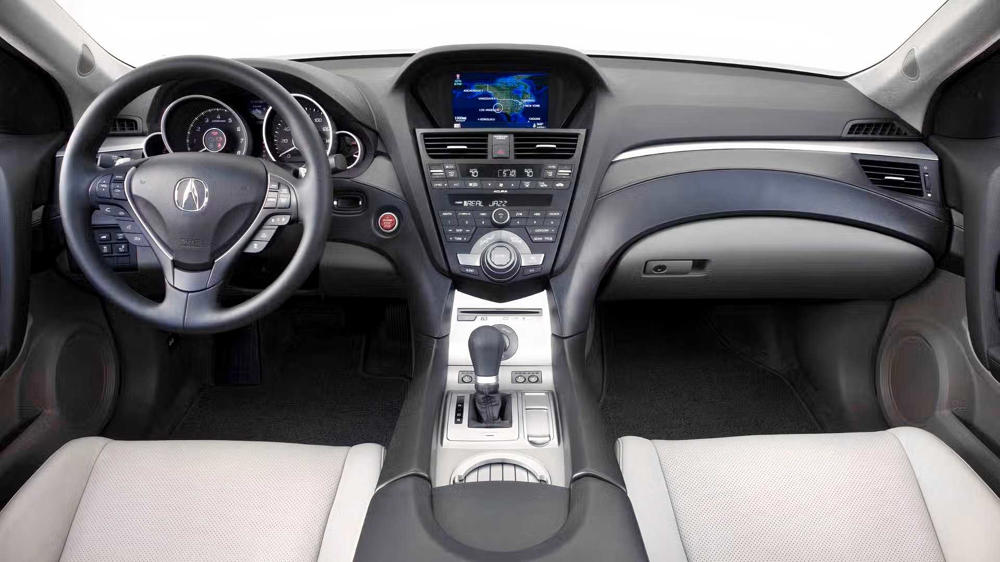
SUV buyers usually want a tall driving position, useful cargo space, easy rear-seat access, and a shape that defines itself. This quirky Acura took a different route. It brought 300 horsepower, luxury equipment, and all-wheel drive, but wrapped them in a sloping body that treated rear-seat space and cargo flexibility as optional extras. That made it difficult to justify when new. The 2010 model started at $45,495 before destination charges, placing it near established luxury SUVs, while offering less practicality than Acura’s own MDX. It looked dramatic, drove with real authority, and still made buyers explain why they should not simply invest in the more sensible Acura instead. Depreciation has now changed the point of view. It isn’t a universally sensible bargain, but it may appeal to those willing to trade conventional practicality for character. That tension matters today, because used-car buyers have the freedom to choose character over conformity — they aren't paying for Acura's original positioning anymore, but deciding whether its drawbacks are worth accepting now. Why The Acura ZDX Struggled To Find An Audience The first-generation ZDX arrived in 2010, when luxury buyers had loads of crossover choices. BMW had the X6, Acura had the MDX, and traditional SUVs were getting easier to drive. The ZDX sat between several categories. Acura marketed it as a four-door sports coupe, but it sat higher than a conventional coupe and offered five seats. Its roofline was hatchback-inspired, while its size and driving position suggested an SUV. The problem wasn’t lack of identity. It just had too much competition. The MDX offered family space, the RDX offered a sportier compact format, and the BMW X6 sold a dramatic shape. The ZDX made buyers accept compromises, without giving them a clear advantage in its category. Its sloping roof reduced rear headroom, while thick rear pillars and the tapering tail made reversing more dependent on the camera. Then there was the Acura MDX. It was more practical, easier to explain, and better suited to families. The ZDX cost more while compromising on cargo space and rear-seat area. Even its standard all-wheel drive couldn't overcome the fact that the vehicle looked like it was designed by someone who had lost interest in utility. The 3.7-Liter V6 Gave The ZDX A Serious Performance Case The gasoline-powered ZDX had legitimate performance numbers. Its 3.7-liter naturally aspirated V6 produced 300 horsepower at 6,300 rpm and 270 pound-feet of torque at 4,500 rpm. A six-speed automatic sent power to Acura's Super Handling All-Wheel Drive (SH-AWD) system, which could vary torque between the axles and direct more of it to the outside rear wheel in corners. SH-AWD was designed to improve cornering response as well as traction, helping the large crossover rotate more confidently through bends. It wasn’t a sports car, but it felt more eager to change directions when compared to most luxury SUVs of its era. On the highway, the ZDX made quick progress without working hard. The V6 delivered strong low and mid-range pull, while the automatic kept the engine in a useful power band. The engine built speed easily, which matched the ZDX's grand-touring personality, and the obvious trade-off was fuel economy. Acura claimed that the ZDX returned 16 mpg in the city and 23 mpg on the highway, with a combined figure of 19 mpg, and it required premium fuel. This, along with a 21-gallon fuel tank, provided reasonable range. Its Coupe Shape Takes A Toll On Practicality The ZDX offered 26.3 cubic feet of luggage area at the rear and 55.8 cubic feet with the rear seats folded. Those numbers were decent, but not impressive for a vehicle of this size. The sloping roof and rising beltline made the rear space feel less open than the dimensions suggested. Rear-seat headroom measured 35.3 inches, while the lift-over height and broad tailgate made loading heavier items awkward. The folding seats created a nearly flat loading area, but the ZDX remained less useful than the MDX or a more conventional luxury crossover. Rear visibility was another compromise, with the split rear window and backup camera offering the only relief, but the thick pillars still required extra caution in tight spaces. Why Depreciation Makes The ZDX Interesting Today 2010 Acura ZDX interior shot showing front cabin Depreciation has changed the ZDX’s value equation. Kelley Blue Book places a 2010 ZDX’s private-party value between roughly $5,500 and $7,050 depending on condition. Actual prices vary with mileage, trim, location, and history, but buyers can now access 300 horsepower and upscale equipment for used-crossover money. For the right buyer, the ZDX is an attractive proposition. The ZDX offers leather, premium audio, navigation on higher trims, a panoramic roof, a power tailgate, SH-AWD, and a cabin that still feels more special than the average economy crossover. Its unusual styling also means it will stand out in a parking lot filled with anonymous utility vehicles. Be cautious, though; the low price doesn’t mean low running costs. Fuel consumption remains mediocre, premium gasoline is mandatory, and age-related repairs can quickly erode the purchase discount. Buyers should inspect the panoramic roof mechanism, suspension, brakes, cooling system, electronics, and SH-AWD service history. The age may also make the navigation and infotainment systems feel dated. Air-conditioning, power-seat function, parking sensors, and the powered tailgate should be tested. Labor at Acura dealerships can be expensive, while independent specialists may be easier on the wallet but also less familiar with ZDX-specific issues. Its Rarity Is Both The Appeal And The Risk Acura sold relatively few first-gen ZDXs between 2010 and 2013. While some buyers may find that rarity appealing, it can make body panels, trim pieces, and specialist repairs harder to source than parts for an MDX or RDX. So, a clean example with documented service is worth the premium, because finding another one in similar condition may be challenging. The ZDX is not a particularly sensible SUV, and that is exactly why it is interesting now. It combines 300 horsepower, SH-AWD, upscale equipment, and a shape that never received appreciation when new. For the right owner, Acura’s experiment is no longer an expensive mistake. It is quick, rare, and slightly impractical as a luxury crossover, which finally makes more sense with the showroom price out of the way. Source: Acura, BMW, The EPA, KBB, RepairPal

 Liked by Alexander Anderson, Evan Anderson



 Liked by Alexander Anderson, Evan Anderson