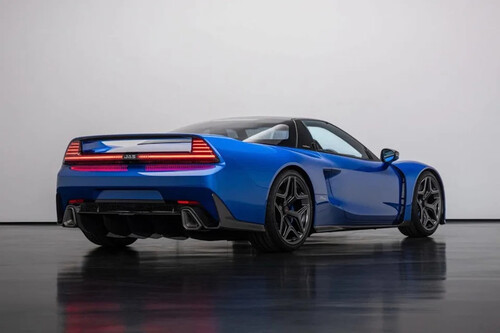
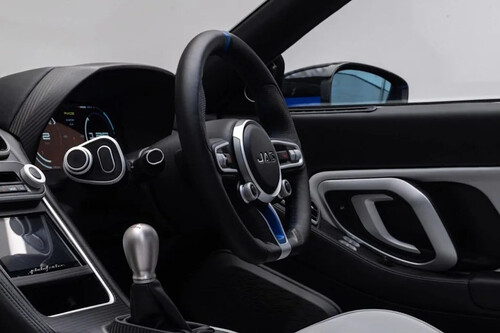
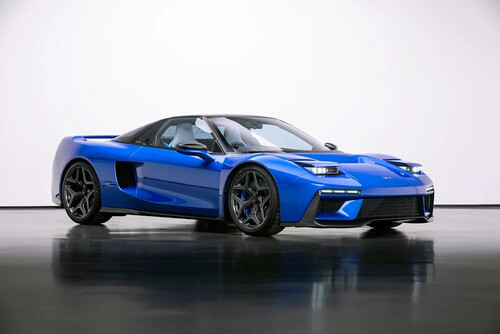
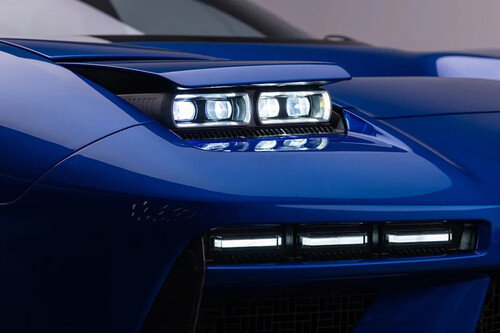
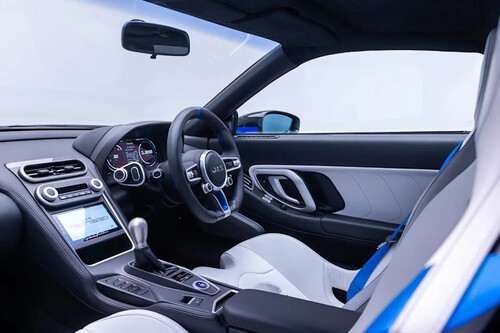
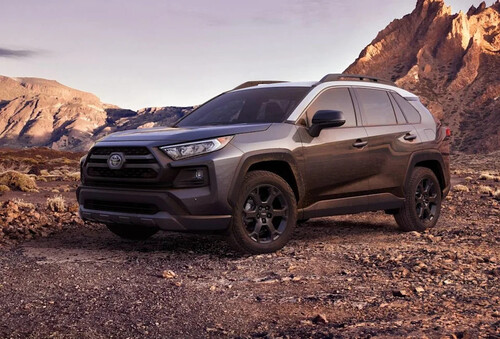
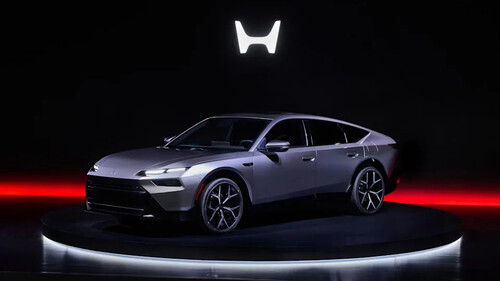
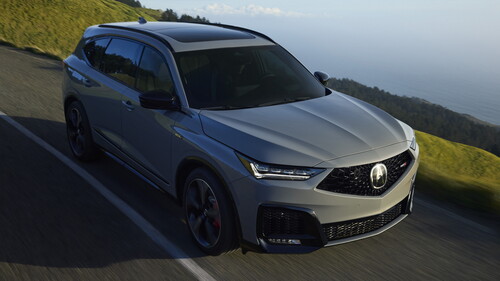
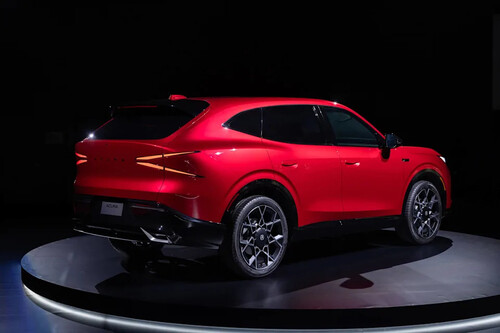
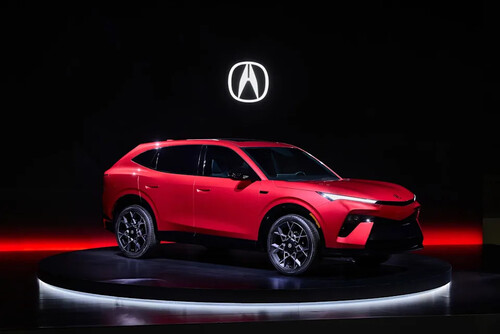
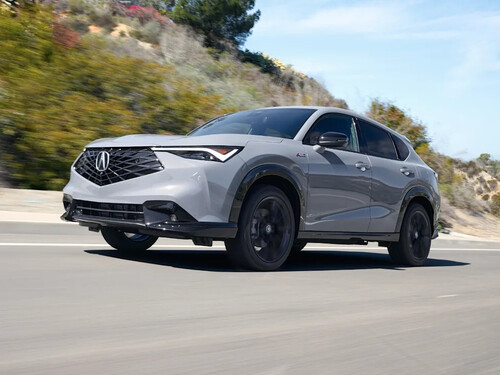
Acura NEXERA Vision: What Actually Reaches The Next RDX HybridAcura's new design language debuts on a coupe that doesn't exist, and lands on a crossoverAcura has a new face, and it arrived attached to a car nobody will ever buy.The NEXERA Vision broke cover ahead of its public debut at The Quail, and it is exactly what these things always are: a low, wide, impossibly clean styling exercise built to sell a philosophy rather than a product. What makes it worth more than a glance is where the ideas are actually headed. Per Acura's own announcement, the concept's new lighting signature will show up first on the fourth-generation RDX Hybrid. Not a coupe. Not a sports sedan. A compact crossover.AdvertisementAdvertisementThat's not a knock so much as a reading of the room, and the room got rearranged in March.The context nobody put in the press kitAcura is turning 40 with a lineup that just lost its next big product. Honda's corporate announcement on March 12 confirmed the cancellation of three EVs planned for North American production — the 0 SUV, the 0 Saloon, and the Acura RSX — citing tariff pressure on gasoline and hybrid profitability, a slowdown in U.S. EV demand tied to eased fuel regulations and revised incentives, and eroding competitiveness in Asia. Honda pegged the total damage at as much as 2.5 trillion yen, said it would strengthen hybrids instead, and disclosed that senior executives would give back a chunk of their pay.So when a design study debuts and the one confirmed production application is a hybrid crossover's headlights, that's the strategy talking. The RDX Hybrid is now carrying weight that was supposed to be shared.Related ArticlesNASCAR's New Stage-Break Rule Doesn't Fix Its Real Time Problem, Says a 23XI SpotterA Stolen Car Stop in Kansas City Turned Up Two Baby Goats, and a Lesson in How Vehicle Recoveries Actually WorkAdvertisementAdvertisementWorth noting from the release's own boilerplate: Acura describes its lineup as four models — Integra, ADX, RDX and MDX. The TLX is not among them. It also states that roughly 85% of Acura vehicles sold in America in 2025 were built in America, which, given what Honda just wrote about tariffs, is not an incidental line.Phantom lighting is the actual engineering storyThe concept's headlights and taillights hide behind bodywork and reveal themselves only when illuminated, which is why the surfacing reads as uninterrupted. It's a lovely trick and a legitimately difficult one to productionize.Federal lighting rules require headlamps to deliver specified light intensity at specified angles, including to the sides, so other drivers can see you from an intersection. Any material you put between the light source and the road attenuates output and scatters the beam pattern. Making that work means either a panel engineered to be effectively transparent at the relevant wavelengths, or a lamp powerful enough to punch through it while still controlling glare — and glare control is what separates a legal headlamp from an expensive lawsuit. Concealed lighting isn't new to American roads, but the classic pop-up solved the problem by physically getting out of the way. This approach doesn't have that luxury.AdvertisementAdvertisementThere's a repair-cost consequence too, and it's the one owners will eventually feel. Every time a lighting element gets integrated into a structural or cosmetic body panel rather than bolted into a discrete opening, minor front-end damage stops being a headlight swap and starts being a panel replacement plus calibration. That's the same dynamic that has quietly pushed repair severity upward across the industry as sensors migrated into bumpers and grilles, and it's a real input into what your comprehensive premium looks like a few years down the road. If you're shopping the next RDX, ask what a corner hit costs before you fall in love with the surfacing.The parts that stay on the concept lawnAcura says the NEXERA Vision wears 22-inch centerlock wheels — a first for the brand — over carbon-ceramic Brembos, with forged carbon in the front fascia, rear diffuser, rocker panels and inner door structures. Dual-hinge butterfly doors and an active rear spoiler round it out.None of that is coming to a crossover, and it's useful to understand why beyond cost. Centerlock hubs are motorsport hardware: one large nut, torqued to a specification that requires a calibrated wrench and a technician who knows what happens if it's wrong. They exist to speed pit stops, not to improve your Tuesday. Directional wheel designs also mean side-specific fitment, so no cross-rotation. Carbon-ceramic rotors are magnificent and effectively last forever under street use, but the pads that work with them are expensive and the rotors themselves cost several times an iron equivalent when they finally do need replacing. On a two-ton hybrid family hauler, they'd be an accounting error dressed as a feature.AdvertisementAdvertisementThe interior detail I find most interesting is the fixed seating. Acura mounted the front seats directly to the floor and made the pedals and steering wheel move to the driver instead. Race cars have done this forever because it drops the hip point, kills weight and eliminates the structure a sliding seat requires. Getting it through federal occupant-protection requirements is another matter, because airbag deployment strategies are calibrated around occupant distance and seat-track position sensors. Solve that, and you also have to fit a genuinely wide range of human beings using pedal and column travel alone. It's a fascinating packaging idea and a regulatory headache, which is precisely why it lives on a show car.Materials as compliance groundworkThe cabin uses recycled aluminum, Alcantara made with certified post-consumer recycled polyester, and something Acura calls CircuLeather, described as a genuine leather designed for a more circular material lifecycle. Creative Director Yasutake Tsuchida framed sustainability as part of how premium gets defined.Related ArticlesJCB's Hydromax Just Set a 406-MPH Hydrogen Land Speed Record With an Engine You Can Still Buy in a BackhoeTriumph Replaces Its Commercial Chief With Two Executives And A BMW HireAdvertisementAdvertisementRead that as more than mood-boarding. Recycled-content requirements are tightening in global markets, and material suppliers don't develop bespoke chemistry for one concept car. Automakers validate these things on show cars precisely because a concept is where you can trial a supplier's process without a warranty exposure. If CircuLeather works, you'll see it in a production interior; if it fails a wear or UV test, nobody outside Torrance ever hears about it.What to actually take from thisConcept cars are a promise about proportion, and proportion is the hardest thing to keep. A long dash-to-axle ratio and a one-motion roofline are cheap on a 2D show car with no crash structure, no pedestrian-impact hood clearance and no rear-seat headroom requirement. They get very expensive on a crossover.So the honest expectation for the next RDX Hybrid is this: the lighting signature will make it, some of the surface language will survive in diluted form, and the rest is theater. That's not cynicism — it's how this has always worked, and Acura is at least being unusually specific about which piece transfers.AdvertisementAdvertisementThe NEXERA Vision heads to the Pebble Beach Concept Lawn on Sunday. It'll look sensational there, and it should. It's the last unconstrained thing Acura gets to show for a while.Images Via: Acura