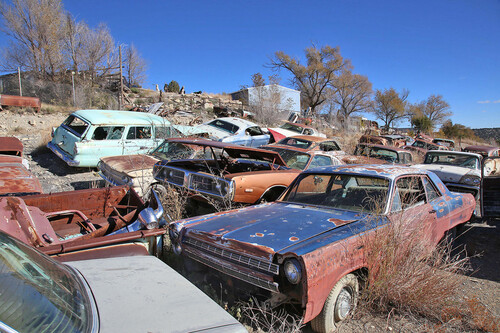
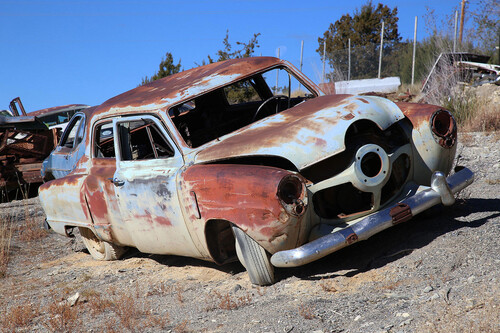
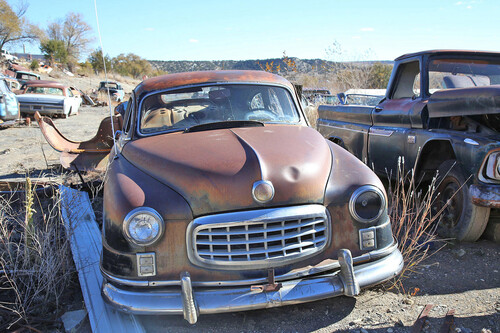
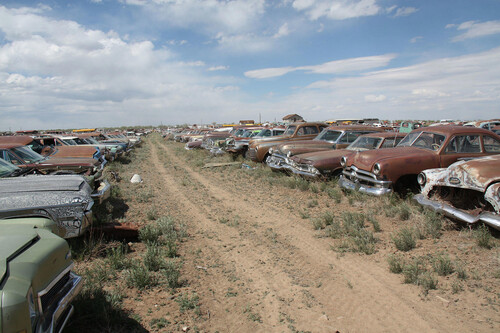
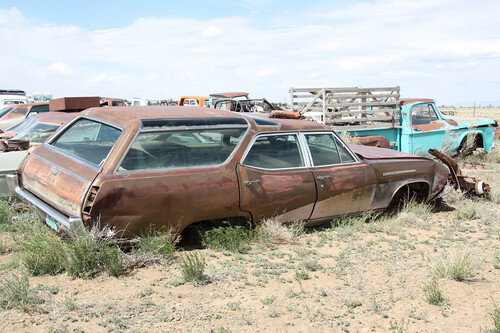
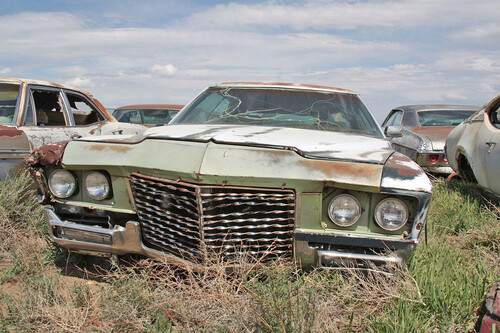
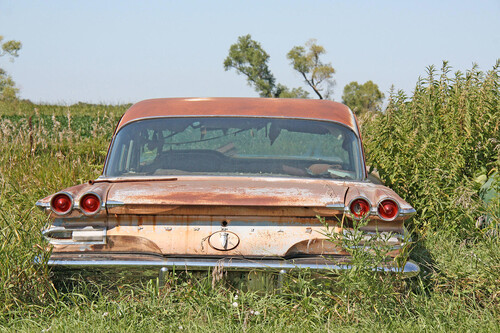
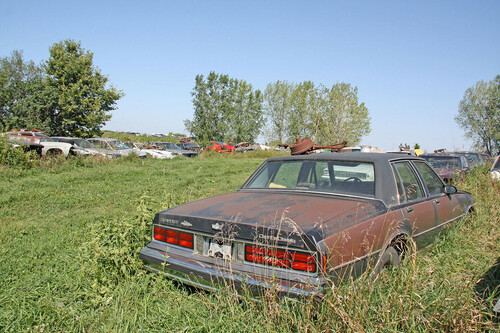
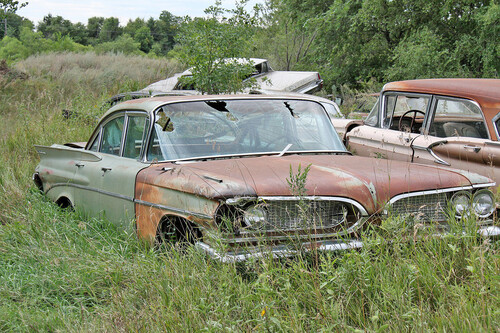
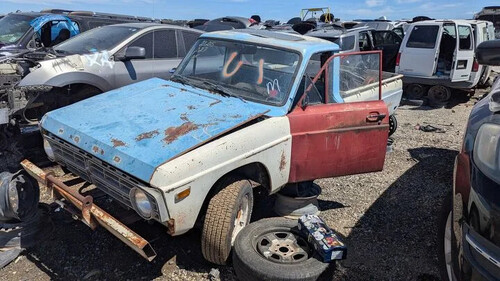
A California Junkyard Just Burned Down Again. Congratulations, That's Seven Since MarchEarly Sunday morning, a fire tore through an auto wrecking yard on Crows Landing Road in Modesto, California, destroying roughly 100 vehicles before firefighters stopped it from reaching a nearby mobile home park. Crews had the blaze under control in about 80 minutes. Nobody was hurt. The cause is still under investigation.Garage Deals: Nowell Leather's Hand-Stitched EDC Gear Belongs in Every Gearhead's GloveboxIf that were the whole story, it wouldn't be much of one. Junkyards catch fire sometimes. But Modesto isn't an outlier. It's the seventh major auto salvage yard fire in the United States since March, spread across five states, and three of those seven happened in California alone within the last three weeks. At some point, "bad luck" stops being a satisfying explanation and starts looking like a pattern with a cause.AdvertisementAdvertisementHere's the roll call. In March, a brush fire in Emanuel County, Georgia jumped U.S. 80 and tore through a wrecking yard, ultimately consuming somewhere between 500 and 750 vehicles and pulling in more than a dozen fire departments. In May, a junkyard fire in Opa-locka, Florida spread into five neighboring businesses, destroyed more than 800 salvaged cars, and forced 125 residents to evacuate. In June, the Median wildfire outside Wendell, Idaho tore through a family salvage yard that had operated since the 1960s and left 9,000 of its 10,000 cars as ash. Later that same month, a Houston County, Georgia junkyard fire needed 10,000 gallons of water and 250 gallons of firefighting foam just to get under control. Then California took its turn: Rancho Cordova on July 3, Pacoima on July 9, and now Modesto on July 19.That's not a crime wave. It's a design flaw.A used car is not inert once it's off the road. Most still carry some amount of gasoline, oil, transmission fluid, coolant, and refrigerant, the exact mix of liquids fire investigators look for whenever a small fire turns into a massive one. Add four rubber tires and a cabin full of foam and plastic, and a single dead car parked in a field is basically kindling with a windshield. Multiply that by hundreds or thousands of vehicles parked nose to tail with no required firebreak, because fire codes were written with buildings in mind, not open rows of cars, and you've built the conditions for exactly what keeps happening across the country.The ignition source, it turns out, barely matters. That's the detail that should surprise you.AdvertisementAdvertisementThe Georgia and Idaho fires didn't start with a car at all. They started as ordinary wildland brush fires that happened to reach a yard full of parked inventory sitting in grass gone dry from heat. Once a wildfire finds a salvage yard, it isn't fighting one target anymore, it's fighting hundreds of small, individually fueled ones parked close enough to share paint. That helps explain why crews in Idaho needed bulldozers and excavators to dig out buried hot spots for days after the flames looked out, and why Miami-Dade Fire Rescue described doing much the same in Opa-locka. A junkyard fire is rarely finished when the visible flames go dark, a lesson The Auto Wire has explored before through one firefighter's account of what it actually takes to put out a single burning car, never mind a few hundred of them at once.Elsewhere, the ignition sources have been almost absurdly small. Georgia fire officials have already traced one 2026 fire that spread across multiple parked vehicles back to a single discarded vape battery, the same class of lithium-ion cell already fueling a much larger debate over electric vehicle fire risk. Old-fashioned wiring faults and arson haven't gone anywhere either, but they're no longer the only way a row of cars catches fire. They're just the most familiar one.Here's the second detail worth knowing, and it's the one that explains why these losses keep landing on family businesses instead of insurance companies: standard commercial property insurance is written to cover buildings, not inventory sitting in an open field. L&L Classic Auto's manager, Jesse Johnson, put it plainly after the Median Fire: "there is no way to insure junk cars sitting in a yard." In Opa-locka, business owners told local reporters much the same thing, their policies covered the structures on the property, not the salvaged cars and used parts that were actually destroyed. That's not a loophole one unlucky owner missed. It's close to the industry norm, in the same way owners of wrecked personal vehicles regularly discover their insurer's definition of a "total loss" bears little resemblance to what the car was actually worth to them.That distinction changes what a junkyard fire actually costs. The value in a salvage yard was never really the scrap steel, it's the used parts: the alternator, the door panel, the transmission a body shop or a home mechanic would have paid real money for. Once that inventory burns, what's left is worth a fraction of what it was, priced now only as recyclable metal. A car worth a couple thousand dollars in parts becomes worth a couple hundred in scrap. Multiply that gap across a hundred vehicles, or nine thousand of them, and a fire with zero serious injuries can still end a 35-year-old family business, which is roughly what has already happened in both Opa-locka and Gooding County.AdvertisementAdvertisementIt's worth remembering who else absorbs the damage. Every yard that burns removes a source of cheap used parts from a market where new parts and repair costs keep climbing. Neighbors get evacuated and told to stay indoors while burning tires and plastic trim send acrid smoke into the air. And there's a real irony in the fact that America's junkyards, the places where old, unloved, rotting cars have always gone to be picked apart for whatever's left of them, have become the site of some of this year's biggest fires, rather than the quiet resting place most people assume they are.None of this means all seven fires share one cause. It probably means the opposite. Wildfire, wiring faults, dropped vapes, and plain bad luck are all landing on the same kind of property, one with no engineered defense against any of them and no financial cushion once one hits. That's the story hiding behind "another junkyard fire." It was never really about how the fire started. It's about an entire industry storing its whole product line outdoors, wheel to wheel, uninsured against the one risk that should worry it most: a spark finding the first car in a row of thousands, with nothing built in to stop it from finding the rest.Join our Newsletter, follow our Instagram page, and connect with us on Facebook.