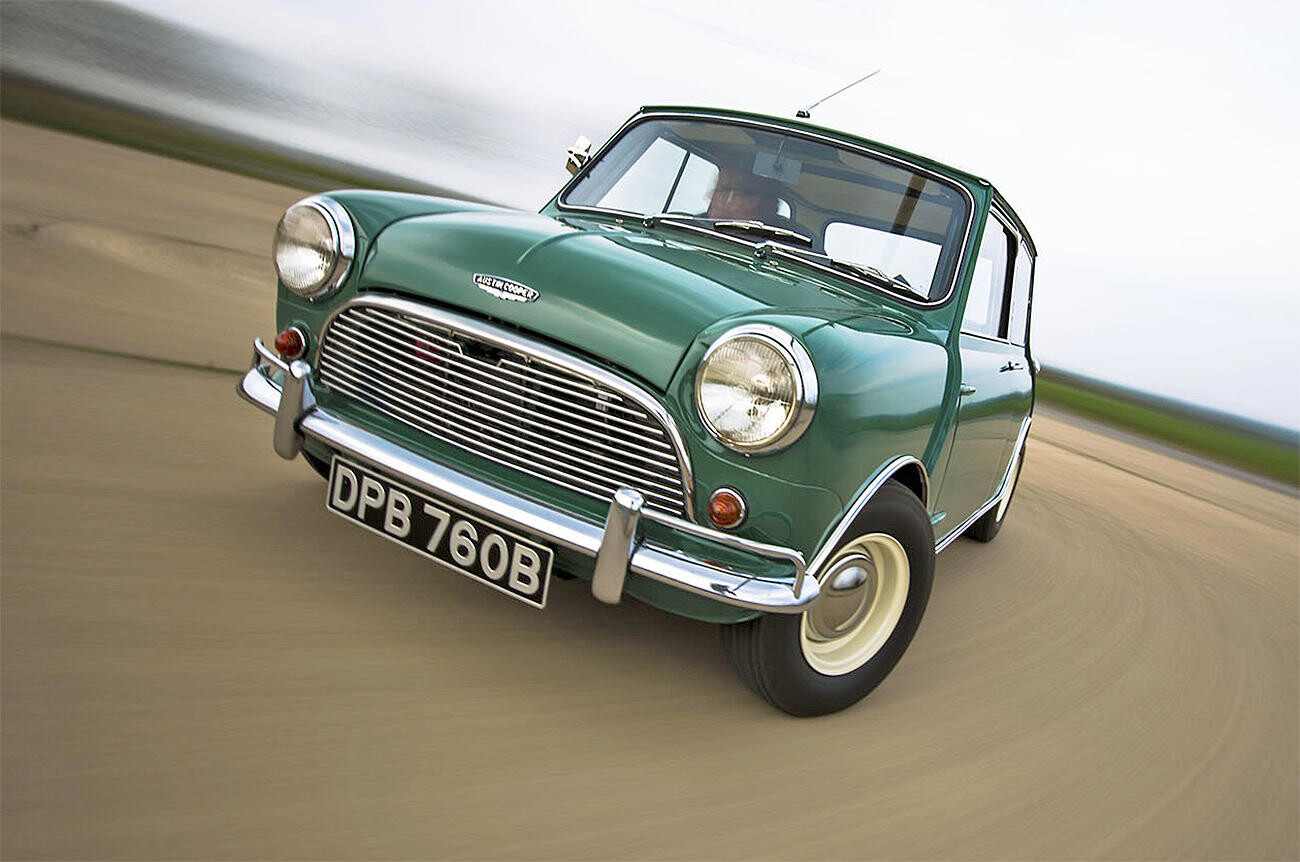
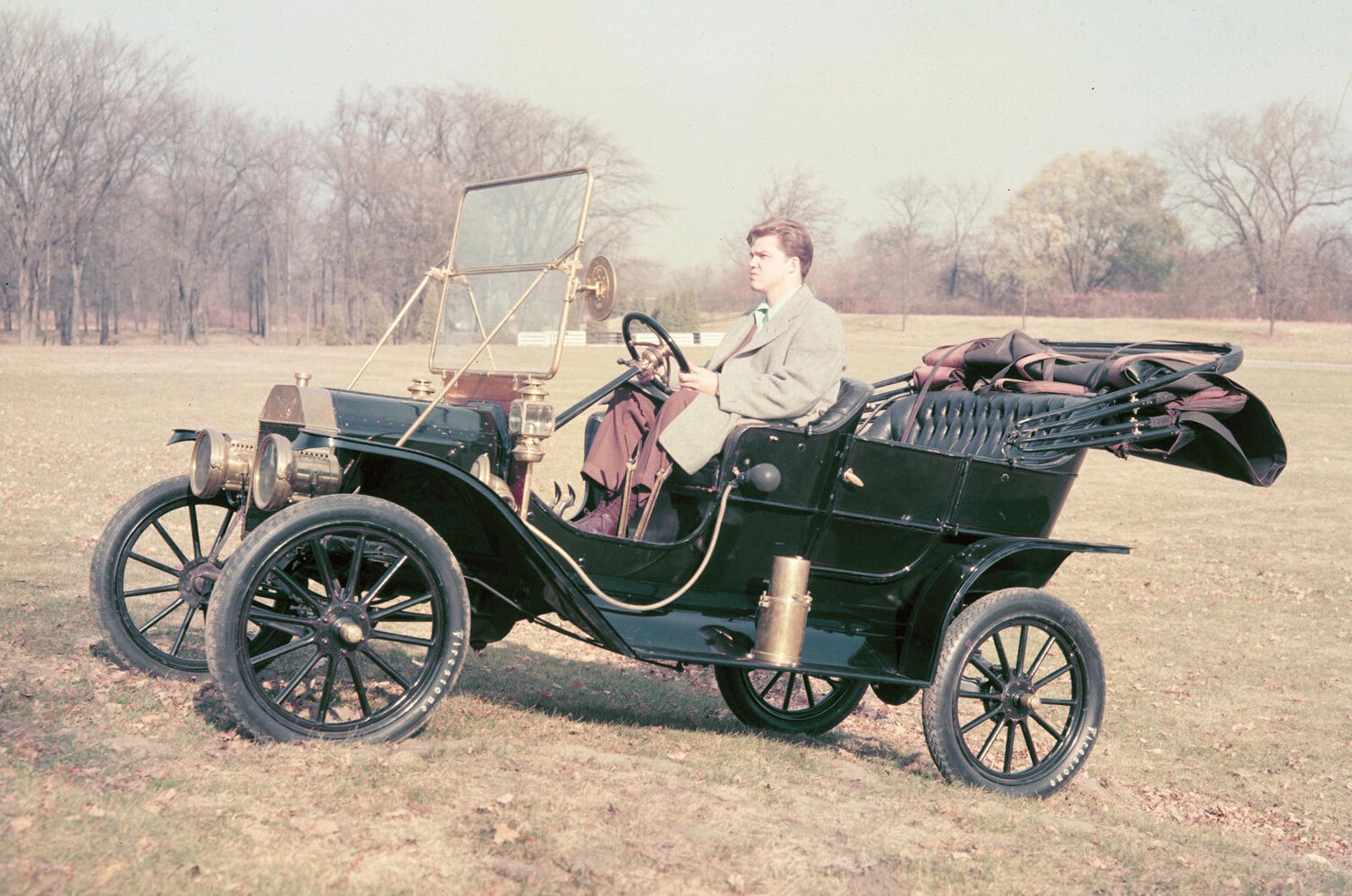
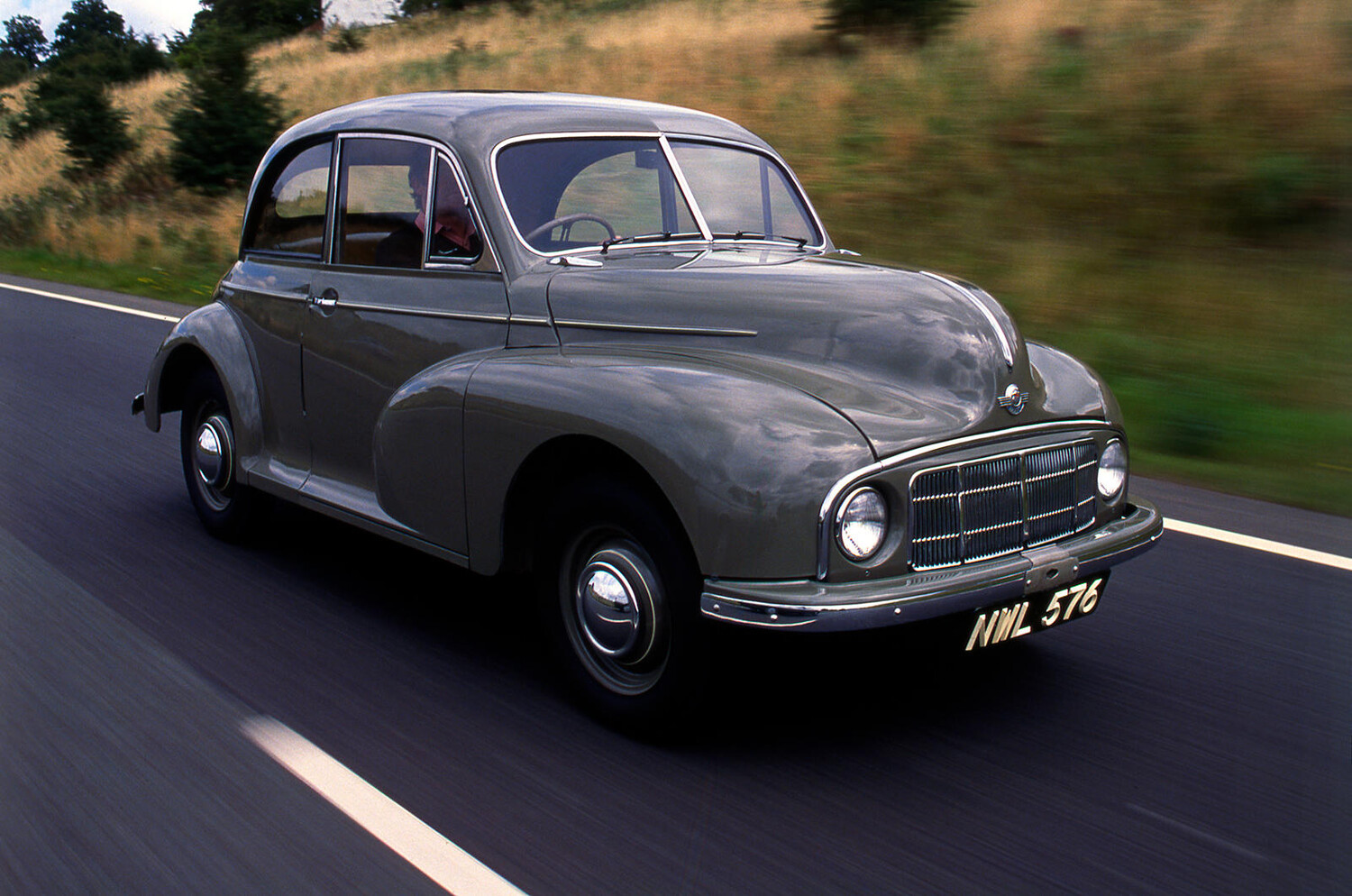
When Citroën launched the Traction Avant in 1934, front-wheel drive was a gamble, and the company went bankrupt that same year. Today, most new cars send power to the front wheels. The early believers took the risk, and their ideas outlived the doubters. Those pioneers were often strange, sometimes underpowered and almost always ahead of their time. Yet each one solved a real problem, whether that was space, grip or a lower roofline. That’s why they feel relevant behind the wheel today. These are our picks, seven front-wheel-drive classics that we think refuse to become obsolete. The choices are our opinion. By contrast, the engines, dates and production figures come from period data and the references linked in the list. 1. 1950 Citroen Traction Avant 11 BL The Traction Avant combined three big ideas in one car: a welded unitary body, front-wheel drive and independent torsion-bar front suspension. André Lefèbvre and Flaminio Bertoni designed it around 1933 and 1934. However, Citroën itself declared bankruptcy late in 1934, the year the car launched. Its biggest creditor, Michelin, took control and kept it until 1976. The car survived its rough start and stayed in production until July 1957. In the 11 BL, the “L” stands for légère, or light, meaning the shorter-wheelbase body. According to Hagerty UK, the 1,911cc four made 46 bhp. The same guide notes that skilled mechanics can pull the engine and gearbox in about 90 minutes. That long life says everything. A car designed in the early 1930s remained on sale more than two decades later, and it never looked old-fashioned. Our take: the 11 BL is the best way into Traction ownership, and it drives far better than its age suggests. Hagerty UK warns that rust is the biggest threat, since a weak monocoque can sag ahead of the windshield. Inspect the structure first, and grease the front axles on schedule. 2. DKW F89 The DKW F89 was the first postwar DKW, built in Düsseldorf. Auto Union built it from 1950 to April 1954 at a plant that Rheinmetall-Borsig operated under contract. Its steel body closely followed the prewar DKW F9 prototype, which never reached production before the war. Power came from a 684cc two-stroke twin making 23 horsepower at 4,500 rpm. That isn’t much, but the F89 weighed about 860 kilograms dry. A three-speed manual was standard, and a four-speed became an option after 1953. The two-door saloon rode on a 2,350mm wheelbase and measured 4,200mm long. That is a tidy footprint, and it made the car easy to place on narrow postwar streets. In short, the F89 kept a modern idea alive through hard times. In our view, the DKW F89 is a charming survivor from a rebuilding country. It’s slow and smoky by today’s standards, yet its layout looks smart even now. Better yet, it’s a car that draws questions at every show, because so few people have seen one. If you find one, look for a specialist who knows two-stroke engines, because general shops rarely do. 3. 1976 Audi 100 C1 Coupe The first Audi 100 was a front-drive sedan aimed a step above the brand’s earlier cars. Then, in autumn 1970, it added the Coupé S, a fastback that surprised plenty of buyers. The coupe used a bored-out 1.9-liter engine rated at 115 PS, while the base 100 used a 1.8. Even so, the styling did most of the talking. The roof sloped into a fastback, with louvers behind the rear side windows. Its taillights looked a lot like those of the Aston Martin DBS, which had arrived a year earlier. For a front-drive Audi, that was a bold look. Audi built 827,474 C1 cars in all, but only 30,687 were the Coupé S. As a result, the coupe is a rare sight today, and a 1976 car is a late example. Our take: the Audi 100 Coupé S is a stylish grand tourer that proves front-wheel drive can look elegant. It’s one of the most overlooked German coupes of the 1970s. If you shop for one, check the rear quarters and sills for rust, since body parts are scarce. 4. 1959 Morris Mini-Minor The Mini started with a fuel crisis. After the 1956 Suez crisis brought petrol rationing to Britain, BMC asked Alec Issigonis for a small, economical car. His answer was announced on August 26, 1959, and it changed small-car design for good. Issigonis turned the 848cc A-Series four sideways and put the four-speed gearbox in the sump. The engine made 33 bhp. That layout left about 80 percent of the floorpan for passengers and luggage. Alex Moulton then added compact rubber cone springs, which kept the suspension small and the ride firm. In our view, that firm setup is why a Mini still feels so eager in tight corners. The results speak for themselves. BMC and its successors built 5,387,862 Minis by October 2000. Meanwhile, Mini Cooper S models won the Monte Carlo Rally in 1964, 1965 and 1967. In our view, the 1959 Morris Mini-Minor is the most important front-drive car ever built. Its packaging set the template for small cars that followed. If you want an early one, verify its originality with a marque expert, since many have been upgraded with later parts. 5. Lancia Fulvia Berlina Lancia has always done things its own way, and the Fulvia Berlina proves it. Launched in 1963, the sedan used a narrow V4 engine with its cylinder banks just 12 degrees apart. Precisely, the original bank angle was 12 degrees, 53 minutes and 28 seconds, a number only Lancia would publish. It sat in front of the transaxle and drove the front wheels. The first engine displaced 1,091cc and made 58 horsepower with one carburetor. Then, from 1964 to 1969, Lancia sold the Berlina 2C with twin Solex carburetors and 71 bhp. You can spot one by the enamel “2C” badge on the grille. In total, Lancia built 192,097 Berlinas through 1972. The Fulvia name also carries competition credit. In 1972, Lancia won the Monte Carlo Rally, with Sandro Munari and Mario Mannucci first. That success gave the whole Fulvia family a halo. Our take: the Fulvia Berlina is the thinking person’s classic. It’s beautifully engineered and more practical than the coupe. If you’re shopping, check the subframe and floors for rust, and find a mechanic who knows the narrow V4. 6. 1931 Cord L-29 Speedster The Cord L-29 was the first mass-produced American car with front-wheel drive, reaching buyers months before the rival Ruxton. As Hagerty notes, it was introduced in September 1929, about a month before the stock market crash. Prices ran from $3,095 to $3,295. The engineering drew on Indianapolis racing. Former Miller engineer Cornelius Van Ranst designed the chassis, with Harry Miller consulting. According to Mac’s Motor City Garage, the Lycoming straight-eight displaced 298.6 cubic inches and made 125 horsepower. Late in production, the displacement grew to 322.1 cubic inches. The car rode on a 137.5-inch wheelbase with inboard front brakes. Without a driveshaft or live rear axle, the L-29 could sit far lower than rivals, under a very long hood. Historian Josh Malks counted exactly 5,010 cars built. By comparison, Hagerty says no more than 96 Ruxtons were ever made. In our view, a 1931 L-29 Speedster is one of the most dramatic American shapes of its era. It proves front-wheel drive could be glamorous long before it became common. If you’re ever in the market, research the car’s body and chassis history thoroughly. 7. 1982 Renault 4 GTL The Renault 4 was Renault’s first front-wheel-drive family car. It’s also widely recognized as the first mass-produced hatchback, thanks to its short rear and one-piece tailgate. Renault built more than eight million of them between 1961 and 1994. The engineering is delightfully odd. A dash-mounted gear lever works the gearbox through a rod over the engine, which leaves a flat cabin floor. Torsion bars suspend all four wheels. As a result, the wheelbase measures 2,440mm on the right and 2,395mm on the left. The GTL arrived in 1978 with the 1,108cc engine from the Renault 6 TL, tuned for economy rather than speed. Spot one by its grey grille, bumpers and door strips, which gave the old shape a slightly more modern face. A 1982 car comes from the later years, when the 4 was already an old design. Our take: the Renault 4 GTL is proof that clever packaging never ages. It’s slow, soft and endlessly practical. If you want one, check the chassis and floor for rust, and line up a parts specialist before you buy.

 Liked by Emily Lavoie, Connor Bouchard









 Liked by Emily Lavoie, Connor Bouchard