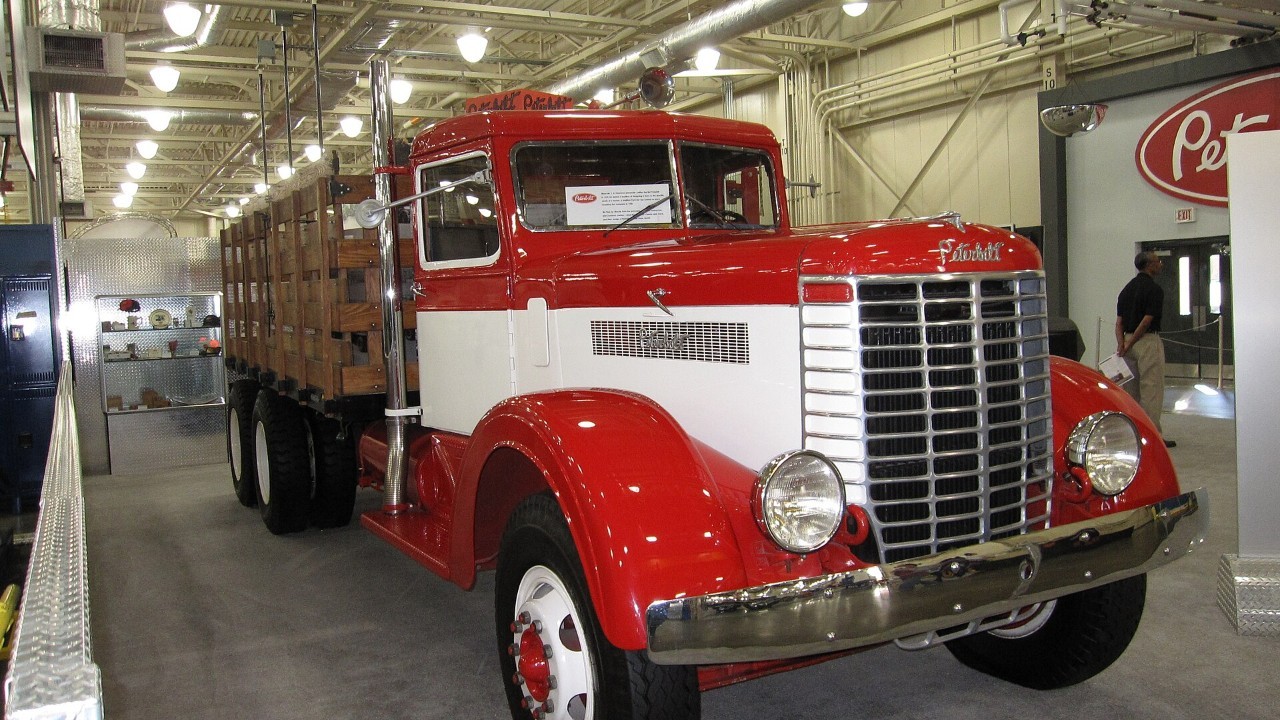
Peterbilt built just 16 trucks in 1939, and the 1939 Peterbilt 334 was one of its first two models. Today the red oval sits on some of the most recognizable rigs in America. Yet many of the trucks that got the brand there have slipped from memory. These are our picks for the Peterbilts that did more than anyone asked of them. The verdicts are our opinion. However, the dates, models and figures come from the trucking history sources listed at the end. 1. 1939 Peterbilt 334 Lumberman Al Peterman paid $50,000 for the Oakland plant, parts and tooling that Fageol left behind. He then renamed the trucks after himself. The first lineup had two models, and the Peterbilt 334 was the three-axle one with dual drive. In fact, all of 16 trucks left the plant in 1939. By 1940 that number had climbed to 93. For a company born from leftover parts, we’d call that a serious over-achiever. 2. 1954 Peterbilt 351 The 351 arrived in 1954, one year after the red oval logo first appeared. It had a narrow nose and a butterfly hood. Then it simply refused to leave. The 351 stayed in production for more than 20 years, which AuctionTime calls the longest run of any Peterbilt model. As a result, a design from the Eisenhower years stayed in the catalog well into the 1970s. In our view, that is over-achieving by any measure. 3. Peterbilt 282 The 282 rarely gets a mention when people talk about classic Peterbilts. That’s a shame, because owners keep bringing them back. Overdrive profiled Ken Joiner’s restored 1972 Peterbilt 282, for example. It runs a 450-horsepower Big Cam Cummins with a 13-speed transmission. He even used a wrecked 1977 282 as a parts truck to finish the job. Any truck worth that much effort decades later has earned its place here, in our book. 4. Peterbilt 362 cabover Peterbilt announced the 362 in 1981 to replace the 352. Fleets could order it with Caterpillar, Cummins or Detroit Diesel power, plus six cab lengths from 54 to 110 inches. In our view, that flexibility kept it relevant long after cabovers fell out of fashion. In fact, the last 362 VIN dates to 2003. Meanwhile, a maroon 1981 Peterbilt 362 even became a character in Pixar’s Cars. Not bad for a flat-nosed workhorse. 5. Peterbilt 310 low cab forward The 310 arrived in 1978 to replace the CB300, a low cabover that Kenworth and Peterbilt had shared. Peterbilt built it for waste management, a tough and dirty job. Sales fell short, mostly because Mack owned the refuse market. Even so, the 310 taught Peterbilt how to build a garbage truck. About ten years later, that lesson became the 320, so we’d say the 310 punched far above its sales. 6. Peterbilt 320 low cab forward The 320 replaced the 310 in 1987 and stayed on sale until the 520 took over in 2017. Its low cab forward design sat on a lowered doghouse for better visibility. The cab used aluminum with lap seams, too. Peterbilt aimed it at refuse collection. But owners later put it to work hauling construction loads, pulling tanker duty and fighting fires. Shoreline Truck Parts notes that the 320 made large market share gains after 2000. That’s a long way from the 310’s struggles. 7. Peterbilt 377 The 377 joined Peterbilt’s lineup in 1986, alongside the 357, 375 and the famous 379. Of course, the long-hood 379 grabbed the spotlight and later starred in Transformers. Instead, the 377 offered a sloped, more aerodynamic hood for owners who cared about fuel bills. Few people remember it now. But we think a truck that sold on common sense while its sibling sold on looks deserves a little credit.

 Liked by Nicole Mitchell, Justin Brown






 Liked by Nicole Mitchell, Justin Brown