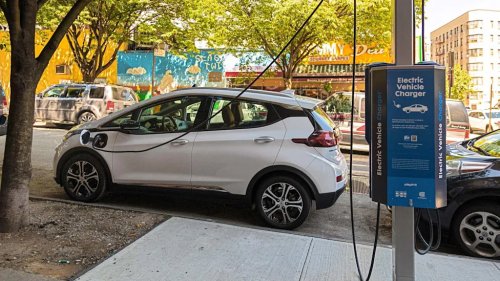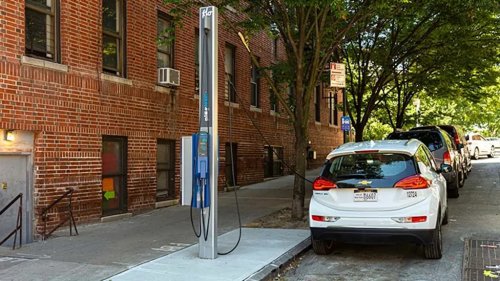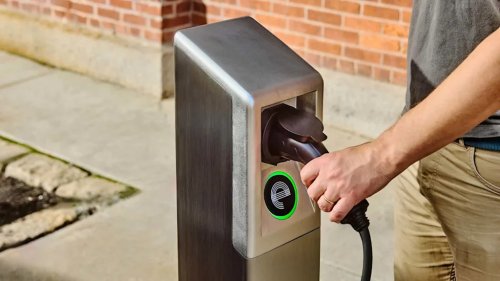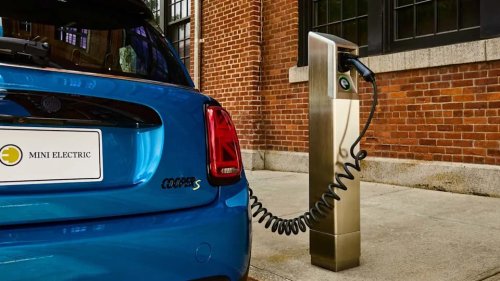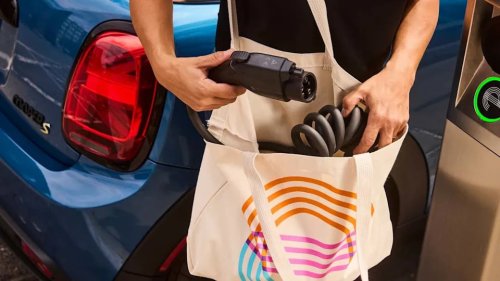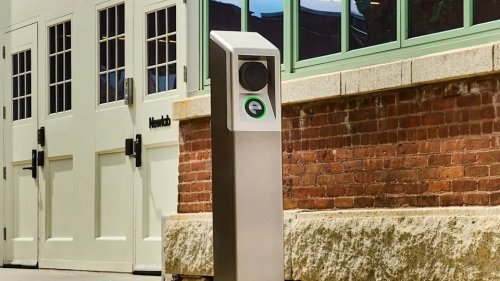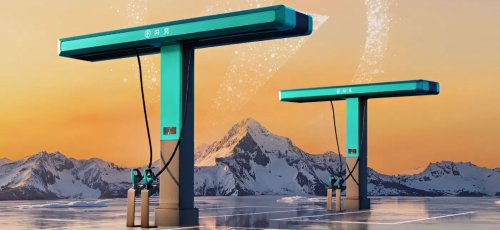



















As if owning a gas-powered car couldn’t get any more expensive and inconvenient, consider how difficult it is to find a gas station nowadays. The number of gas stations in the US has been shrinking steadily for years, while EV charging stations are sprouting up everywhere like mushrooms after the rain. That includes curbside charging stations, which provide a particularly useful, localized service in cities where “gas deserts” have been blooming. The Rise Of The EV Charging Station Even after last year’s sharp U-turn in federal energy policy, the EV charging industry has continued to sprawl over the US, claiming new territories where the retail gas industry faces stricter limitations. Quick serve restaurants, for example, have become especially fertile ground for the proliferation of public charging stations, with Waffle House, BoJangles, and Cracker Barrel among those mainstreaming the vehicle electrification movement. In contrast, industry consolidation is one of the factors behind the demise of the local gas station. The downward slide has been ongoing for decades. The American Petroleum Institute ran the numbers in 2004 and counted 168,000 retail gas stations in the U.S, a sharp drop from the 200,000 it counted in 1994. In an update posted in 2011, API took note of another downward slide to 160,000 stations. The numbers continued to shrink after 2011, with 145,000 cited by the US Department of Transportation in 2021. The Rise Of The Gas Desert Co-locating gas pumps with convenience stores and quick-serve restaurants can help soften any inconvenience involved in detouring off-route to find fuel. Still, that hardly applies in areas where the decline in the number of gas stations is severe. Cities are particularly vulnerable to the “gas desert” phenomenon due to space constraints and the high value of real estate, among other factors. Car ownership in New York City, for example, has been growing alongside its population, with the Census showing an increase up by 12.1% from 2012 to 2023, up from 1,853,000 to 2,077,000. Meanwhile, the number of gas stations has been declining. According to the New York-based research scientist Michael Zoorob, the city had about 1,100 gas stations in 2002,. Only 700 gas stations remained by 2023, a decline of 37%. In terms of public health, removing gas stations from neighborhoods where people live or congregate is a good thing. Public health studies, including this recent one in Canada, indicate that proximity to gas stations is linked with a higher risk of childhood leukemia. The Rising Tide Of Curbside EV Charging Among other advantages, EV charging stations eliminate neighborhood tailpipe emissions from drivers heading to a gas station, including drivers idling their cars while waiting their turn at a pump. High-density cities like New York have little space available for large, multi-port EV charging stations, but they do have plenty of curb space for standalone stations. New York currently has 88 Level 2 curbside charging stations, installed under a pilot program. Based on the success of the program, on August 4 the city’s Department of Transportation announced that the program will expand to an additional 600 stations, bringing the total to almost 700. The focus will be on selected high-density residential neighborhoods with a high concentration of drivers licensed by the Taxi and Limousine Commission, as well as lower-income neighborhoods that have been neglected by private EV charging stakeholders. The three-year program will initially launch in Soundview and Unionport in the Bronx; Rego Park, Forest Hills, and Far Rockaway in Queens; Red Hook, Carroll Gardens, and Bedford-Stuyvesant in Brooklyn; the Upper West Side and Washington Heights in Manhattan; and Stapleton on Staten Island. The Local Benefits Of Curbside EV Charging The wheels are already in motion. On September 15, the curbside EV charging firm “it’s electric” announced that it has been tapped to do the heavy lifting through a contract with the Department of Citywide Administrative Services supported by a partnership between the Department of Transportation and the New York Power Authority. The startup crossed the CleanTechnica radar last year, with a stylish design aesthetic and a subscription-based business model. “We’ve reinvented the EV charger by removing the big, the bad, and the ugly,” it’s electric explains. “There are no screens or touchpads, no credit card interface, and no charger cables to manage. Our sleek design was created with neighborhoods like yours in mind, so you’ll barely notice we’re there,” the company elaborates. In addition to supporting New York City’s vehicle electrification policies, the contract will also benefit local businesses and workers. “The chargers designed by it’s electric, which is headquartered in Brooklyn, will be manufactured right in Queens by Boyce Technologies — meaning the infrastructure for the city’s clean transportation future will be entirely made in New York, making it the epicenter of transportation innovation,” it’s electric enthused in a press statement. “New York City is home to more than 80,000 rideshare drivers, the majority of whom park on the street rather than in a garage or driveway,” it’s electric adds, noting that the lack of a garage or driveway all but eliminates the ability to use a home EV charger. Policy, Policy, And More Policy The clock is already ticking. Under the New York City Green Rides Initiative, all Uber and Lyft trips licensed by the New York City Taxi and Limousine Commission must be electric by 2030, though wheelchair-accessible vehicles are exempt. The program began with a 5% goal, rising to 15% in 2025 and 25% this year. “In 2027 it will increase to 40%, then rise yearly by 20 percentage points until the end of the decade, when 100 percent of all rides will be under the guidelines,” the city explains. “Both Uber and Lyft, which together comprise New York City’s high-volume for-hire fleet, have committed to transitioning to a greener fleet by 2030,” New York further explains. In addition to new curbside EV charging stations, keep an eye out for e-bike battery swapping stations. In the August announcement, NYC DOT noted that some of the new curbside charging stations will share a dig with the electrical infrastructure needed to install new battery swapping stations for e-bikes. The battery-swapping initiative launched in 2024 as a pilot program with the goal of providing a fire-safe battery charging alternative for e-bike delivery riders, helping to avoid the risks involved in charging at home. Based on the success of the pilot phase, the program expanded earlier this year. The swapping stations are also equipped with charging ports for riders who prefer to recharge their own batteries. Photo: Curbside EV charging is expanding in New York City, with the aim of adding 600 new Level 2 stations to the city’s existing roster of just 88 stations (cropped, courtesy of it’s electric).