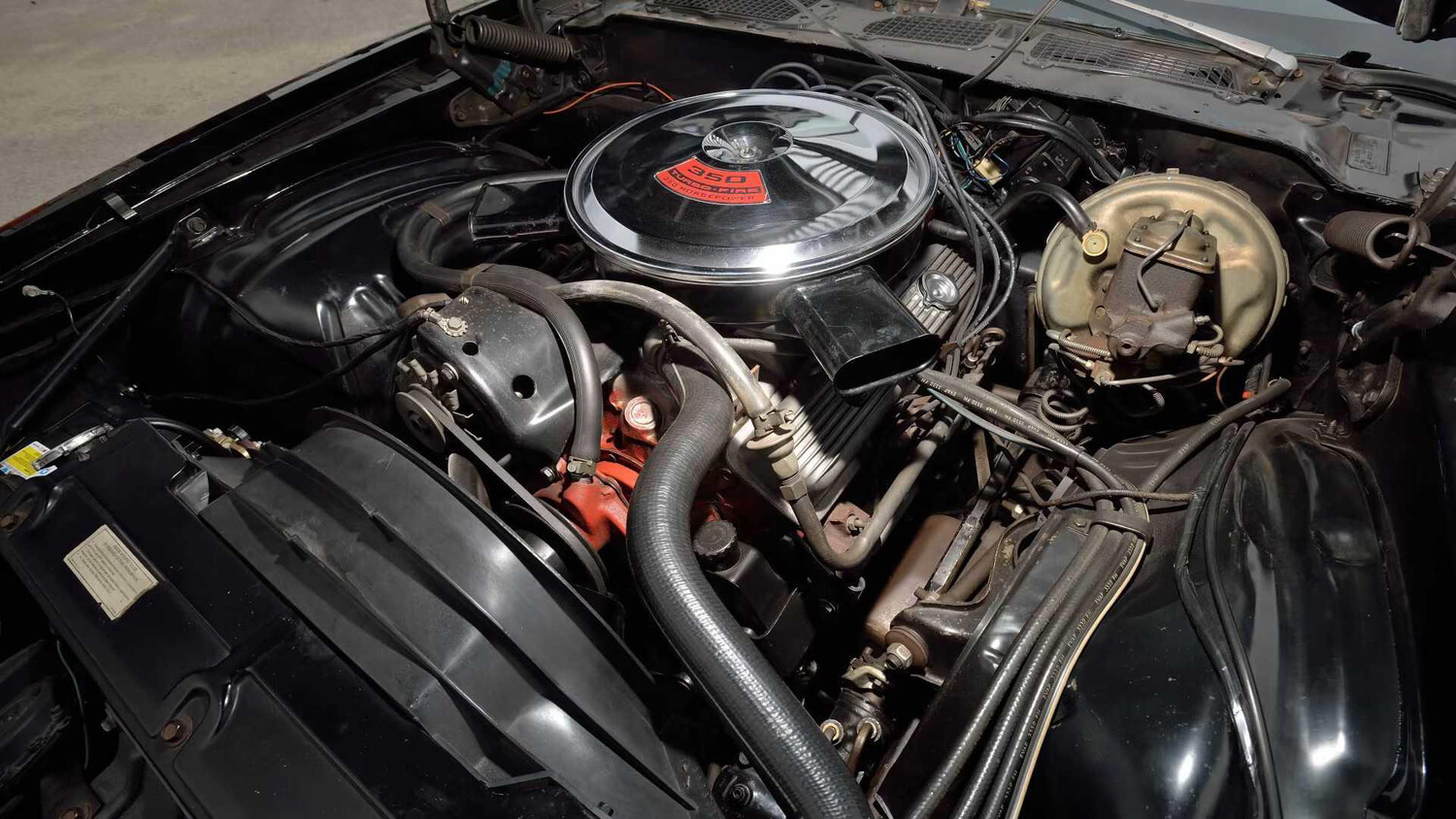
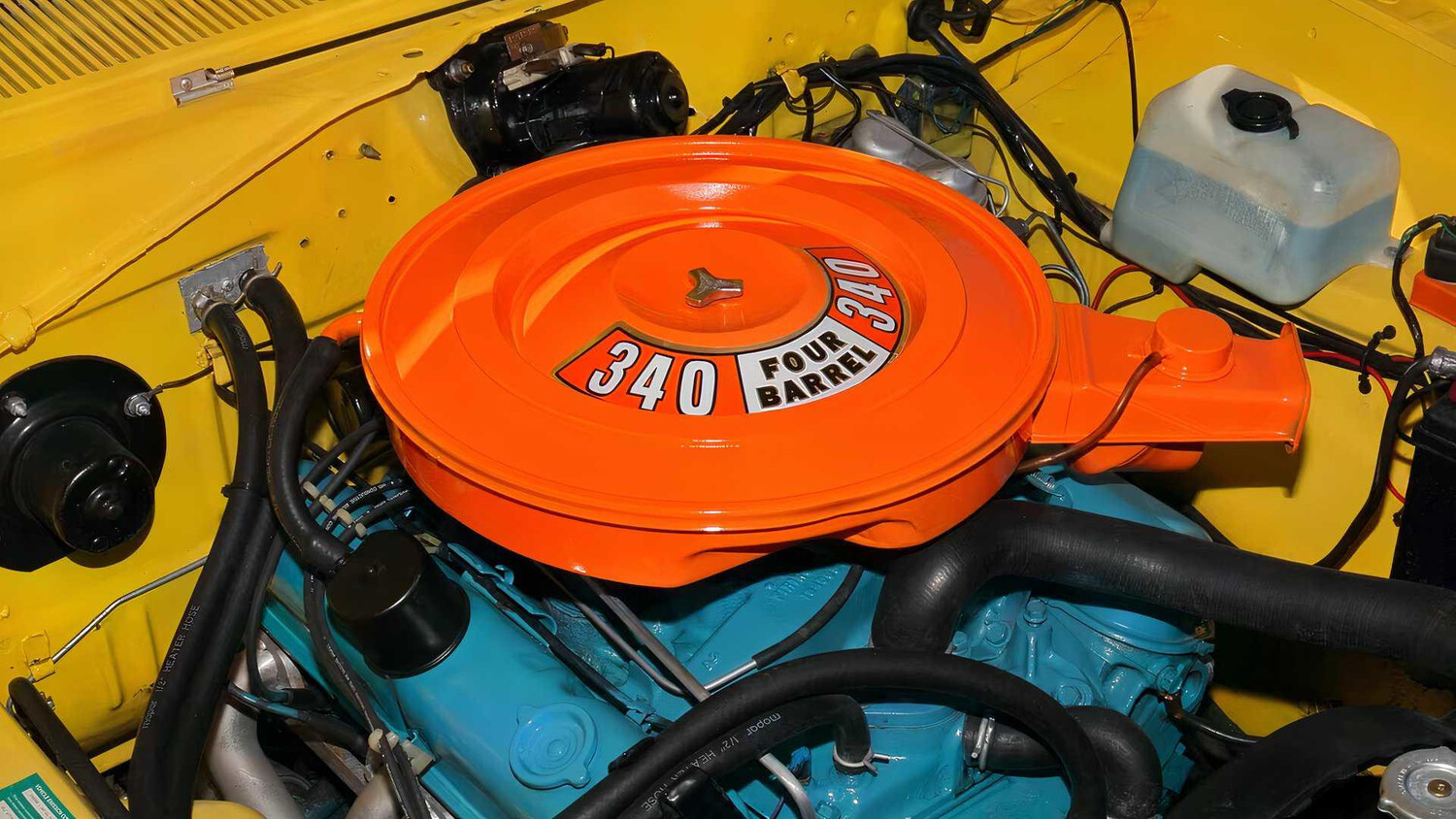
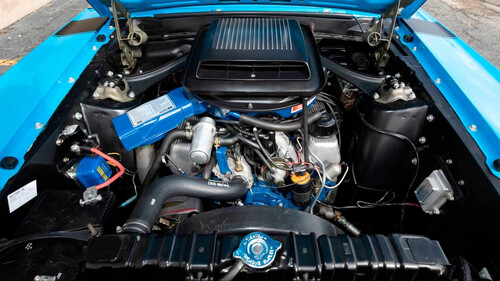
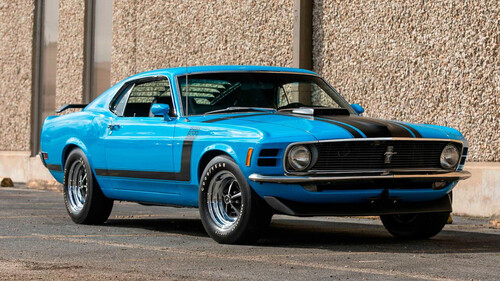
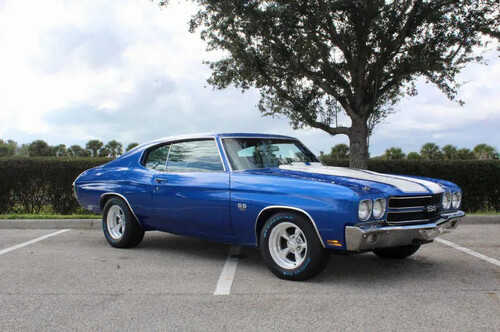
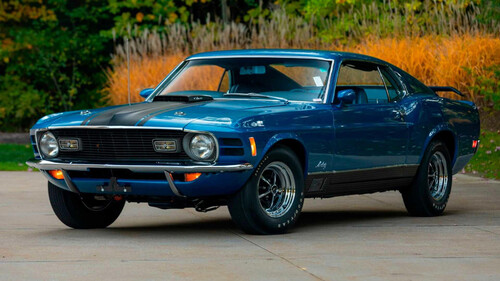
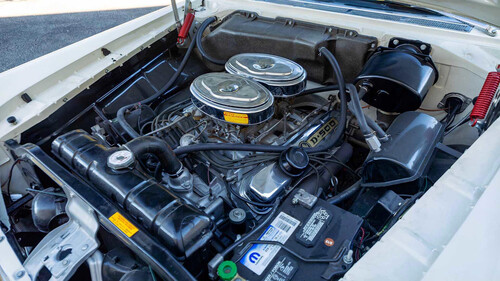
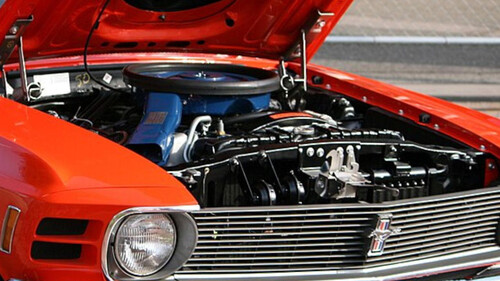
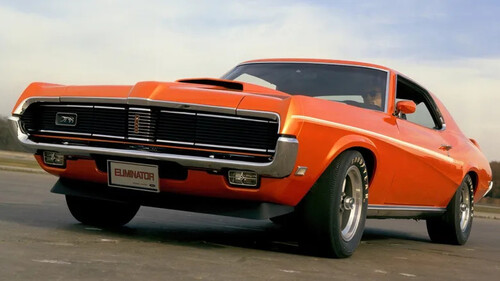
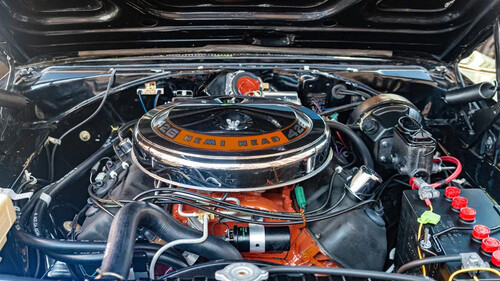
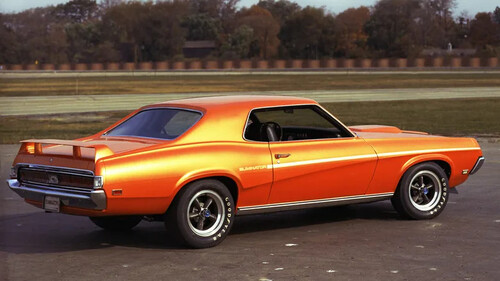
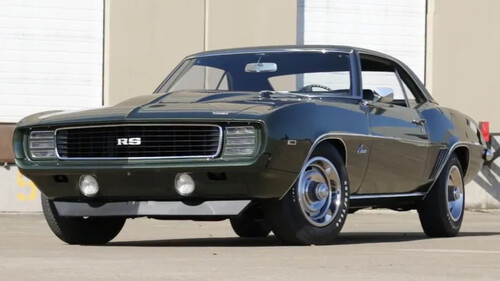
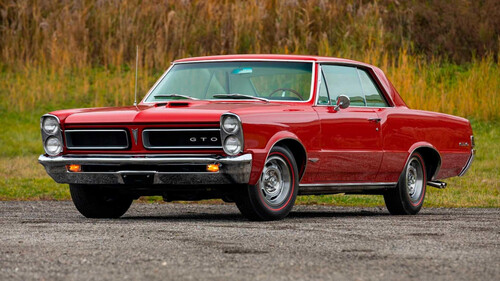
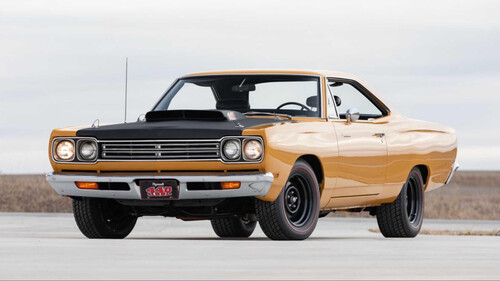
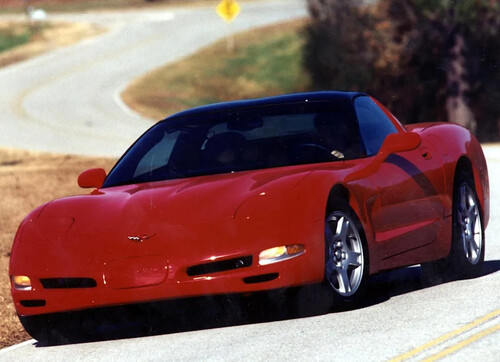
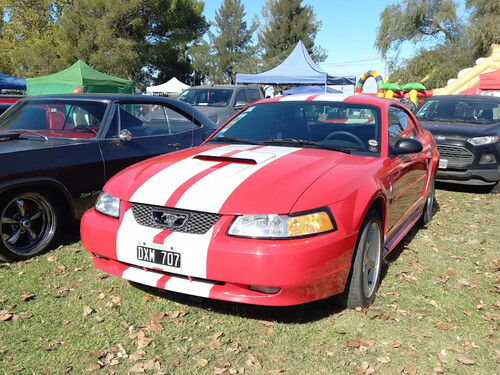
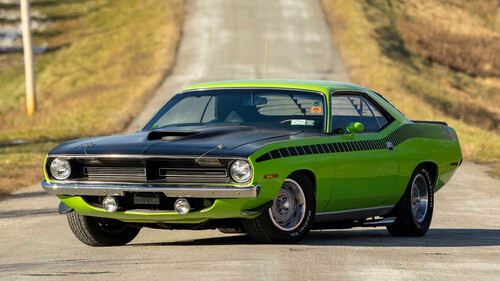
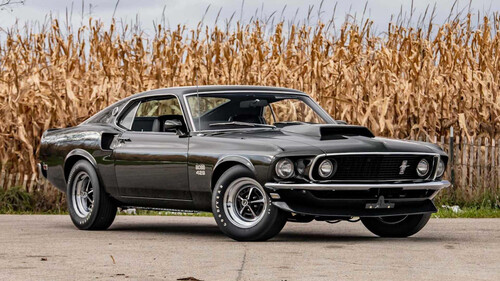
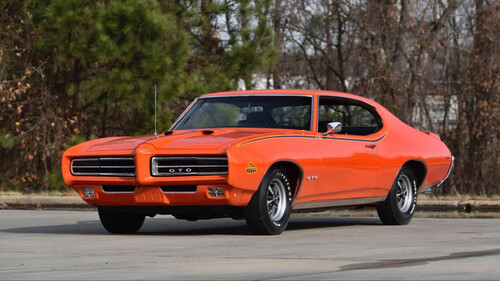
The golden age of American muscle was not won with massive 454s, 426 Hemis, or 429 Super Cobra Jets alone. While these behemoths grabbed the headlines, the street-level battle was among the high-revving small-block V8s that came out of Detroit and defined late-1960s and early-1970s performance.Chrysler's 340, Chevrolet's 350, and Ford's 351 were the three contenders for the throne, each with a distinct philosophy. These three engines challenged the big-block dominance to see which truly ruled the peak of American Muscle. Why Bigger Wasn't Actually Better On The Street Mecum The 1960s were all about big engines and massive displacement as the ultimate path to peak performance. If you were carrying north of 400 cubic inches, you were the king of the streets. However, the penalty was weight; these heavy big-blocks added significant mass over the front axle, and braking, handling, and even the launch suffered as a result. This also made the cars nose-heavy and caused significant understeer when cornering at high speed.It became clear that displacement alone was not enough for overall performance; it often resulted in wheelspin rather than usable straight-line acceleration. The extra 150 to 200 pounds of cast iron also didn't help, significantly compromising the dynamics. The Rise Of Power-To-Weight Ratio Mecum Engineers in Detroit knew that optimizing the small-block and reducing the total weight of the car created a greater power-to-weight ratio, which in turn increased usable performance. Shedding mass off the front axle was the key to stable outright acceleration while unlocking further dynamic abilities of the chassis.By using high-flow cylinder heads, aggressive camshafts, and four-barrel carburetors on lightweight compact engines, the big three produced a new generation of agile street fighters. These new engines were higher-revving than their older siblings and drew the same airflow figures out of much smaller, lighter blocks.Bring A Trailer / HotCarsThe small-block engine-equipped sporty cars would consistently outrun heavy big-block cruisers while avoiding steep insurance costs. With stiffer suspensions and heavy-duty gearboxes with shorter ratios, these cars transformed into quarter-mile weapons. Three Small Blocks, One Crown: Mopar, Bowtie, Blue Oval Mecum To win the small-block crown, Chrysler, GM, and Ford each used their own different engineering philosophies. pursued race-grade internals straight out of the box, whereas General Motors had its sights on bulletproof reliability. Ford had its ace in the shape of revolutionary cylinder-head airflow.To understand how these V8S stacked up against each other, we need to go beyond the horsepower rating and look at the physical hardware that gave each engine its unique identity. Mopar 340 LA Wikimedia Commons The Mopar 340 LA was introduced in 1968, with forged steel crankshafts, floating-wrist-pin connecting rods, and massive 2.02-inch intake valves paired with 1.60-inch exhaust valves, and a 4.04-inch bore and 3.31-inch stroke. The 340 utilized a heavy-duty cast iron block. Officially rated at 275 horsepower, cleverly to trick the insurance companies. With the help of a Carter four-barrel carburetor, it could rev up to 6,000 RPM with ease when fitted inside lightweight A-bodies such as the Plymouth Duster 340 and Dodge Dart.Later in 1970, Chrysler released an upgraded 340 T/A with a four-barrel carburetor setup, which also made a conservative 290 horsepower. But in a recent test done by Hemming in 2023, they managed to put out 375 horsepower at 5,600 rpm and 389 lb-ft of torque at 4,200 rpm out of a rebuilt engine. Proving how underrated these engines were from the factory. Chevrolet's 350 LT-1 MecumChevroletOn the other hand, the 350 small-block V8 peaked in the solid-lifter 1970 LT-1 trim; it produced a massive 360 horsepower and 370 lb-ft of torque in the 1970 Chevrolet Corvette.The Camaro Z28 and the Nova SS also featured the 350 LT-1, with the engine making power in roughly the same neighborhood. The L1-1 featured 4-bolt mains, forged pistons, an 11:1 compression ratio, and a 780 CFM Holley four-barrel carburetor on the intake manifold. The LT-1 was built for high-RPM power and maximum endurance. Ford 351 Cleveland MecumForddeveloped the 351 Cleveland as part of its “335-series” engine family, using innovative poly-angle canted-valve cylinder heads. The 351 shared its design philosophy with its older brothers, the 385-series 429/460 big-blocks. It was one of the mainstays of Ford's performance from 1970 to 1972 in cars like the Mustang Mach 1, Boss 351. It produced 330 horsepower in the Boss 531 and 370 horsepower in the Mach 1 Mustang. The Cleveland used a 4.00-incch bore and a 3.50-inch stroke to rev all the way up to its 6,500 rpm. How Each Small Block Felt Through The Gears Bring a Trailer The figures and dyno sheets only tell half the story; the real test of these lightweight engines unfolded on the streets. How each small-block pulled through the gears, built RPMs, and reacted to wide-open throttle dictated the driver's experience during a high-speed drag run. Chevy LT-1: A Linear Push Bring a TrailerChevrolet's LT-1 350 provided a smooth, linear powerband with plenty of torque throughout the rev range, resulting in predictable, effortless acceleration across all four gears. The subtle noise of the mechanical solid valvetrain provided a stock-car-like soundtrack at idle, and under heavy acceleration it surged forward with a flat, continuous pull without hesitation. The 350 LT-1 in the 1970 Camaro Z28 ran a quarter-mile time of 14.2 seconds at 100.3 mph as tested by Car and Driver. Mopar 340 LA & Ford 351 Cleveland, Aggression and Agility vs High-RPM Surge Mecum The Mopar 340 LA, developed by Chrysler, delivered immediate throttle response with a distinct mechanical rasp, allowing lightweight A-body cars to rev quickly to 6,000 RPM with continuous torque. As the 340 engine block was significantly lighter than Chrysler's big block, the 340-powered car felt sharper, better balanced, and remarkably more nimble through tight turns and long corners.Bury the gas pedal, and the result is instant response that could catch big-block rivals completely off-guard in a compact, unassuming lightweight budget car. It ran a quarter mile in 14.7 seconds at 94 mph and reached 0 to 60 mph in 6.2 seconds as tested by Car Life magazine in 1970 in a Plymouth Duster 340.In contrast, the Ford 351 Cleveland required holding the revs constantly above 4,000 RPM for explosive power, where the large-port canted-valve heads transformed the car with a massive top-end pull. The engine was somewhat docile at lower engine speeds and unrefined in stop-and-go driving conditions. But it had a dual personality; once past 4,000 rpm, the engine came alive with a distinctive exhaust howl and top-end torque that pulled all the way to its redline. It ran the quarter mile in 13.8 seconds at 104 mph in the 351 Mustang, according to performance data by MotorTrend. The Small Block That Truly Ruled The Era Mecum The Mopar 340 democratized street racing performance, offering 14-second quarter-mile capabilities in budget-compatible cars. Ford’s 351 Cleveland proved that small blocks could perform like big blocks thanks to the canted-valve head design.Chevrolet achieved what no other manufacturer could: it engineered power, weight, and longevity. The 370 horsepower LT-1 delivered an unrivaled factory power-to-weight ratio like no other.Furthermore, the Chevy 350 spawned one of the largest aftermarket ecosystems in the automotive space, so that any enthusiast could build reliable power affordably. Most importantly, it laid the foundation for the Gen III, IV, LS, and modern LT engine families. By combining top-of-the-line output, lightweight chassis, and the lineage that kept pushing the V8, the Chevrolet 350 LT-1 comes out as the definite winner as the small block that ruled the muscle car era.