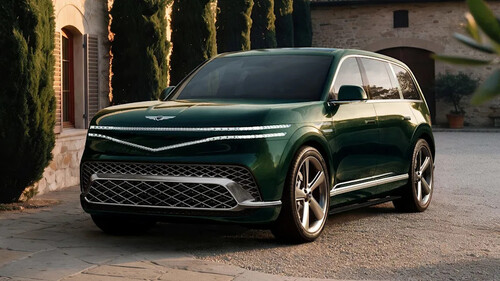
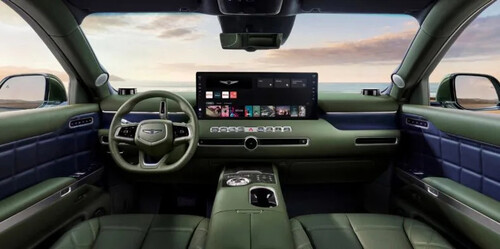
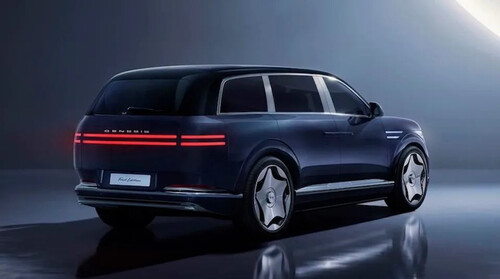
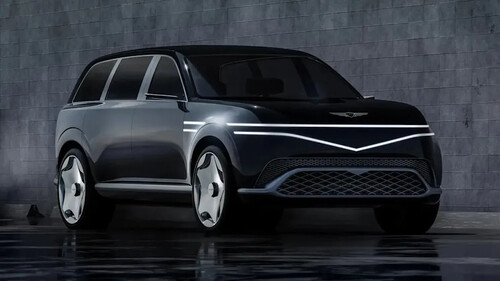
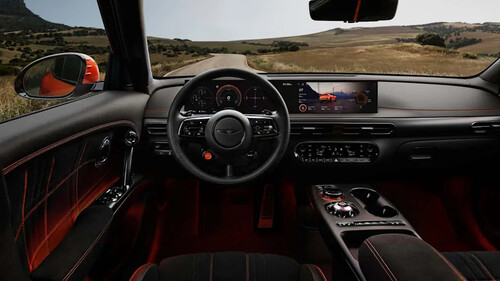
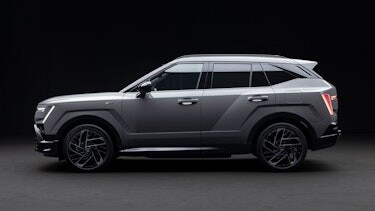
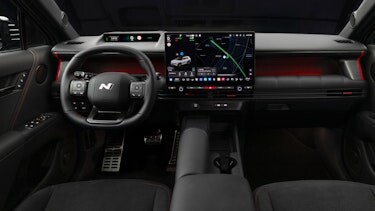
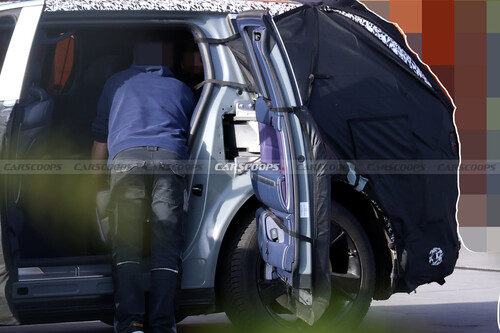
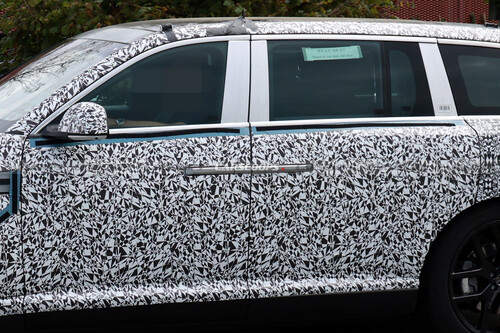
Genesis Every once in a while, a new vehicle comes along that puts everything else in its class on notice, and that's exactly what Genesis just did to the world of full-size SUVs with its new GV90 flagship — and more specifically, the GV90 Neolun that mogs the hell out of Rolls-Royce. What we've got here is a large electric SUV that is moving the needle for what we should expect from luxury vehicles, and it should have automakers across the world thinking long and hard about whether they're really putting their best foot forward. Find me another 650-plus-horsepower crossover with B-pillar-less coach doors, heated wood floors, stone trim, a motorized shifter, an airbag that covers the whole glass roof, swiveling seats, and an extending cinema screen. You can't. In fact, you can't find most of those features on their own in any car. Genesis' designers and engineers who worked on both the coach-door GV90 Neolun and its slightly more pedestrian standard GV90 sibling were operating on a different level when they concocted this beast and the brand-new platform that underpins it. Full Disclosure: Genesis flew me out to San Francisco, put me up in a very nice hotel and fed me, so I could check out the GV90 and GV90 Neolun. New moon for Genesis Genesis While the standard GV90 will be the model's bread and butter, the crown jewel is undoubtedly the GV90 Neolun, which means "New Moon" for all you "Twilight" fans out there. Step inside the B-pillar-less coach doors, which Genesis calls the Neolun Arch Gate, and you're greeted with an interior that rivals the best the industry has to offer — maybe even surpasses the best. This thing is a true luxury limo with roller blinds for privacy and a glass partition between the cargo area and back seats. The seats are finished in semi-aniline leather, and sitting between the second-row recliners is a center console with a refrigerator, control screen, and integrated tables for passengers who want to drink and do business on the go. The front passenger seats can also swivel around to face the rear occupants if they want to have more in-depth conversations about life, Korean engineering, or if Nixon was really that bad. (We don't yet know if the swiveling seats will come to the U.S., but it's a popular feature on high-end cars in Korea and China.) If the two front passengers were to turn back around, they'd probably notice the dashboard of the Neolun and regular GV90s look basically the same. Stepping out, they might notice the two cars don't look basically the same from the outside, to, save for the door handle placement and the fact the Neolun comes with 24-inch wheels as standard. There are five color combinations to choose from on the inside, exclusive to the Neolun: Quince Brown, Regal Navy with Majestic Purple, Saddle Brown with Shadow Gray, Tyrian Purple with Travertine Beige, and Vault Black with Shadow Gray. That's right, there are two different purples. What makes a First Edition a First Edition? Genesis To kick off the GV90's launch, Genesis is offering the GV90 Neolun First Edition, which is being held for "elite customers" only. I personally would like to know how many Genesis cars you need to buy to become elite, but that's besides the point. What is the point is that the First Edition comes with three different two-tone paint options that will then dictate the interior it comes with from the get-go, all with unique interior trimmings. These combos are Jaipur Rose and Seychelles Beige paint with a Quince Brown interior, Vik Black and Baena Green paint with a Veiled Indigo and Puglia Green interior, and Vik Black and Sonoran Navy paint with a Majestic Purple and Regal Navy interior. It also gets body-colored 24-inch wheels, which I'm not too sure about, and First Edition logos on the headrests, doorsteps and crystal orb. Only offered on the First Edition (at least for now) is what Genesis calls the Executive Suite, giving the GV90 Neolun First Edition just four seats and real wood veneer flooring with a radiant heating system built right in. Look up, and you'll see the massive Smart Vision Roof that can adjust its opacity across six sections. Son-nim in the GV90 Genesis It's hard to think of many interiors in the automotive industry that outclass that of the GV90 and especially the GV90 Neolun. It truly looks out of this world and does a wonderful job of combining thoughtful old-school luxury with techy gimmicks like the pop-up screen, rotating infotainment control knob, and shifty shifter that I'll talk about in a little bit. The dashboard and door trims have a dual-layer look to them with a recessed center section — not terribly unlike the Hyundai Palisade, but it's far more sculpted and premium-looking in this application. It's also got all sorts of funky quilting patterns throughout, as any good luxury car should. While the interior is thoroughly modern and screen-focused, Genesis was still kind enough to add plenty of buttons for everyday functions. Below the wide screen is a row of eight hard buttons made out of glass that control climate functions and bring up various infotainment menus. There are even more buttons by the infotainment control knob for other drive settings, and there's a massive volume knob in the middle of the center air vents. Unfortunately, it seems that vent positioning is controlled through the screen — you can't win them all. Material choices are plentiful, with natural woods, leathers, cashmere, and even genuine stone available for buyers to choose from. It's hard to imagine any two GV90s looking the same. It helps that there are five interior color combinations to choose from on the standard car: Veiled Indigo with Puglia Green, Folio Brown with Batiste Blue, Vault Black with Shadow Gray, Tyrian Purple with Travertine Beige, and Saddle Brown with Shadow Gray. The "base" GV90 can be had with six or seven seats, choosing between a three-across bench or captain's chairs for the second-row while the Neolun is exclusively a six-seater. Currently, only the GV90 Neolun First Edition comes with four seats, but I wouldn't be surprised if that option trickles down in the future, especially given how popular that configuration is on cars like the Mercedes-Maybach GLS. Power stance Genesis The exterior of the GV90 pulls heavily from the Neolun Concept we first saw in 2024. I'm honestly shocked at how similar the two look, especially when it comes to the coach doors. Genesis says the 208.1-inch-long SUV draws its inspiration from the moon jar, a traditional piece of Korean porcelain pottery. Like a moon jar, the design of the GV90 is simple yet elegant despite its size. It's made up of clean, curved lines, and while it's certainly a bold look for the brand, it's unmistakably still a Genesis. The classic two-line light signature we've come to expect from the brand is here, front and back. Up front, there's a clamshell hood with Micro Lens Array headlights sitting directly below it. The lower line dips to create a simulation of the Genesis crest we're used to seeing, but since this is an EV, there's no grille to speak of until we get to the lower bumper. That's outfitted with chrome 3D mesh that looks rather stunning. Thanks to the clamshell hood, there's no cutlines interrupting the crest of light, either. Along the sides, the clean lines continue. Undoubtedly, you'll notice the Neolun's coach doors, but the standard GV90 looks nearly as elegant. The surfacing is fairly flat — almost Range Rover-ish — aside from some anodized aluminum accents. But the space is dominated by the delightfully large and beautifully designed 24-inch forged wheels. Sure, the 24s probably won't ride as well as the standard 22s, but they look sick as hell, so who actually cares? We love smooth butts Genesis Like the front of the car, the rear is rather blunt and unfussy; it looks almost as if it was carved out of a single piece of metal, and it continues that same moon jar aesthetic. There are no superfluous lines or unnecessary items like a rear spoiler to be found here, and both the taillights and Genesis lettering are flush-mounted. You do get a rear wiper, at least — Hyundai's learned that lesson from the Ioniq 5. A big theme of the GV90 and GV90 Neolun is personalization, and that could explain why there are 16 different color options available from the jump, three of which are matte finishes. Don't worry, they go far beyond your typical German rainbow, and Genesis may be giving Dodge a run for its money when it comes to color names: Baena Green, Capri Blue, Cardiff Green, Como Blue, Jaipur Rose, Makalu Gray, Saville Silver, Sonoran Navy, Seychelles Beige, Taupo Gray, Uyuni White, Vela Burgundy and Vik Black. The mattes are as follows: Makalu Gray Matte, Matterhorn White and Monashee Silver. Buyers are going to be spoiled for choice. More than a door Genesis The differentiator between the Neolun and standard GV90 is the Neolun Arch Gate, which Genesis touts as the world's first independently opening and closing hidden B-pillar coach doors. With both doors ajar, the opening is truly massive. Sure, other cars have coach doors, but there's nothing like this. The closest thing is the Zeekr Mix (the basis for Waymo's new Ojai), which has no B-pillar, but its rear doors slide like a minivan, the front passenger door slides forward and the driver's door is normal. Engineers were able to do this with a newly developed dual-motion hinge mechanism in the rear. Here's how the whole system operates and why there's no need for a conventional B-pillar, according to Genesis: [The dual-motion hinges are] optimized for the vehicle's hidden B-pillar body structure, which enables the rear doors to open and close independently without impeding the front doors. This mechanism works by first sliding the rear door slightly outward, then smoothly rotating it open. Safety remains paramount in the GV90 Neolun, despite the absence of a B-pillar. Genesis engineered a new structure that seamlessly marries the doors to the vehicle body while maintaining the highest safety standards. Additionally, replacing the conventional B-pillar, high-strength dual steel beams have been integrated for rigidity. This architecture that joins the doors and body effectively disperses collision forces. A concealed yet robust roll cage is created by reinforcing the passenger cabin with a frame 1.5 times thicker than conventional vehicles and fortifying it with integrated high-strength steel tubes and structural foam. This hidden roll cage structure protects occupants while achieving crash safety performance equivalent to vehicles with conventional B-pillars. I can't even imagine how much these doors weigh. And Genesis put an emphasis on safety beyond just the coach doors' engineering. It comes with 12 airbags, including what Genesis claims is the world's first roof airbag. In the event of a rollover, the airbag deploys across the entire glass roof to both prevent passengers from being flung out of the car and stop them from being injured if they come in contact with the roof. The GV90 also has an in-cabin monitoring system that can tell how the passengers are sitting in the car and optimize the airbags and seatbelt controls during a collision. A new driving experience Genesis The GV90 runs on a brand-new platform for Genesis called eMP — Electric Mobility Prime — and it's slated to be exclusive for Genesis flagship vehicles with an emphasis on spacious cabin layouts, solid driving dynamics and a refined, luxurious ride. Both versions of the crossover run on the same 127.8-inch wheelbase, which is 5.6 inches longer than the BMW X7's and only a couple of inches shy of a Rolls-Royce Cullinan, and they're both energized by the same 123.5-kWh battery pack, the largest ever fitted to a Hyundai Motor Group product. Genesis says a seven-seater version of the GV90 can travel about 311 miles on a single charge in its U.S. testing; not exactly world-beating, but not terrible by any means, and charging times are lightning-quick. When using a 350-kW DC fast charger, the GV90 can be juiced from 10% to 80% in just 22 minutes, impressive given how huge its battery is. Motivational power comes courtesy of one drive motor on each axle that combines to put out an incredibly healthy 657 horsepower and 590 pound-feet of torque. That should be more than enough to get this big bruiser out of its own way. It's fitted with an E-LSD mounted to each motor, enabling them to deliver power exactly where it needs to be. To help slow things down, the GV90 comes with a four-piston monoblock caliper up front. Both models run on adjustable multi-chamber air suspension to make the ride as plush and luxurious as possible, and its height can be changed depending on road conditions. It also has active rear wheel steering that can turn at up to 5 degrees, which should certainly help in maneuvering the large SUV. Tech time Genesis The GV90 won't drive like any Genesis that has come before, and it most definitely won't start like any vehicle that has come before. First of all, there's no start button, which isn't that out of the ordinary on an EV. All the driver needs to do is pull the door handle, and the GV90 will turn on as the door automatically closes. From there, the Motion Control Shifter (read: gear selector) moves from the 12 o'clock position on the steering column to the 2 o'clock position, enabling the driver to pick a gear. At the same time, the Crystal Sphere Controller — a staple of other Genesis interiors — rotates toward the driver, and a few tweeter covers appear from where they were hidden in the dashboard. After that, just press the brake pedal, and the car is ready to drive. The wacky starting procedure isn't the only piece of cool tech inside the GV90. Like all modern luxury cars, it has a big OLED screen that runs on HMG's new Pleos Connect infotainment system, and it gets even bigger. Genesis calls it the Cinematic Display — in normal driving situations, the wide screen measures 23.6 inches, and that's not exactly groundbreaking, but when the GV90 is parked, the display can rise with the press of a glass button, creating a 24.6-inch display. (It's extended in all these photos.) That doesn't sound that much bigger because of the way screens are measured diagonally, but it ends up being about 1.7 times more screen real estate than it is when it's retracted, making for the perfect place to watch a movie, TV show, or YouTube video while charging or just hanging out. Additionally, in place of a traditional gauge cluster, the GV90 has a 25-inch head-up display that will give drivers everything they need, including their speed, navigation, and driver-assistance functions. Screens aren't the only techy part of the GV90's interior that makes it a cool place to be. Genesis fitted a 25-speaker Bang & Olufsen Premier 3D sound system, which has four headliner speakers, Dolby Atmos, and the ability to recreate the signature acoustics of iconic venues like Boston Symphony Hall and Wembley Stadium using a program called Virtual Venue. How sick is that? Adding to the experience is the ambient lighting featured throughout the GV90's cabin. Genesis says it uses indirect lighting to create a "gentle glow on garnishes" and accentuate the design elements that are already there. Of course, you can take this all in from the massage seats that Genesis says go "beyond" what it has offered before. There are also some AI features built in that I don't care about, and neither should you. NeoSUV Genesis There's no word yet on exactly when the GV90 or GV90 Neolun will go on sale, but it's targeted for the first half of 2027. There's also no information on how much they're going to cost, but I'll hazard a guess they won't be cheap, with the standard GV90 probably hovering around $100,000 to start. Hell, it's not even clear exactly where they'll be made, but I for one cannot wait. The GV90 and GV90 Neolun are an incredibly exciting new offering in the automotive industry, which is hard to do when you're talking about a full-size SUV. Traditionally, they're not the most exhilarating vehicles on the road. With its thoughtful design and unique blend of one-off features, cutting-edge tech and commitment to luxury rather than the sportiness some of its rivals are chasing, the GV90 feels totally fresh. Between this SUV, its Le Mans racer and the Magma GT supercar, I can't think of another automaker on as big of a tear as Genesis right now.