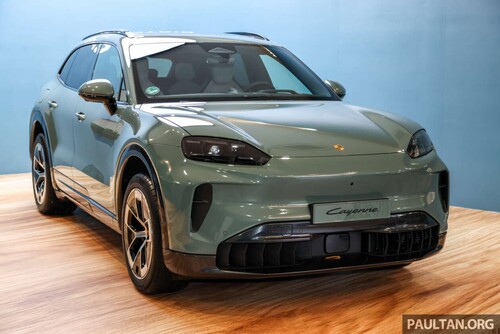
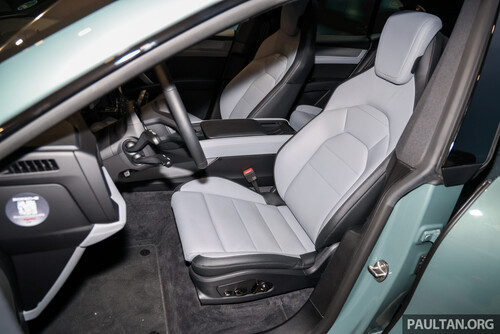
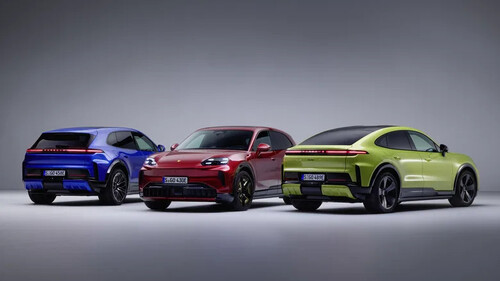
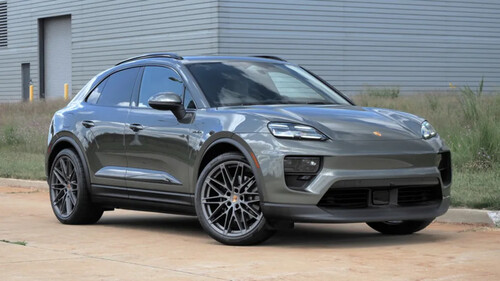
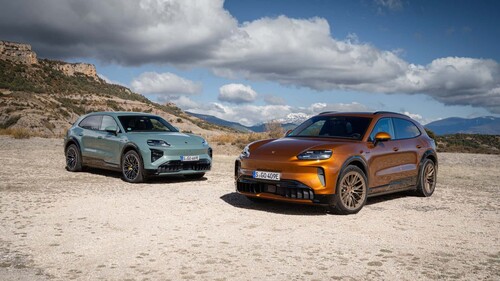
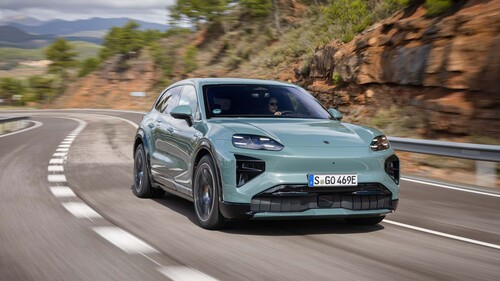
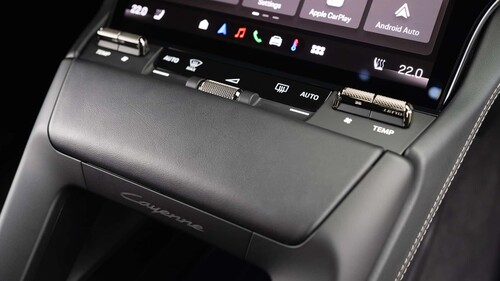
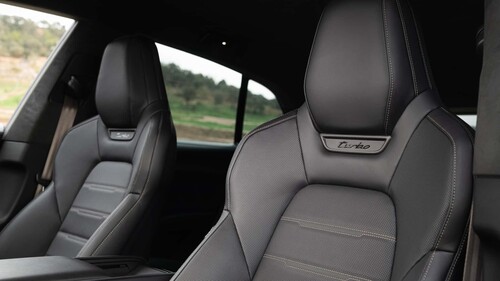
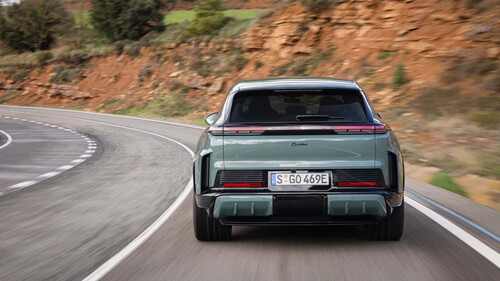
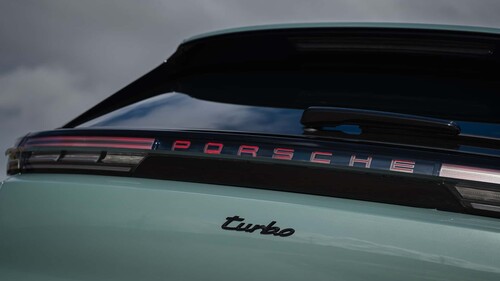
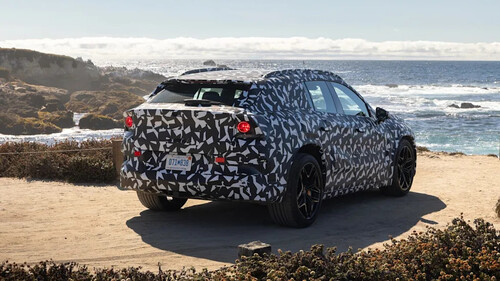
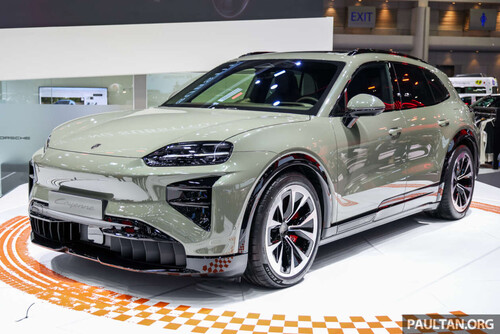
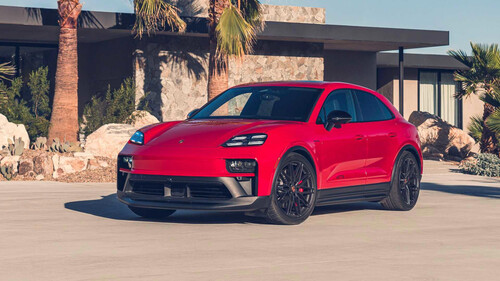
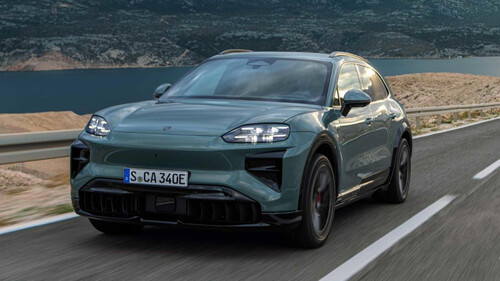
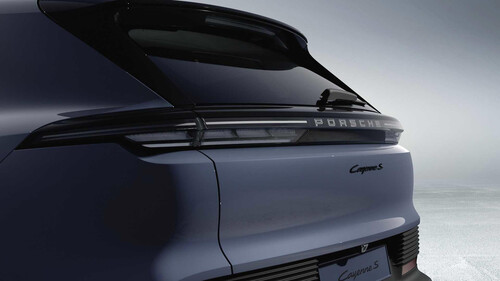
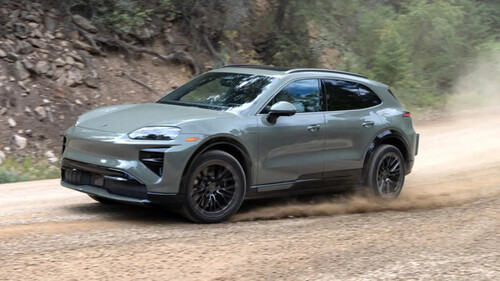
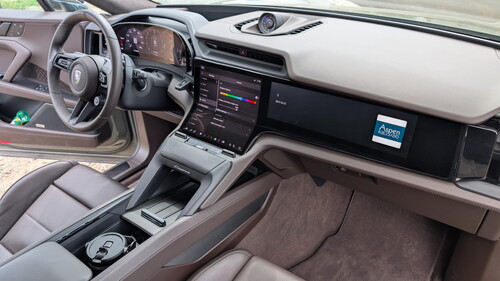
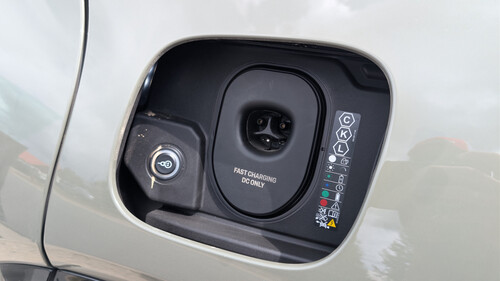
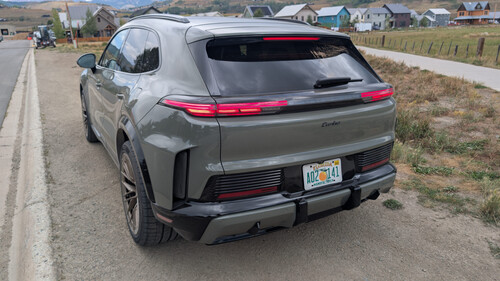
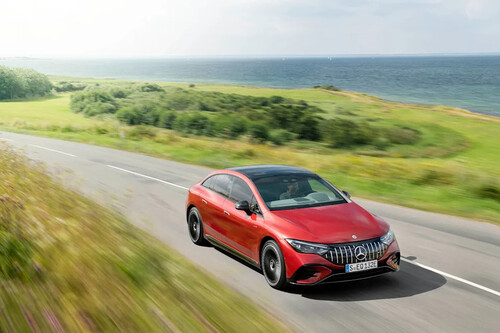
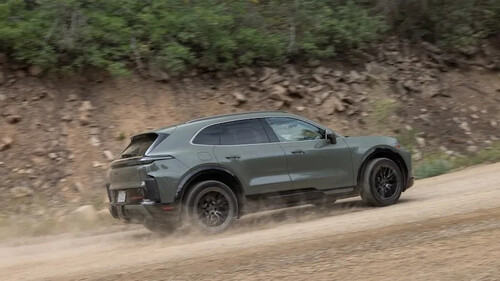
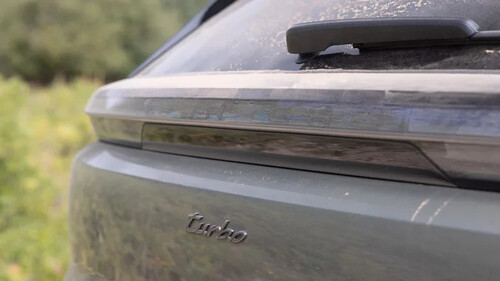
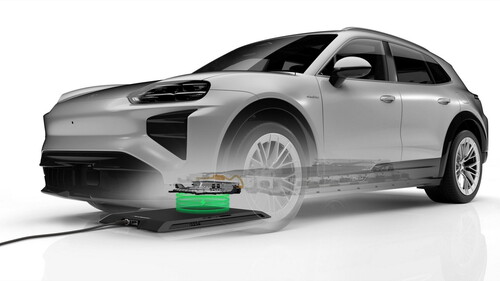
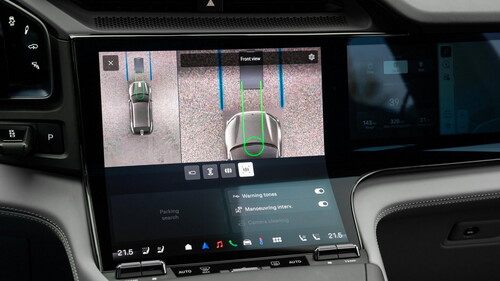
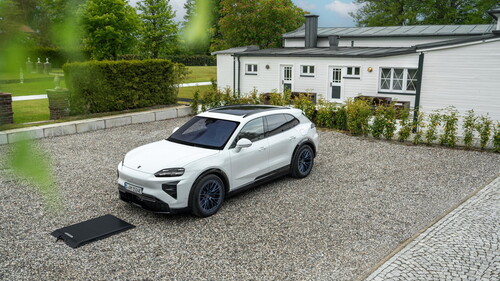
PorscheThere's no getting around the fact that the Porsche Cayenne Turbo Electric is an expensive car. Ridiculously expensive, even. Just to get in the door, you're looking at $165,350 with destination included. Start adding options — $3,000 for Oak Green Metallic Neo paint, $1,350 for rear-axle steering, $7,790 for the Active Ride suspension, $4,810 for the Premium package, $6,120 for the Burmester sound system, $2,910 for the augmented reality head-up display — and before you know it, you'll be knocking on the door of $200,000.Meanwhile, the Bureau of Labor Statistics estimates that the median full-time worker earned about $62,000 in 2025. Odds are, no matter how hard you work or how aggressively you save, you'll never be able to afford a Cayenne Turbo Electric. Even if depreciation kicks every single one of these cars in the teeth. Then again, it's not like anyone needs a midsize luxury electric crossover that makes up to 1,139 horsepower and 1,106 pound-feet of torque. Despite a curb weight of 5,860 pounds, Porsche quotes a 2.4-second 0-to-60-mph time and a 9.9-second quarter-mile. In a family SUV that offers a front passenger screen.It's a ridiculous car with a ridiculous price. And yet, after driving the 2026 Porsche Cayenne Turbo Electric for the better part of a day, I remain blown away. Everything about this car is so impressive that it almost feels like a bargain, even at $200,000. A five-seat crossover EV that costs as much as a nice condo shouldn't feel like a good value for your money, but the Cayenne Turbo Electric's combination of power, handling, comfort, and practicality makes it one of those do-everything cars that transcends segments and labels. It's just ridiculously good at everything except being affordable.AdvertisementAdvertisementFull Disclosure: Porsche wanted me to drive the 2026 Cayenne Turbo Electric so badly, it flew me out to Aspen, Colorado, put me up in a nice hotel, paid for my food and drinks, and even provided some canned air in case the altitude got to me. It didn't, but I appreciate the thought.Read more: These Were The First Cars Ever Made By The World's Best-Known AutomakersIt has AerobladesPorscheAs far as styling goes, the new Cayenne Electric feels like an evolution of the existing third-generation gas-powered Cayenne that succeeds more from some angles than others. Especially painted green it can look a little frog-like, but it's still handsome enough, and from some angles it really does look great. While Mercedes-Benz clings to giant grilles, even on its EVs, I appreciate Porsche's willingness to move on with the electric Cayenne. If it isn't necessary anymore, why keep the grille around?The advantage of the design is that it's slippery, with Porsche reporting a drag coefficient of 0.25 in the regular Cayenne Electric and 0.23 for the Coupe version. Turbos get active cooling flaps, an adaptive rear wing, and a feature Porsche calls Active Aeroblades — two vertical panels that extend from the rear bumper of the car to clean up the aero, as you can see above. The engineers claim it helps, but even if it didn't, it looks cool, and if I'm spending at least $165,000 on a car, you better believe I want it to look cool.AdvertisementAdvertisementSizewise, the electric Cayenne is a couple of inches longer than the third-gen Cayenne but gains 5.1 inches in the wheelbase. As a result, there should be more than enough space to take four adults on a multi-hour road trip in pure comfort. Odds are, more kids are going to spend time in the Cayenne's rear seats than adults will, but unless your friends are giants, you won't hear many complaints. They may have to pack a little lighter if you go with the coupe version, but the regular Cayenne Electric's cargo capacity does edge out the Mercedes-Benz EQE SUV's. As for the front seat, after about six hours of driving, I got back to the hotel feeling fresh as a daisy. Impressive.Sorry to the curved screen hatersPorscheInside, the cabin also feels very familiar, at least if you're familiar with Porsche's recent interiors. It's attractive but restrained, assembled using high-quality materials, and everything you touch feels nice. Despite the Cayenne Electric having a 14.25-inch driver display, and offering a 14.9-inch passenger display and an augmented reality HUD, most people are going to focus on the curved center screen, which probably stands out even more than the grille-less front end. It attracted a lot of hate when Porsche first showed off photos of the interior, and if you're one of the haters, I'm sorry to tell you that it actually works really well.Integrated center screens may look better than the "tacked-on iPads" so many people hate, but in addition to forcing you to look down and away while driving, they're also harder to use. In my Fiat, I can use the screen itself as a brace for my hand, making it pretty easy to touch the part of the screen I'm aiming for, but integrated screens don't offer that option. By curving the screen and building in a little perch for your hand, Porsche found a way to fix that. The latest infotainment system puts the vast majority of the controls on the lower portion of the screen, too, while physical controls still allow you to adjust things like volume and air temperature.If you just hate the way it looks, I probably can't change your mind there. Just like pointing out that the passenger screen is optional won't change the minds of the people who hate the existence of passenger screens on principle. Personally, I don't understand being mad at a luxury car company offering an optional luxury feature, but there are a lot of things I don't understand about the world, like why Netflix canceled "The OA" after two seasons. But seriously, "luxury cars should only offer the features I think are strictly necessary" is such a silly belief, especially when we're talking about an electric crossover that starts at $165,000. They have other cars for that.Silent supercar hunterPorscheYou can also change or turn the driving sounds off if you want to ride in pure silence, and around town, that might be the way to do it. My test car had the fancy Porsche Active Ride suspension, and let me tell you, in Comfort mode, you'd have no idea you were in a high-performance vehicle of any kind. Combined with the $1,080 insulated glass option, the cabin was almost eerily quiet. I'm sure Bentley will throw more sound deadening at its upcoming Cayenne-based Torcal, but between the incredibly smooth ride and near-silent cabin, I have to wonder how much there is to improve on.AdvertisementAdvertisementMore insulation also adds more weight, and the Cayenne Turbo Electric is already heavy at about 5,800 pounds. But oh my. Switch out of Comfort mode into Sport Plus, and the experience will have you questioning where Porsche hid all that weight because this thing is an absolute rocket. Eleven-hundred horsepower does tend to do that. But I've driven other high-horsepower EVs that didn't feel nearly as quick. On paper, it should be slightly quicker than a quad-motor Rivian R1S, but from the driver's seat, it almost feels like the Porsche is smuggling some extra power.If Porsche had cheaped out on the suspension, that kind of power would probably feel like far too much, but it didn't. It's all so easily controllable, and not just because you only get 844 hp until you hit the Push-to-Pass button on the steering wheel. Everything from the suspension to the optional rear-axle steering and the firm, direct brakes works together seamlessly to make all that power feel somehow normal. On the winding mountain roads outside Aspen, it was transcendent.Without gears to shift through or an engine that needs to rev up, that mountain of torque is always available the moment you want it, but the active suspension works to keep the car flat, both under hard braking and acceleration. In theory, it could feel unsettling, but instead, it whispers in your ear that you can push harder and drive even faster. It's so quick, passing slower cars is almost instantaneous. You just change lanes, and all of a sudden, you're way ahead of them, doing a speed you probably shouldn't post on the internet. On and off-roadPorscheThe mass is still there, but up in the Colorado Rockies, it barely even entered the equation. I just drove. Fast. Some might even say too fast. But it's not my fault, either. The car wanted me to drive it fast.AdvertisementAdvertisementMore than 200 miles of mountain driving should be exhausting, especially in such a heavy SUV. Nearly 6,000 pounds is a lot of pounds, but as the hours flew by, I didn't get tired. I didn't feel the urge to slow down and maybe relax for a bit. All I wanted to do was attack the next corner and the corner after that. Again and again. Calling it addictive would be accurate, but "addictive" makes the experience sound less composed and relaxed than it really is. It's incredibly exciting, just in a drama-free way that feels far safer and more predictable than an 1,100-horsepower car on public roads probably should.Porsche also says it developed the Cayenne Electric to be a more capable off-roader than you might expect, and with the air suspension raised in Off-Road mode, you get a solid 9.6 inches of ground clearance. The summer performance tires don't naturally lend themselves to off-roading, but I appreciate Porsche at least being brave enough to include unpaved roads on the drive route. There weren't really any obstacles to speak of, and you probably could have driven the same roads in a Civic, it did give the suspension the opportunity to showcase how well it smooths out bumps and jolts.It also gave me the opportunity to hang the tail out and confirm the Cayenne Turbo Electric likes to slide. I didn't get to push it nearly as much as I would have liked, though, because it was a busy enough road that oncoming traffic was always a concern, and there were a lot of blind corners. Better to rally the electric Cayenne responsibly than end up praying for a rescue at the bottom of a cliff, I always say. Electric rangePorscheAs far as range goes, Porsche says to expect 298 miles of range out of the Turbo's 113-kWh battery (or 303 miles if you get the more efficient tires). My tester initially displayed an entirely too optimistic 396-mile estimate with a 99% charge, but when I pulled off to take a photo with 51% remaining, it still showed an estimated 189 miles. On mountain roads, I definitely had the benefit of more regenerative braking dumping electricity back into the battery — it has 600 kW of recuperation power — but trust me when I tell you efficiency was the last thing on my mind while driving an 1,100-hp car in the mountains.AdvertisementAdvertisementYour mileage will quite literally vary, but at the very least, we know the battery is big enough for a pretty long day of mountain driving or canyon carving. At least on a mild day in Colorado where the temperatures were in the 70s.And while we didn't do any charging, Porsche says the Cayenne Electric can recharge at speeds up to 400 kW and can go from 10% to 80% in less than 16 minutes. At home, you can also buy an optional inductive charging pad that wirelessly charges your electric Cayenne at up to 11 kW with 90% efficiency. Not a bad trade-off for never having to plug your car in at home ever again. I know it isn't exactly difficult to plug an EV in, but it's still one more thing to remember, and if you have Cayenne Turbo Electric money, why not? Porsche says the average Cayenne buyer earns almost $800,000 a year.An EV you want to keep drivingPorscheThat's an absurd amount of money, but someone has to take home all the raises they denied their employees, and at that income level, they aren't saving up for new car purchases or limiting themselves to only one car. You have to assume that for most owners, the Cayenne Turbo Electric will one car in a small stable of them. Convenience is worth a few bucks when you make $1 million in a good year. I also wouldn't be surprised if customers who plan to rotate through a few cars find themselves grabbing the keys to the Cayenne Turbo Electric far more than they expected to.It just does everything so well. Yes, it's expensive, and that does technically count as a flaw, but for the few sitting on a large enough pile of money, my God, what a daily driver. I could talk battery improvements, new motor tech, platform upgrades, and the million different options in the configurator, but really, the most impressive thing Porsche did with the Cayenne Turbo Electric is build a car I didn't want to stop driving. I can imagine the same will be true for the base and S versions, too.AdvertisementAdvertisementEven after a long day winding my way along tight mountain roads, I wasn't worn out at the end. I was disappointed I'd finally run out of drive route after more than six hours behind the wheel of a near-6,000-pound car. That's what you'd expect from a Porsche, but from an electric crossover? That's seriously impressive.Want more like this? Join the Jalopnik newsletter to get the latest auto news sent straight to your inbox, and follow us or add us as a preferred search source on Google.Read the original article on Jalopnik.